
Migrants in Central Park, The Warblers Are Coming!
The Black-throated Blue Warbler is one of the few species increasing in numbers, but it still has not fully recovered from the huge population losses caused by the clear-cutting of its habitat over a hundred years ago. Image: Thanks to Dennis Newsham
ROBERTA KRAVETTE, EDITOR, DESTINATION: WILDLIFE. CONTACT ME
This article was updated from the original in August, 2027
By Roberta Kravette
Warbler Migration: The Epic Journey of a Half-Ounce of Flying Fury!
Each spring, thousands of foreigners migrate across our borders from Cuba, South America, and even Mexico. Under cover of darkness, they make their way north to Manhattan’s Central Park.
✓ TRIP TIPS
Who: Adults, Children who are able to be quieter
What: The spring warbler migration. Birdwatching
When: Early to middle May
Where: Central Park, New York, NY.
Why Responsible: Warbler watchers give park care-takers a reason to preserve the park’s “wild” sections, good news for warbler and other species’ conservation.
By The New Year’s First Months, Their Epic Journey Begins.
Navigating by the stars, sun, and the earth’s magnetic pull, they travel thousands of miles from their southern winter homes en route to breeding grounds as far north as the Arctic. It is a perilous and exhausting pilgrimage. The route, once lush with forests and open meadows, with places to rest and feed during the long journey, is largely changed now.
In far too many places, nature has been replaced by pavement and brick. And each little traveler, most less than a half-ounce (14 grams) of flying fury, must compete even for airspace with the huge, powerful, uncompromising, engine-driven metal birds and tall glass-sided buildings - and the unpredictable reality of climate-change-driven super-storms.
Manhattan’s Heart is a Migrator’s Vital Resting Point
They arrive at last, in waves of different species and colors, to the oasis in Manhattan’s heart: Central Park. Here they rest, refuel, and then, without a trace, are gone again. Who are these stealthy visitors? Warblers and other tiny birds, each obeying an ancient call.
A BLACKTHROATED GREEN WARBLER RESTS IN CENTRAL PARK. THEY FLY IN FROM CUBA, PUERTO RICO, CENTRAL AMERICA, AND NORTHWESTERN COLUMBIA AND VENEZUELA. IMAGE: @Stubblefieldphoto
New York: A Sanctuary State For Birds
The feathered migrants arrive under cover of darkness - at least they hope to. New York City’s famous night-lit skyline can be deadly.
It is estimated that fatal light attraction kills over 90,000 of the intrepid wayfarers each year. But thanks to New York’s nature-respecting government and business leaders, many of our most iconic structures, including the Time-Warner, the Chrysler, Rockefeller Center, and all city government buildings, have opted to turn down the lights during prime arrival times (April 1 to June 1). New York is truly a sanctuary state.
The American Redstart winters in Central America, Colombia, and Venezuela and is one of the thousands of warblers that migrate to New York City’s Central Park each spring.. IMAGE: ©John Anderson
LOOK FAST: The Birds are Here and Gone
Most feathered transients spend only a few days or, at best, a couple of weeks; then, one night, they are gone again, heading north to breeding grounds as far as the Arctic.
One of my favorite warblers, the Common Yellowthroat, looks like a little bandit. They winter in Mexico and the Caribbean. Image: Courtesy of Robert Wallace Photo
Advice from Elise Boeger, "The peak for the spring migration is the last week in April and first two weeks of May."
If you want to see these colorful visitors, you must be here at exactly the right time. And hundreds of two-legged guests from all over the world do just that.
I Just Love New York
Central Park fan Gerry Griffiths of the UK-based Avian Adventures. Image: Avian Adventures.
For the third year in a row, Gerald Griffiths, president of Avian Adventures, based outside of London, is bringing one such international warbler-loving group to New York.
Gerry and his clients have been exploring the world’s most beautiful natural environments for over 25 years. I asked him why they come to Manhattan, a city of brick caverns and 8 million people, to see warblers? Gerry said, ...the amazing variety and volume of birdlife present amidst a hive of human activity and in a major world city (that draws us here). I have not experienced anything that compares with New York’s Central Park. “
"The amazing Park allows the opportunity to experience close encounters with a fantastic variety of American wood warblers (Parulidae) – one of my favorite bird families. It also allows one the opportunity to enjoy New York’s wonderful array of star attractions. I just love New York City. We do too. Gerry!
Elise Boeger’s Central Park Warbler Watching Tips
Long-time conservationist, avid birder, and good friend, Elise Boeger. Image ©Roberta Kravette
Good friend, conservationist, avid birdwatcher, and Central Park lover, Elise Boeger shared her favorite warbler-spotting spot: The Ramble.
"My favorite area in Central Park is the Ramble. Frederick Law Olmsted, Designer of the Park, considered these 36 acres his 'Wild Garden' — a tranquil escape from urban life.
"The meandering paths through beautiful trees, gardens, rocky outcrops, streams, and a lake are meant to slow folks down and (give them time to) appreciate just how inspiring nature can be in our bustling city throughout the year.
"While early morning and late afternoon can find these birds most active, during peak days all day can be very good. And mid-day is a good time to look along the streams and pond areas of the Ramble as well."
Among the Hundreds of Speices, These are Some Favorites
I saw my first BLACKBURNIAN (winters in Venezuela) with Elise and Gerry in Central Park. Image: ©Paul Reeves
Says Elise, "Among my favorite warblers are the ones I first saw decades ago: magnificent Blackburnian, Hooded. Black-and-White, Blue-winged, and Cape May warblers … in the Ramble. Over the years, all have become favorites! While we have 'wave days' where we can get 20 + species of warblers, there are so many other beautiful migrants, and a few stay to breed in the Park."
A Black-and-white warbler peeks out at the warbler watchers from his woodland perch in Central Park. (He probably wintered in Mexico or Colombia) Image: ©Stubblefieldphotos
Elise continues, "Overall, I have seen 37 warbler species just in the Ramble. While some birders come to Central Park to see these species for the first time, many birders love the challenge of finding these birds every year. We call this the FOY, or first-of-year sightings. And the challenge is also to identify them by their beautiful songs, especially the ones that mostly forage high in the canopy of trees."


Central Park's Other Special Places

The Ramble's thirty-eight acres (15 hectares) of thicket, the Gill a man-made stream, the Azalea Pond, rocks, trees, and shrubs are a favorite for the migrating warblers, thrushes, flycatchers, and other neotropical birds — and a great place to begin your warbler adventure. But the park spans 843 acres (341 hectares)!
Be sure to save time to explore the Park’s other wonderful and completely different areas too!
The 40-acre North Woods, the largest of Central Park’s three wooded areas, is located from 102 to 106th Streets. Its dense forest is prime habitat for owls and woodpeckers. Explore The Ravine and the area surrounding the Blockhouse. Built during the War of 1812, this is the oldest structure in the park.
Olmstead and Vaux created this area to give New Yorkers a feeling of entering rugged wilderness - without leaving the city. They incorporated streams, pools, and waterfalls, and a network of pathways connecting it all.
Hidden waterfalls are part of Central Park’s surprises. This one is in a section called “The North Woods”. Image courtesy of ©Dennis Newsham
First Time Birders are Always Welcome!

While Central Park can be a great place for birding all year round, many folks travel great distances for the annual spring migration of the beautiful Eastern Wood Warblers and other magnificent songbirds, or Neotropical Migrants.
Birders time their arrival to glimpse their favorites: from the American Woodcock, which arrives as early as February, with Palm and Pine not far behind in late February and into March and April. They are soon joined by the Eastern Phoebe and that migrating woodpecker, the Northern Flicker.
The month of May is considered peak migration, and the bird watchers (“Twichers” if you hail from the UK!) come out in earnest to look for up to 30 different warbler species, including Cape May, Magnolia, Hooded, Blackpoll, and Blackburnian. Over 30 warbler species have been counted in Central Park, as well as Tanagers, Thrushes, Vireos, Swallows, Orioles, and others.
Many local groups lead morning birding walks, including the American Museum of Natural History, NYC Audubon, the Linnaean Society, and the Central Park Conservancy.
"Look Up" For Warblers
Migrating warblers draw a crowd! When you see a group with binoculars pointed to the tree-tops, quietly ask what they see. Birders are always happy to share the excitement. Image: ©R Kravette
During the warbler migration, there may be hundreds of avid birders, standing in clumps of 2 to 50, all looking up. Hint: robins, sparrows, starlings are easily spotted on the ground, but warblers mostly stay high in the trees. When you see a “clump” of people stop. Look up. Ask someone what they are looking at. New York bird watchers are never happier than when they are introducing a new watcher to their favorite hobby.
Do NOT disturb the Birds, like this Scarlet Tanager, bathing in the Ramble after its flight from Northern South America. Image: Stubblefieldphoto
⚠︎ Responsible Bird Viewing In Central Park
1. Be Considerate of Others.
Asking birders questions is fine and welcome. Pushing, bumping, stepping in front of someone, loud voices, and other noises are not. They disturb both wildlife and the watchers.
2. Avoid flushing or otherwise purposely disturbing wildlife.
Never try to “Flush out” birds by getting close, moving, or disturbing bushes or trees.
3. Got a Bird Call App?
Keep it turned off. Calling birds confuses and stresses them. Use it at home to learn the calls.
4. Keep dogs away from bird sighting areas.
Never allow them off leash.
5. Keep Yourself Out of Trouble:
Some warbler and other bird species are threatened or endangered. Flushing or bothering them is illegal.
6. Keep a respectful distance from nests and young.
7. Protect the habitat.
Stay on existing roads, trails, or pathways. Take your trash with you!
8. Know and observe the laws, rules, and regulations and Best Practices governing the site,
Central Park's Other Amazing Birds
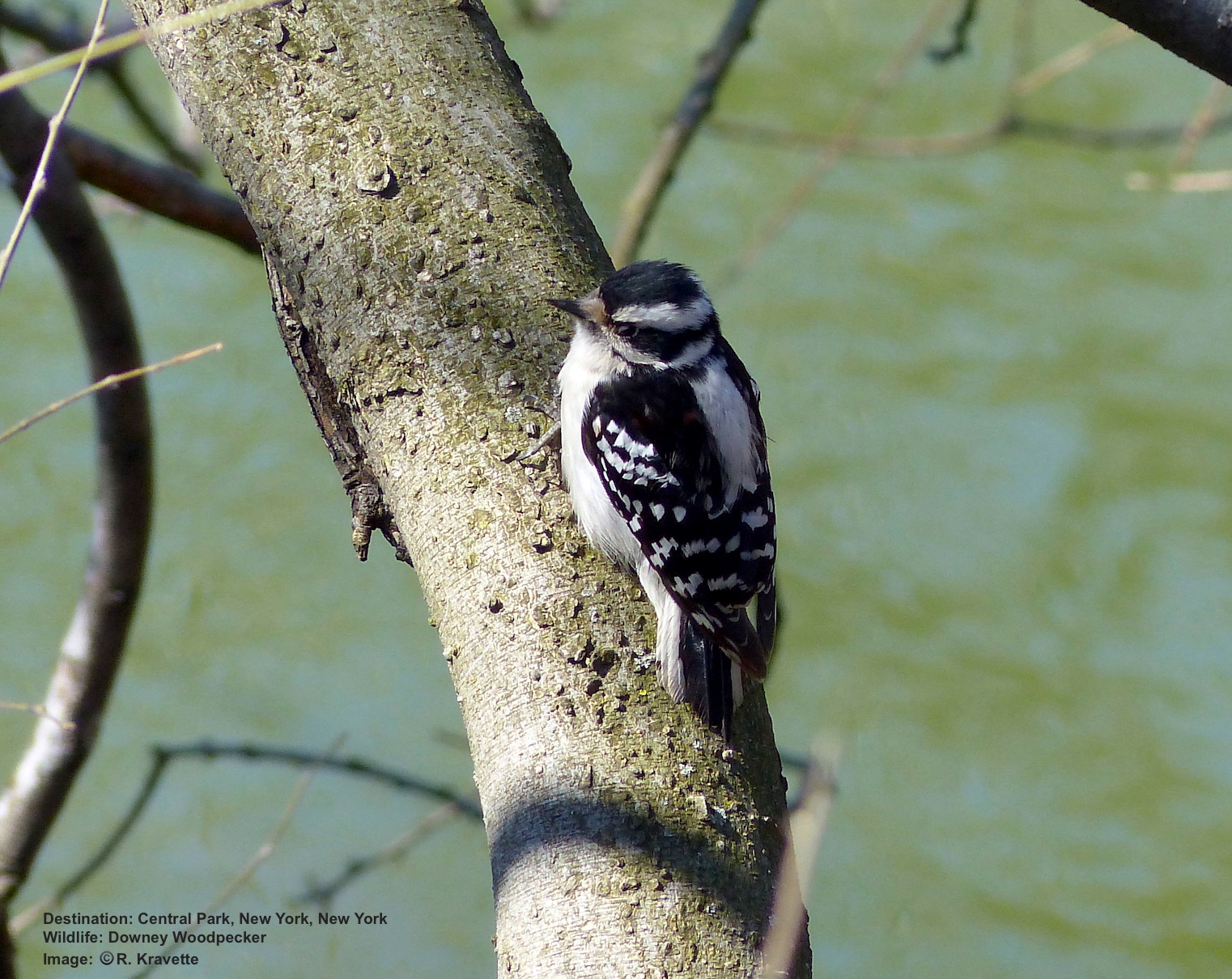
Birds: Along with the warblers, Central Park is also home or resting place for over 200 avian species including numerous types of woodpecker, four owl species, and numerous songbirds.




For an amateur (like me), the water birds are easily to find, graceful, and beautiful. Two of my favorite places to spot white egrets, sometimes a great blue heron, and colorful duck species are from a comfortable sitting spot on the rocks at the edge of the Turtle Pond (lots of red-eared slider turtles here) or during a walk around the Jackie Kennedy Onassis Reservoir. But it is the raptors - or perhaps a single raptor that is most synonymous with Central Park.
Feathered Controversy. Red-tailed Hawks in Central Park
Red-tailed hawks are year-round Central Park residents. Image: Thanks to Dennis Newsham
The most famous, beloved, and sometimes controversial single bird in Central Park, New York, and maybe in the entire world must be Pale Male, the red tailed hawk.
A couple of springs ago, I watched him (some say this hawk is really one of Pale Male’s adult offspring) coax his three youngsters from a pine tree with offerings of dead rodents. Neither he nor the hawklings were the least bit nervous of the crown that circled no more than 20 feet from where they eventually landed.
We watched for hours, taking pictures, quietly debating Pale Male’s parenting techniques, and betting on which youngster would grab the gift first. These are truly city hawks. It was wonderful.
Pale Male is gone now, but his progeny live on in Central Park.

Logistics: Getting to Central Park
Coming to Manhattan for the weekend? Leave your car at home. This is a walking city.
Take a bus into Port Authority or the train- both Amtrak and New Jersey Transit into Penn Station. Or take Metro-North to Grand Central Station.
Once in Manhattan, the second-best transportation, after your own feet, is the subway. Choose the number of rides you want with a per-trip multi-ride deal (since I tend to misplace them, I usually stick with no more than a $20 renewable card). Or get a weekly unlimited for about $35.00. At Penn Station, connect to the uptown C subway (blue line) and get off at West 86th Street. Cross the street, and you are in the park. Or, at Grand Central, transfer inside to an uptown 4, 5, or 6 (green line) train, get off at 72nd, 77th, or 86th Street. Walk west three blocks, and again you are in the park.
Central Park is the green heart of Manhattan and an oasis for migrating birds stretching from 56th to 100th Street. IMAGE: ©VAMPY1

Download an NYC subway map on your phone. The train lines are color-coded and easy to follow. Remember, “Avenues” run north and south, and “Streets” run east and west, with the numbers going higher as they go uptown. The dividing line for East / West streets is Central Park or 5th Avenue below 56th Street, where the park begins.
Never be hesitant to ask anyone on the street for directions. New Yorkers love their city; we are delighted to help you find your way anywhere in it. But be ready! They will probably suggest six more of their own favorite “don’t-miss” secret favorite places/routes/restaurants - anything you want to know.
Hint: The Park runs from 56th to 110th Street. Before and after birding, relax uptown away from the hustle and crowds of midtown. Plenty of cafes, neighborhood restaurants, and great hotels are right here. Need a good restaurant or place to stay? Contact us. Put. "Relax Uptown" in the header
Raccoon (year round resident) watching the humans watching the birds in Central Park. Image: from our good friend Annabeth, a warbler migration visitor from the UK
SPECIAL THANKS
for the use of their wonderful images to Team Member Robert Wallace Photo, Nature Photographer, follow him on Instagram. Good friend, Dennis Newsham, Tourist Pics NYC and Plants and Wildlife Photography Elyn & Michael Stubblefield, Stubblefield Photography; and to my friend, Annabeth Horsley
Originally published spring 2017
Did you enjoy this article?
Tell us. Like it. Share it. Let us know!