Uganda, Trekking Mountain Gorillas,Chimps and Others in the “Pearl of Africa!”
Uganda,
”Pearl of Africa” Mountain Gorillas, Chimps, and Wildlife
July 18 - July 30, 2026
Exploring the Pearl of Africa,
Mountain Gorillas, Wildlife, and Birds!
12 Days - 11 Nights
Best time: August
Join us as we meet the
Mountain Gorillas of Bwindi Impenetrable Forest!
Plus Chimpanzees, the “Queen’s” famous tree-climbing lions,
and Conservationists helping wildlife and communities thrive.
10% of your ticket cost is a tax-deductible donation in your name to
Conservation Through Public Health
Professional naturalist guide
Comfortable vehicle, all lodging, and meals included.
The Experience
★ Trek Mountain Gorillas in Bwindi Impenetrable Forest and Chimpanzees in Kibale National Park
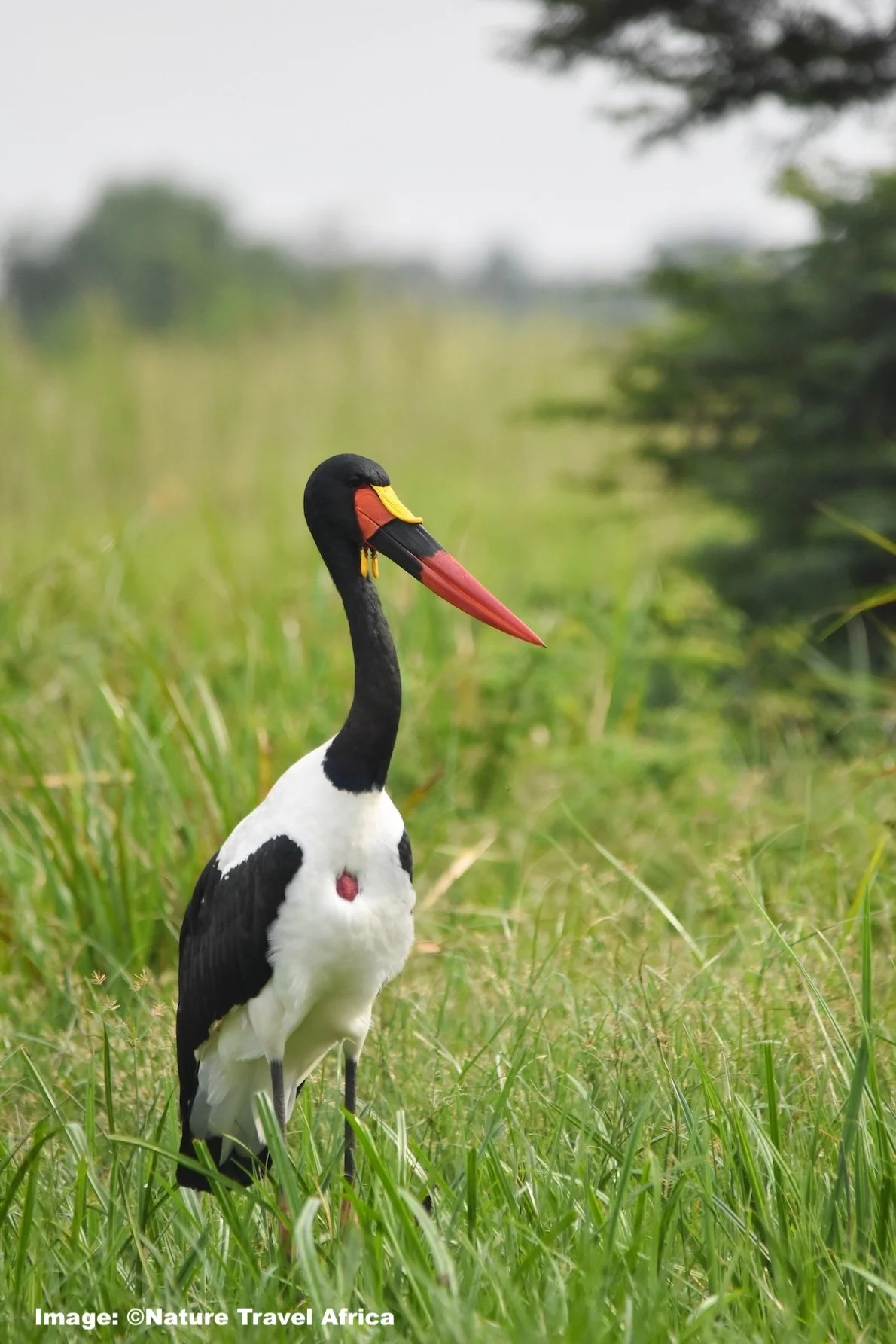
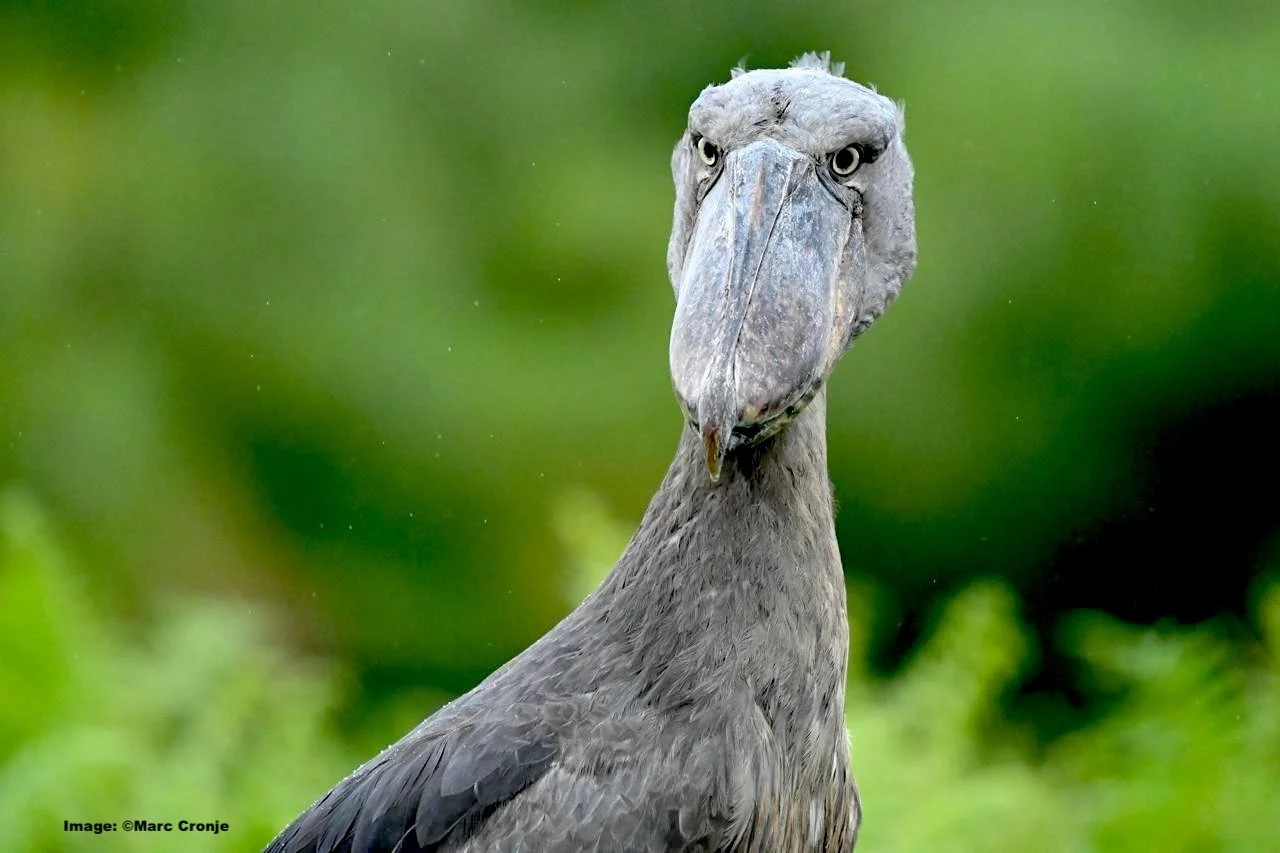
★ Discover the weird, wonderful, and rare African Shoebill stork
★ Cruise with hippos and watch for buffalo, leopard, zebra, exotic birds, and more.
★ Let Uganda reveal why Winston Churchill called it, “The Pearl of Africa.” And
★ Make a difference to conservation organizations at home and in Uganda,
Plus: Meet with conservation organizations helping wildlife and communities.
The Highlights
Uganda is full of surprises, like their famous tree-climbing lions in Queen Elizabeth Park! Image: Thanks to ©Nature Travel Namibia
Introducing
Uganda, The Pearl of Africa!
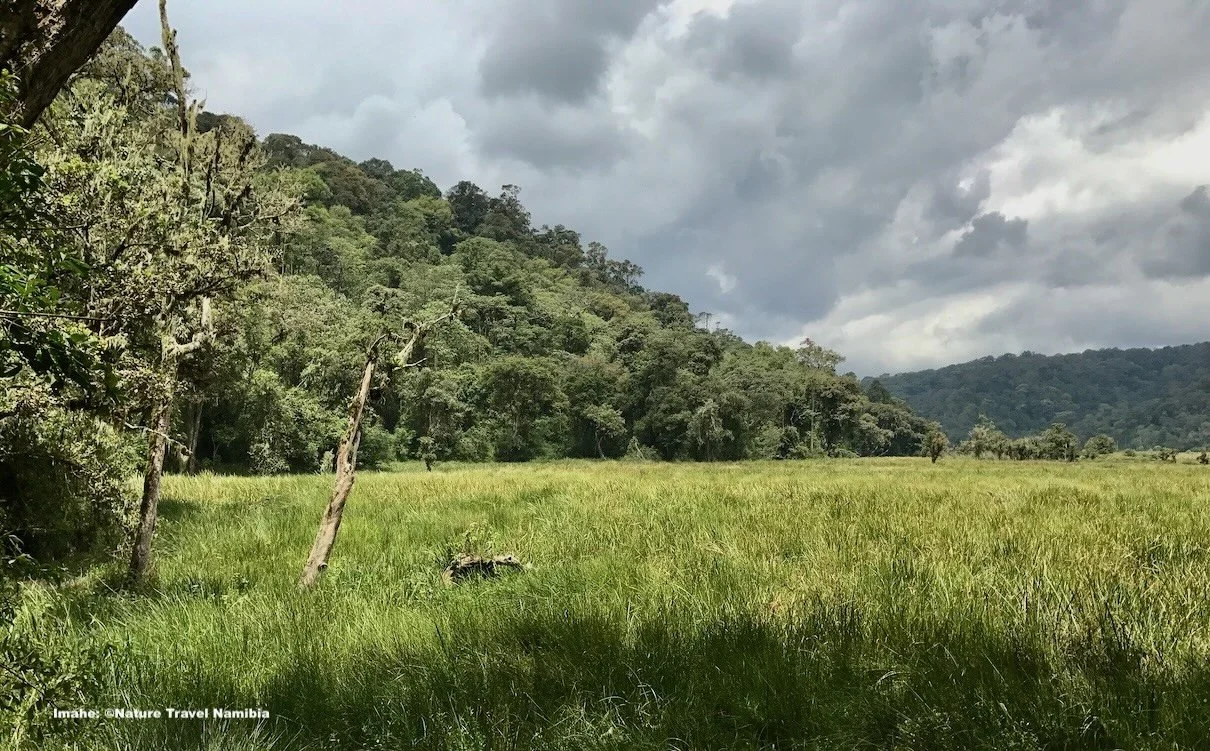
Bwindi Impenetrable Forest, Uganda. Image ©Nature Travel Namibia
Winston Churchill called Uganda, The Pearl of Africa, for good reason. Beautiful, lush, and friendly, and although small in size (less than the size of the UK), Uganda is also a place of astounding biodiversity.
Over 20% of Uganda is protected and supports over 345 mammal and 1016 bird species. Its lush rainforests are home to the world’s highest density of primates (20 different species in all), including the famous Mountain Gorillas of Bwindi Impenetrable Forest, one of only three populations left in the world.
East Africa and West Africa merge in Kibale Forest, one of the few regions that has both tropical rainforest and evergreen montain forests.
Toward the south, Kibale, famous for its chimpanzee population (and 13 other primate species), is the site of important long-term studies, including Gladys Kelema-Zikusuka's, Uganda’s first gorilla and wildlife veterinarian, and founder and CEO of the award-winning Conservation Through Public Health.
Gladys is an amazing woman making a huge difference for the people and primates of Uganda. * We will have the opportunity to meet with her and hear about her work *
But primates are only part of Uganda’s wildlife story. One of the only two known populations of tree-climbing lions thrives here, along with African elephants, leopard, hyena, mongoose, buffalo, hippos, giraffes, zebra, African civits, 29 different antelope species, including the African Kob (a favorite of the tree-climbing lions), and half of the continent’s bird species, including the weird-but-wonderful, prehistoric-looking Shoebill!
The opening lines of the country’s national anthem are, “Oh Uganda, Land of Beauty”, and you will see why. It truly is an incredibly scenic place, and no other area in Africa can match its amazing diversity of habitats. And then there are the friendly people from over 50 different tribal cultures!
Join me to experience the magic of Uganda; it is unforgettable.
Read More about Uganda:
Trekking Mountain Gorillas In Bwindi Impenetrable National Park, Uganda
Up Close and Personal, with Mountain Gorillas and Chimpanzees




Detailed Itinerary
Your Itinerary for “The Pearl of Africa” Mountain Gorilla, Chimpanzee and Wildlife Adventure
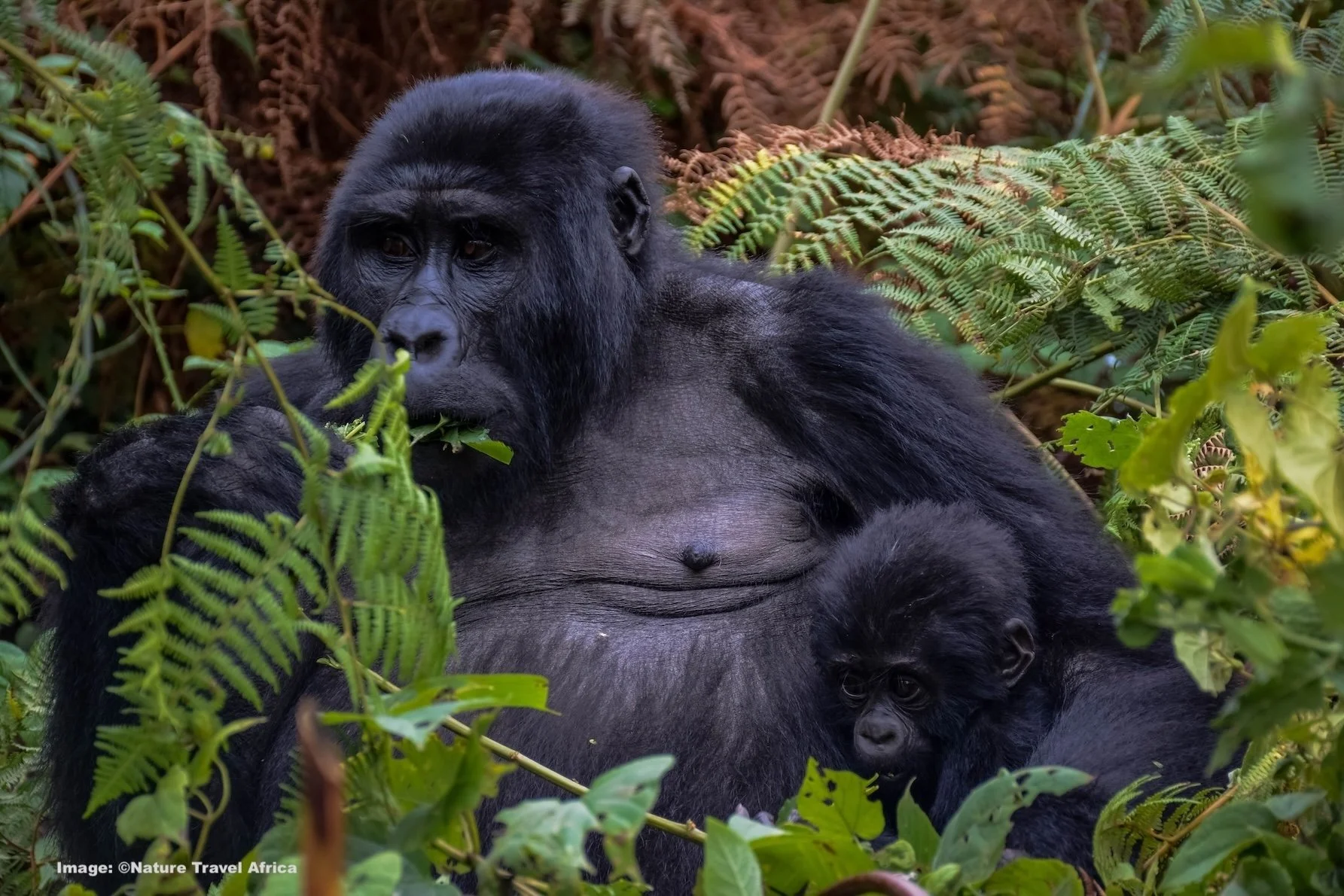
A baby gorilla snuggles on Mom’s back while she keeps an eye on the visitors. Bwindi Impenetrable Forest. Image: ©Nature Travel Africa.
African Shoebill, Mabamba Swamp Image:©Marc Cronje
Arrival Day! (July 18, 2026)
Arrival in Entebbe – Welcome to Uganda!
Welcome to Uganda! Our fantastic wildlife and conservation safari will start as soon as you touch down at the Entebbe International Airport. (TBC) You will be met by a transfer representative, who will help load the bags into our comfortable, air-conditioned vehicle before we set off to our hotel, where you will spend your first night in Uganda.
Once there, relax and spend the rest of the day acclimating to our new surroundings. Relax. Rest. Enjoy the pool. Tomorrow we will explore Entebbe before heading out to Uganda’s fascinating wild side.
Entebbe is in central Uganda, about 44 km (27 mi) southwest of the capital, Kampala, and is stunningly located on the shores of Lake Victoria (Africa’s largest lake) on the magical Entebbe peninsula. The fresh air, relaxed pace of life, and tropical sun will make you feel instantly at home in the “Pearl of Africa”. The small city used to be the seat of government (the word Entebbe in the local Luganda language actually means "seat") before it transferred to Kampala. In fact, the president of Uganda still has his official office and residence in Entebbe.
Meals: On your own
Accommodation: The Admas Grand Hotel
Day 1: (July 19, 2026)
Entebbe Relax and Explore
Today we will enjoy breakfast and plan our day. We have the opportunity to experience one or more of the nearby attractions. These include the extensive National Botanical Gardens, the National Zoo, and the Uganda Reptiles Village. Attention Tarzan Fans!!! The National Botanical Gardens served as the setting for the 1940 Tarzan films starring Johnny Weissmuller. It is also a great place to start our trip lists, with primates (Angola Colobus, Vervet, and Red-tailed Monkey) and some cool birds (Black-and-white-casqued Hornbill, Red-headed Lovebird, Double-toothed Barbet, Grey Parrot, White-throated Bee-eater, Great Blue Turaco, Palm-nut Vulture, Orange Weaver, and Black-headed Gonolek)
This evening, we will get together at the restaurant for our welcome dinner. Tomorrow the tour starts in earnest!
Meals: B, L, and D
Accommodation: The Admas Grand Hotel
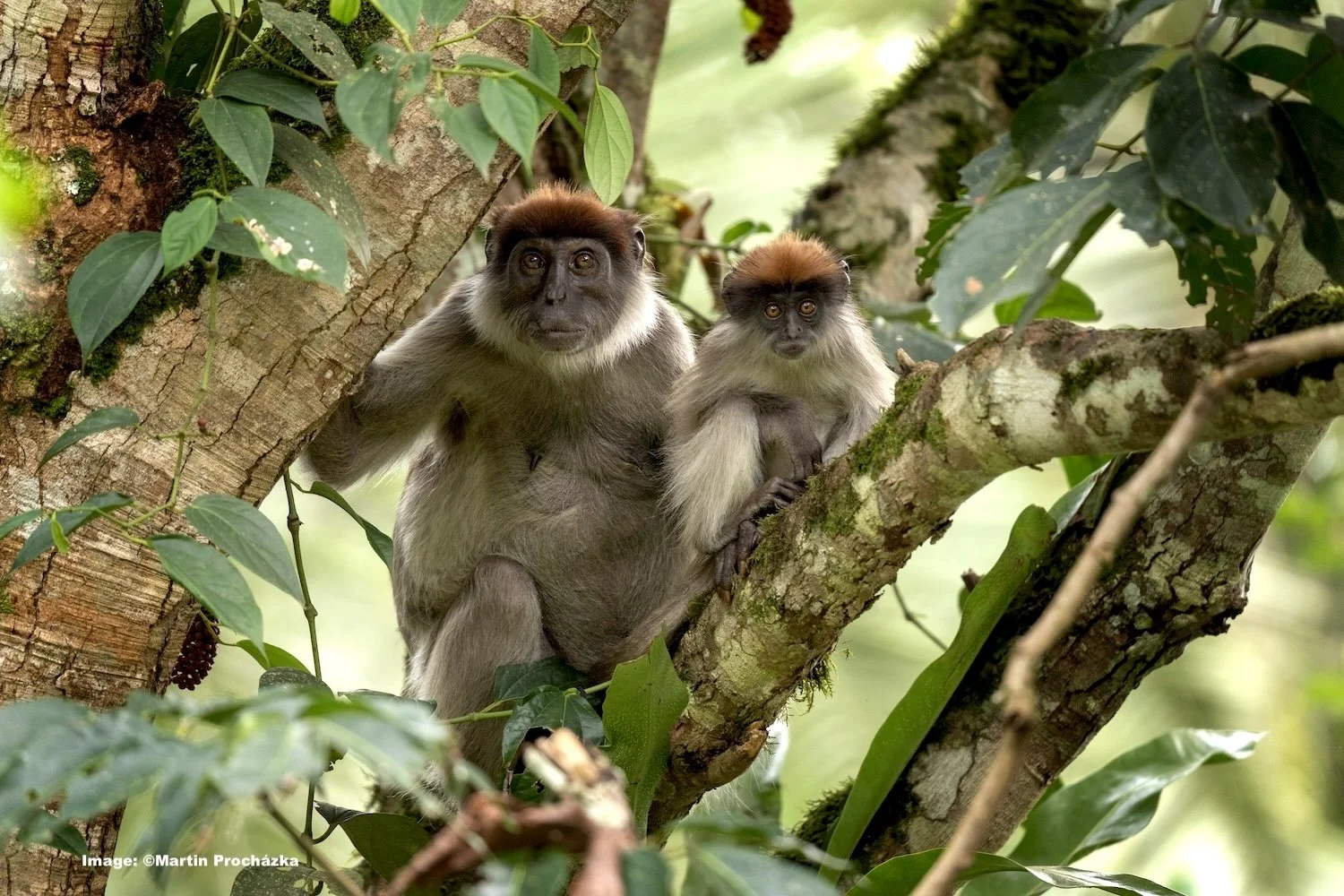
Red-tailed Guenon Monkeys huddle and watch. Image: ©Jocrebbin One of the many species we hope to see in Kibale.
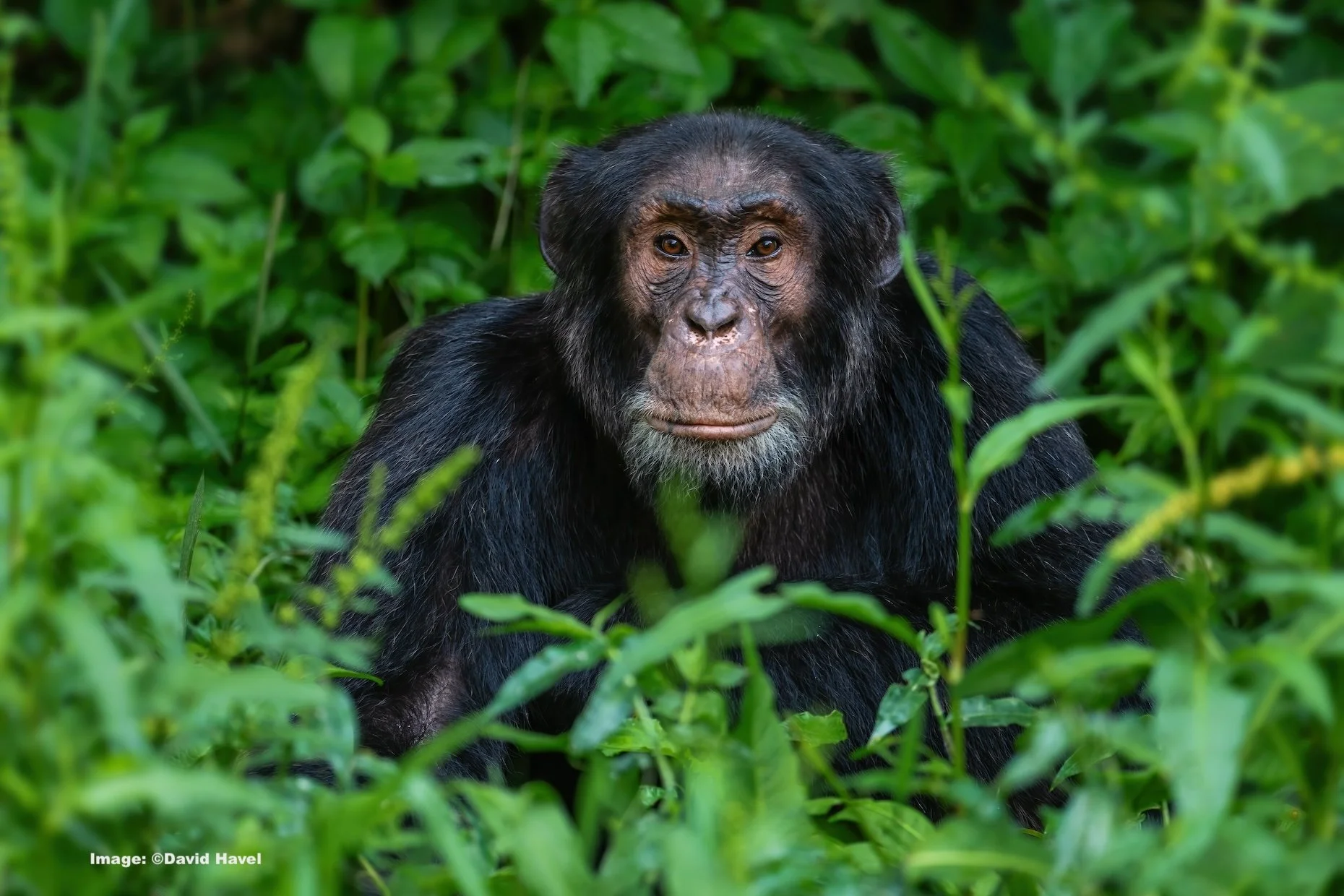
Endangered Chimpanzee caught in a thoughtful moment Image: ©Nature Travel Africa
Day 2: (July 20, 2026)
Entebbe to Kibale (Mabamba Swamp for Shoebill in the morning)
We will start our day with an early breakfast in the hotel. We will then load our bags into our vehicle, check out, and set off!
Our first stop is the legendary Mabamba Swamp, about an hour to the north. It is a large (16,500 hectares/64 sq mi) wetland on the shores of Lake Victoria in the west of Kampala, and is a Ramsar Wetland of International Importance, as well as one of Uganda’s 33 Important Bird Areas.
The magical species of this location is the endangered Shoebill, Uganda’s most famous and iconic avian resident. This prehistoric-looking bird is very high on most world birders’ and wildlife lovers’ wish lists, and for good reason. It is just so different, with huge, yellow, human-like eyes and that massive, clog-like bill. On a recent trip, we were treated to a flyover by a young bird, which then landed and called for an adult to bring in food while it preened.
We will stop for lunch along the way on our drive to our next destination.
Uganda is situated in Africa’s Great Lakes region, and the southern portion of the country includes a large portion of Lake Victoria. Uganda also lies within the Nile basin, averages about 1,100 metres (3,609 ft) above sea level, and has a moderate equatorial climate. Uganda has 60 protected areas, including 10 national parks, that harbour populations of numerous critically endangered and locally restricted wildlife and bird species!
After lunch, we will transfer to Kibale National Park. The 776 km² (300 sq mi) park is one of the last remaining expanses to contain both lowland and montane forests, and is famous for its primates. The park, formally established in 1993, forms a continuous forest with Queen Elizabeth National Park to the southwest. This joining of the parks creates a 180-kilometre (110-mile) wildlife corridor, in which African Elephants move freely.
The varied altitude (1,100 metres (3,600 ft) to 1,600 metres (5,200 ft) above sea level) of the park results in different varieties of habitat, ranging from moist evergreen forest (wet tropical forest) along the Fort Portal plateau, then through the dry tropical forest (moist semi deciduous), and then to the woodland & savanna along the rift valley floor. Over 350 tree species have been recorded in Kibale.
Kibale has one of the highest primate diversities in Africa, including threatened and endangered species, and is a magnet for naturalists and primatologists from all over the world. Species include the endangered Chimpanzee, the Ugandan Grey-cheeked Mangabey, the endangered Ashy Red Colobus, the Olive Baboon, the Red-tailed Monkey, the Guereza, the Blue Monkey, and the vulnerable L'Hoest's Monkey.
We will reach our camp in the late afternoon and settle in. We will get together in the restaurant area for relaxation, dinner, and our overnight stay. Tomorrow, another exciting adventure awaits!
Meals: Breakfast, Lunch, Dinner
Accommodation: Kibale Guest Cottages
Day 3: (July 21, 2026)
Kibale National Park: Wildlife, Birds, and Introduction to the Local Culture
Today is going to be one of the highlights of the tour!
We will gather at the Kanyanchu Tourism Centre in Kibale for Chimpanzee trekking. The encounter begins with a briefing (a Conservation Primate talk with the Ugandan Wildlife Authority) from the excellent park rangers who will be our guides for the activity. After the briefing, we head to the forest in search of man’s closest relative.
The activity lasts about 3 hours, and over the years, it has had a 95% success rate of seeing at least some of the 1,450 individuals in Kibale. The chimps have been fully habituated and thus offer you an opportunity to draw quite close to them and take pictures. Viewing them as they munch fruit, swing in trees, socialize, patrol, mate, and make hooting calls is an unforgettable experience you will treasure forever. Once we find the monkeys, we will have a full hour to enjoy and photograph these precious creatures.
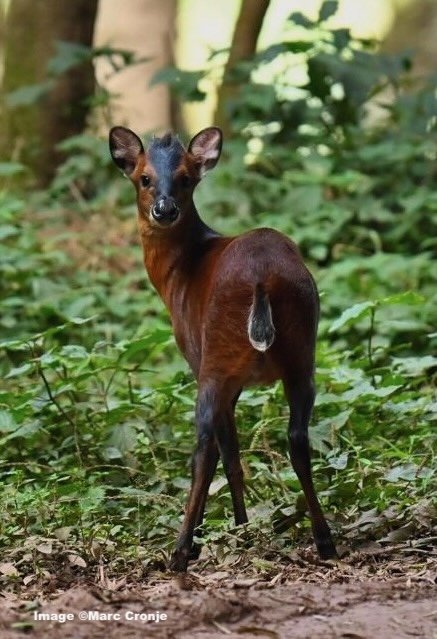
There are several other mammals present in Kibale’s lush flora, though they are hardly seen. If we are lucky, we might see Bushbuck, Blue Duiker, Common Warthog, Sitatunga, Forest Hog, or Bushpig. And if we are extremely lucky, we could encounter African Buffalo, Leopard, some of the forest-adapted African Elephant, different mongooses, two species of otter, and even a lion. A sharp observer will also see many species of amphibians and reptiles, as well as a colourful variety of butterflies.
Kibale is also home to 325 bird species, including 6 endemic to the Albertine Rift Valley. These are Dusky Crimsonwing, Black-capped and Black-collared Apalis, Blue-headed and Purple-breasted Sunbird, and Red-faced Woodland Warbler. If we happen on them, we will point them out.
In the afternoon, after enjoying a packed lunch, we will have time to enjoy this beautiful forest reserve, and later enjoy a cultural community walk with one of our local guides.
The walk offers a touch of the community, including the home of the traditional healer. The range of arts and crafts at the centre, put together by local women, offers you an impressive glimpse of local expertise.
After a relaxing dinner at our hotel, we will enjoy a Conservation talk.
Meals: Breakfast, Lunch, Dinner
Accommodation: Kibale Guest Cottages
Rare and shy, Bwindi Impenetrable Forest is one of the few places to spot L’Hoest’s Monkeys. Will we be lucky? Image: ©Martin Mecnarowski
Day 4 (July 22 2026)
Kibale to Queen Elizabeth National Park
This morning, after breakfast, we make our way to the Queen Elizabeth National Park. We may make short stops to bird or watch wildlife and stretch our legs. On previous trips, we have seen Little Sparrowhawk, Bronzy Sunbird, and African Golden and Black-headed Weaver on this stretch of road.
We will arrive at our lodge in time for lunch. Surrounded by the park and bordering the stunning Kazinga channel, the authentic lodge has a truly unique setting. Animals literally roam in and out of the camp. It really has a great outdoor safari atmosphere, and a close-to-nature experience with excellent food and friendly service.
We will get together for a short afternoon game drive to explore the impressive landscapes of “Queen”, as the locals and those in the know call the park.
Queen is Uganda’s most visited park, and with good reason! It has the most diverse habitats of any park in the country, and includes areas of sprawling grassland savannah, moist forests, fertile wetlands, and beautiful crater lakes cut into the green, rolling hills. This incredible diversity has led to a fauna and flora count of 95 mammal species, over 600 bird species, and much, much more. Get your cameras ready!
At the end of the game drive, we will enjoy a sundowner boat cruise on the impressively scenic Kazinga channel. From the boat we will almost certainly see many African Buffalo, African Elephant, and Hippopotamus.
It really is a fantastic experience sitting on the sturdy cruiser and watching the animals and birds as we float serenely by. Africa is just the best!
After the fantastic boat cruise, we will do a short game drive along the channel track as we head back to the lodge.
Mammals we could tick on the drive include Leopard, Spotted Hyaena, Kob, Defassa (subspecies of Waterbuck), Bushbuck, the huge Forest Hog, and Common Warthog. In fact, on a recent trip, we even managed to see two young male lions of the famous “tree-climbing” variety on the drive to the jetty.
Afterward, the sounds of hippos and hyenas will complement our star-lit dinner…as we relax and chat.
Remember to listen for night creatures in and around our accommodation; we have seen Verreaux’ Eagle-owl, Square-tailed and Black-shouldered Nightjar, and African Wood Owl here before. After our exciting day, we will all get a good night’s sleep!
Meals: Breakfast, Lunch, Dinner
Accommodation: Mweya Safari Lodge (Standard rooms)
Hippos, like this mom and baby in Queen Elizabeth park, spend most of their time in the water, but come out to graze on tender grasses. Image: ©Rixie
Day 5: July 23, 2026
Full Day Queen Elizabeth National Park (Evening Conservation talk)
We start our day with an early breakfast at the camp and spend the full day in this incredible park.
After dinner, we will have a conservation talk on vet connections, poaching, and communities living in harmony with wildlife.
Meals: Breakfast, Lunch, Dinner
Accommodation: Mweya Safari Lodge (Standard rooms)
The famous tree-climbing lions of Queen Elizabeth Park!
Day 6: July 24, 2026
Queen Elizabeth National Park to Bwindi Impenetrable National Park
We begin our day with an early breakfast at the camp, then load our bags and check out.
Before leaving the park, we will undertake a game drive in the Ishasha sector in the Rukungiri District in search of the famous tree-climbing lions, whose males sport black manes. The lions tend to lie on fig tree branches, scanning the plains for prey. This is also the only area in the park where you can see Tsessebe (Topi subspecies) and Sitatunga.
We will then depart the “Queen” and head even further south towards the world-famous Bwindi Impenetrable National Park. We will enjoy our lunch somewhere along the route and reach our destination in the mid-afternoon.
Composed of 321 km2 (124 sq mi) of both montane and lowland rainforest, and accessible only on foot due to the improbable steepness, Bwindi was gazetted as a National Park in 1991 and declared a UNESCO Natural World Heritage Site in 1994. It is an amazing piece of land; it survived the last Ice Age (about 15,000 years ago) when most other forests in Africa disappeared. In the local language (Lukiga), Bwindi actually means ‘impenetrable.’
Of course, most famously, Bwindi is home to more than half the world’s population of Mountain Gorillas (a subspecies of the Eastern Gorilla), Gorilla beringei beringei, about 400 individuals at last count. It is undoubtedly Uganda’s biggest tourism drawcard, and rightly so.
We will check into our accommodation (our home for three nights) and set off for our first bit of forest exploring in Bwindi. After our afternoon session, we will return to our lodge.
Together, we will enjoy a scrumptious dinner, update our trip lists, and relax. Then we are off to bed for a good night’s rest.
Meals: Breakfast, Lunch, Dinner
Accommodation: Buhoma Gorilla Camp
An adult Mountain Gorilla relaxes for his portrait in Bwindi National Park. Mountain Gorillas make a new nest every evening, in the morning we will trek with our guides to their chosen spot. Image: ©Marc Cronje
Day 7: July, 25 2026
Bwindi Impenetrable National Park
Apart from the Eastern Gorillas (that we will see tomorrow), Bwindi also boasts 120 other mammal species (including various other primate species, in addition to the African Elephant and many antelopes), more than 200 butterfly species, 27 species of frogs, more than 1,000 flowering plant species, and 324 species of trees.
We will spend most of today in the fantastic forests of Bwindi, looking for mammals in this amazing place. Bwindi is also undoubtedly one of the most famous birding spots in all of East Africa, if not the entire continent. We are sure to see some surprising and memorable birds.
We will either have a packed lunch somewhere in the forest today, or return to the lodge for lunch and a siesta before heading into the forest again in the afternoon. We will make this decision based on how everyone is feeling and which species we are looking for.
In the early evening, we will get together to relax and have dinner.
We will already feel the excitement to start building for tomorrow’s activity… A trek through the thick and dark rainforests of Bwindi in search of the great apes definitely ranks among one of the world’s premier wildlife encounters.
Meals: Breakfast, Lunch, Dinner
Accommodation: Buhoma Gorilla Camp
Day 8: July 26, 2026
Bwindi Impenetrable National Park and Gorilla Trekking
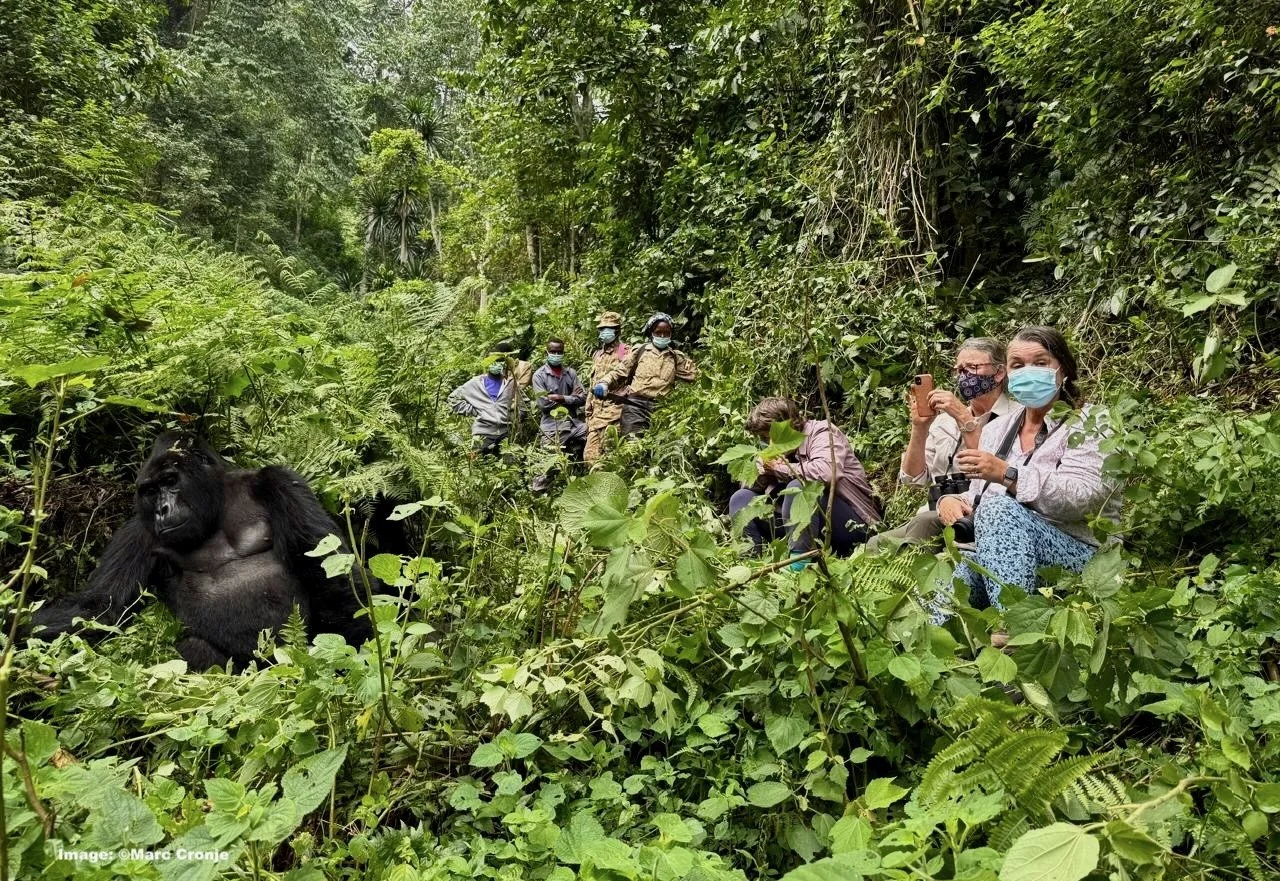
Bwindi is one of three places in the world where Mountain Gorillas live. Image: ©Marc Cronje
Today is going to be an undoubted highlight. Gorilla trekking is a bucket-list experience that naturalists from all over the world dream of!
We will head to the park offices for a briefing by the expert local guides. At 8 am, we will embark on the trek along the designated trails within the impenetrable forest in search of these great mountain creatures. We are specifically looking for the Mukiza family group, but our expert guides are brilliant at knowing where the different family groups are, so we might change our plans according to where we have the best chance of finding these amazing creatures.
The park is home to about 400 individual gorillas, known as the Bwindi population, which makes up almost half of all Mountain Gorillas in the world.
The gorilla trek might take us a good few hours, depending on their movements. The trek for these great apes is tiresome as the forest can be quite wet, and the going is fairly steep. But trust us, the bit of exercise will be well rewarded by meeting, watching, spending time with, and photographing these incredible big apes as you look straight into their inviting, expressive brown eyes. You will soon realise why, in both evolutionary and genetic terms, ape species (like the gorilla) are actually much closer to humans than monkeys are. Today’s gorilla trek is a thrill of a lifetime that only Bwindi can offer you. Enjoy!
To illustrate how unpredictable the gorilla trekking is, on a very recent visit, we were extremely lucky, and after just 45 minutes of walking, we found a family of 17 individuals ranging from a baby of 7 months, infants of about 2 years of age, adult females, and a big silverback male. So you never know…
Although the gorillas will be the undoubted highlight, other mammals that we may be fortunate enough to find on our trek include Black-fronted and Yellow-backed Duiker, Guereza, L’Hoest’s, Blue and Red-tailed Monkey, Chimpanzee, and several species of squirrels, including Fire-footed Rope, Carruthers’ Mountain, Ruwenzori Sun, and Red-legged Sun Squirrel.
After this unforgettable gorilla trekking experience, we will return to the starting point, where the slogan “we came, we trekked, we saw, and we conquered” will be cheered when we receive our gorilla trekking certificates at our gorilla graduation!
VISIT RIDE FOR A WOMAN;
More than 300 women from 11 villages use or work at the Ride 4 a Woman community centre, where they can be trained in new skills, make a living, be empowered and independent, and be part of the R4W family.
The organization leads many projects to empower women in different ways: micro-financing their entrepreneurial business ideas, sponsoring the education of many children, providing safe water for the entire community, and installing solar panels in homes without electricity, among others. While here, you will tour the amazing women’s various projects.
We will enjoy a packed picnic lunch, after which we will explore more of this part of the Bwindi forest, then return to our lodge for dinner
Meals: Breakfast, Lunch, Dinner
Accommodations: Buhoma Gorilla Camp
A family of Rothschild’s Giraffe, one of the wildlife highlights at Mburo Lake, Uganda Image: ©Nature Travel Africa
Day 9 & 10: July 27 and 28, 2026
Bwindi Impenetrable National Park to Lake Mburo National Park
Long-horned Ankole Cattle of the Bahima people. Image Courtesy of ©Nature Travel Africa
We will start our day with an early breakfast and then check out of our accommodation, saying goodbye to the wonderful staff.
This morning, we will head northeast towards our final park, the Lake Mburo National Park. The drive to the northeast will take about 5 to 6 hours.
We will enter the Lake Mburo National Park through the Sanga Gate. Just outside the park, we will come across some of the world-famous long-horned Ankole cattle of the Bahima people that live in the area – always a highlight and worthy of a few photos.
The 260 km2 (100 sq mi) park is a superb wetland and Acacia savanna sanctuary, a famous spot for serious birders, and also a Ramsar Wetland of International Importance. Together with 13 other lakes in the area, Lake Mburo forms part of a 50km-long wetland system linked by a swamp. Five of these lakes lie within the park’s borders.
We will reach our stunning lodge and check in, followed by a superb late lunch. We will spend 2 nights here.
We will end our day with an afternoon/early evening game drive in the park. Lake Mburo is home to 350 bird species as well as Plains Zebra, Impala (the only park in Uganda with this elegant antelope), Common Eland, African Buffalo, Oribi, Defassa subspecies of Waterbuck, Leopard, Hippopotamus, Spotted Hyaena, Topi subspecies of Tsessebe, Southern Reedbuck, and Banded, Slender, and Dwarf Mongoose.
We will then return to our stunningly located lodge in time to freshen up. Then we enjoy an excellent dinner as we watch the African night creep closer over the waters of Lake Mburo…
Meals: Breakfast, Lunch, Dinner
Accommodation: Kigarama Wilderness Lodge
Day 11: Lake Mburo to Entebbe – 29 July 2026
After our early morning breakfast, we will undertake a short private boat cruise on the lake, our last “safari activity” of the tour.
This is one of the most beautiful, tranquil boat cruises you can imagine. Apart from the stunning scenery, we may encounter some of the interesting wildlife and birds that call the Lake “home”, including the African Finfoot, African Fish Eagle, Squacco Heron, Water Thick-knee, Pied and Giant Kingfisher, and loads of Hippopotamus.
After the boat cruise, we will begin our ride to Entebbe, about 4 to 5 hours away. However, there is one more surprise in store!
We will stop at the Ugandan Equator crossing at Kayabwe, where you can stand with one leg in the Northern Hemisphere while the other remains in the Southern Hemisphere! It makes for great photographs and memories. It is also an impressive place to purchase memorabilia to take home as a memento of this incredible birding safari in Uganda.
We will reach Entebbe in time to settle into our guesthouse and celebrate our visit to the “Pearl of Africa” at our farewell dinner.
Meals: Breakfast, Lunch, Farewell Dinner
Accommodation: 2 Friends Guest House, Entebbe
Day 12: July 30, 2026
Entebbe International Airport and Departure
This morning, after breakfast, we will transfer to the airport, where our adventure comes to an end!
Uganda’s grasslands are perfect for African elephants. Image: ©Nature Travel Africa
Incredible view of African Shoebill flying directly over head in Uganda! Image: ©Nature Travel Africa
Accommodations
Our Accommodations
1 Admas Grand Hotel, Entebbe (2 nights)
Minutes from the airport, we will spend our first two nights here, resting from our journey and getting to know some of Entebbe’s most interesting sites.
We will enjoy our Welcome Dinner here, bring a bathing suit for the lovely pool.
Learn More, Adamas Grand Hotel
2. Kibale Guest Cottages (2 Nights)
Relaxing and peaceful with only 12 cabins, enjoy a walk around the lovely gardens or a cup of Ugandan “Joe”) in their coffee shop. Left with a little energy after an exciting day? Enjoy a game of pool and a nightcap.
Learn More, Kibale Guest Cottages
3. Mweye Safari Lodge (2 Nights, Queen Elizabeth National Park_
Located on a peninsula within the heart of the Queen Elizabeth National Park, Mweya Safari Lodge is surrounded by the magical Rwenzori Mountains aptly described as the 'Mountains of the Moon'. Enjoy a dip in the infinity pool overlooking the Kazinga Channel, and if you absolutely must reconnect, a visit to the business center should do the trick. They have a nice gift shop, too.
Learn More, Mweye Safari Lodge
4. Buhoma Gorilla Camp (3 Nights, Bwindi National Forest)
Spacious, comfortable individual cottages with a rustic decor that befits their location at the entrance to Bwindi Impenetrable Forest! The staff is famous for friendliness, making you feel right at home. This is the perfect place to stay when visiting Bwindi.
Learn More, Buhoma Gorilla Camp
5. Kigarama Wilderness Lodge (2 Nights, Lake Mburo)
Kigaarama Wilderness Lodge is a small community lodge focused on sustainability … and crafted to be your home away from home. Enjoy the pool, food from the organic garden, gift shop, unforgettable views, and museum! Or get a massage!
Learn more, Kigarama Wilderness Lodge
6 Two Friends Guest House, Entebbe (1 night before departing)
Only ten minutes from the airport, on the shore of Lake Victoria. Enjoy the pool
What to Expect & Packing List
What to Expect on Our “The Pearl of Africa” Mountain Gorilla, Chimpanzee and Wildlife Adventure
Mountain Gorillas were almost extinct just a few years ago, thei economic value of responsible tourism to communities saved them Image: ©Nature Travel Africa
Included
• Full-time English professional safari driver guide
• 4x4 air-conditioned vehicle for the entire duration of the tour
• Full-time Naturalist Guide (Marc Cronje)
• Breakfast in Entebbe (Day 12)
• Full board accommodation from Day 1 to Day 11
• Gorilla Trekking Permit (USD $800 per permit)
• Chimp Trekking Permit (USD $250 per permit)
• Boat cruise fees
• Airport transfers
• Bottled water
Excluded
International & domestic flight fees
• Meals in Entebbe on Arrival Day, July 18
• Visa fees
• Laundry services
• Items of a personal nature
• Gratuities and tips
• Other beverages/ drinks
• Other extras not mentioned in the itinerary above
Your Packing List for Our Uganda Mountain Gorilla Expedition
We believe in packing light and packing smart. This is our Go-To Packing List for our Mountain Gorilla Expedition. Questions? Give us a shout!
Is this Trip Right For Me?


Theme: Mountain Gorillas, and other primates, and wildlife conservation safari
Trip Duration: 11 Nights / 12 Days
Trip Type: Wildlife watching
Max: 5 guests + Professional Naturalist Guide + Destination: Wildlife leader. A professional Ugandan tour driver will accompany us throughout our tour.
Service Level: Good
Activity level: The Mountain Gorilla trek will be strenuous, with elevation and challenging trail conditions. This hike is of unknown length depending on where the gorillas are spotted. Participants should be able to walk a couple of miles with an elevation rise, and climb 3 or more flights of stairs. There will be guides to help. Other treks (chimpanzee, etc.) and hikes will be of easy-to-moderate difficulty.
Best For: Adults able to navigate mountainous forest paths (uneven terrain, roots, stones) with elevation gain.
Age Requirements: 18+ years
Uganda has some of the most important wetlands on the planet. This African Finfoot was spotted at Lake Mboru. Image: ©Nature Travel Africa
Travel Notes
► Activity Level: Strenuous (Mountain gorilla trek) to easy (wildlife watching in an air-conditioned vehicle.)
► Weather and Temperature Changes : July is the dry season in Uganda. The daytime temperature in Bwindi Impenetrable Forest is 70 - 79F (21-26C) See here for more information From BINP Dry Seasons: June to August and December to February. “The dry seasons are considered the best times for visiting Bwindi, especially for gorilla tracking. Trails are less muddy, making hikes more manageable and enjoyable. Additionally, drier conditions improve the chances of spotting gorillas and other wildlife since heavy rainfall does not hinder visibility.”
► Health: CDC RECOMMENDED VACCINATIONS Also please review: Passport Global Health
► Visa Requirement: A VISA is required for US citizens traveling to Uganda. This is the Uganda link and This is the US link
Passport: 6-month Validity and 1 open page
❖ Additional Resource for Health and Visa Questions: Passport Health USA
Please Note: Destination: Wildlife is not connected in any way, nor does it endorse or indemnify information on the site.
► Drinking water: Purified water is available (sold) at all lodges and will be supplied (included) in the vehicle.
Water is becoming a scarce commodity in much of the world, and vast regions are experiencing desertification due to misuse and the effects of climate change. Please be aware that you may be charged for drinking water in lodges and other public places. Although the fee remains reasonable, it is a good reminder of how precious clean drinking water is to all life. Please bring a refillable personal container for daytime use.
► Single-Use Plastics: The policy at Destination: Wildlife is to Ban or Limit Single-Use Plastics on our tours, as possible. That includes beverage bottles, plastic bags, containers, single-use straws, etc. Clean drinking water will be available in the vehicle. Please bring your own refillable water container.
► Group Size: 5 guests, including your host from Destination: Wildlife, and a professional guide and a driver.
► Packing: Pack as lightly as possible in one soft-sided bag plus your carry-on. A packing list will be provided. DO NOT BRING BLUE CLOTHING OR ACCESSORIES
► Recommended Equipment: binoculars, camera, short lens, long lens, personal, reusable water bottle or canteen, insect repellent, sunscreen, and hat. A walking stick can be useful.
► Travel insurance: ** Travel insurance is mandatory ** for all international travel. Ask us about the best policy for your needs.
Travel Insurance
For all Destination: Wildlife tours, guests must have a minimum level of travel insurance coverage for medical emergencies. We highly recommend comprehensive travel protection for your tour. If you decide against Travel insurance, you must sign a waiver of release before departure. Travel insurance may cover you for cancellation due to illness, lost bags, missed flights, and other unexpected occurrences. Please see our cancellation policy
Important note: Most travel insurance does not cover preexisting conditions unless purchased within 14 days (of the initial deposit and 7 days for some carriers). A pre-existing condition can be anything from an allergy to a back problem to a heart issue. We highly recommend purchasing your travel insurance immediately after making a deposit. Additionally, if your job, business, or the condition of a family member may cause you to cancel after your deposit, ask about specific plans to help protect your investment.
Please contact us if you need assistance.
Terms and Conditions
Your deposit holds your spot. We strongly recommend Travel Insurance.
Due to the nature of our tours, no refunds are available once a tour has started or for any package, accommodation, meals, or other services included. We understand that sometimes, even the most eagerly anticipated plans may need to be canceled. We strongly recommend that every traveler purchase travel insurance. Cancellation Policy.
Cancellation: More than 120 Days
Forfeiture of 10% of trip fees, including extensions, plus any specified donations to the sponsor, and any non-refundable train/airfare. *
Cancellation 120 to 90 Days
Forfeiture of 50% of trip fees, including extensions, plus any specified donations to the sponsor, and any non-refundable train/airfare.*
Cancellation 90 or Less
Forfeiture of 100% of trip fees, including extensions, plus any specified donations to the sponsor, and any non-refundable train/airfare.*
*Where another guest fills the space, a portion of your fees may be eligible for an additional partial refund, subject to Destination: Wildlife's sole and exclusive discretion.
Making a Difference
How Your Trip Makes A Difference
How Your Trip Helps Biodiversity and People in Uganda
Mountain Gorillas were on the path to extinction in the early 1980s when, at one point, only 254 individuals could be found across their entire Virunga Mountains stronghold spanning Uganda, Rwanda, and the Democratic Republic of Congo. Today, thanks to the combined efforts of the governments and people of these three countries, the Mountain Gorilla population has grown to over 1000 individuals. Controlled, responsible tourism made the recovery of mountain gorillas possible. And it has also spread the seeds of (and the economic reason to keep) the peace between these three nations.
How Important is Mountain Gorilla tourism in Uganda? It accounts for 2.5% of the nation's annual GDP.
The people of Uganda directly benefit from the tourism dollars generated by Mountain Gorilla tourism. Mountain gorilla tourism in Bwindi Impenetrable Forest, a UNESCO Heritage site, is a community affair, directly and indirectly, employing hundreds of local people and thousands throughout Uganda. Direct community benefits include hospitals, schools, roads, and jobs.
These communities’ economic benefits ensure that the gorillas have a safe future, as many of the best former poachers are now avid protectors. In 2020, a watchdog group of accomplished poachers, some many generations in the “trade”, formed to protect and watch for any signs of trouble. Read the AP article
How Your Trip Helps the World
Destination: Wildlife will donate 10% of your (double occupancy) tour cost in your name to a wildlife conservation-missioned not-for-profit.
Reviews
Reviews for Destination: Wildlife
Read more reviews for Destination: Wildlife’s Unforgettable Journeys that Do Good!
Liz G, New York State
Southern Spain Birding and Culture, 2025
The GBT [Grassland Bird Trust] trips are a sparkling jewel that lights up our year. Each day was totally different and totally wonderful. Nacho was amazing -full of knowledge, tireless, sensitive to individuals’ needs and skills. I constantly marveled at his vocabulary. He totally understood our humor, and I felt he liked our group a lot. I feel we get very personal attention with Destination Wildlife, and the group size is terrific.
Isabella, K, Illinois
Winter Wolf Watching and Learning in Yellowstone, 2025
On a scale of 1 to 10
10, I’ve already been bragging to everyone.
What was your favorite part of the trip?
..my heart’s/soul’s desire was to visually experience a Wolf in the wild, simply being Wolf, and this trip afforded me that.
Is there anything Destination: Wildlife could have done to improve your experience?
For me, the trip, as a whole, was perfect. From the L&C in Bozeman (best beds ever!!) and all points in between. I can find no fault. I must say, the people that made up the group, less included, were the best 💖 What a fortunate stroke of serendipity as a group’s makeup can easily make or break a trip.
Cara was magnificent, I couldn't imagine a better guide!! How fortunate we were! Exceeded expectations.
Roberta R., New York
Southern Colombia Birding and Culture, 2024
Exceed - Roger was amazing… talented, professional, passionate about his work, skilled, kind, helpful in every way, and a good sense of humor.
Cathy H., Maryland
Southern Colombia Birding and Culture, 2024
It was a 10+. Communication was great. I feel taken care of on your trips.
Kathy R., New York
Birding and Safari in Namibia, 2023
We were so impressed with Destination Wildlife's meticulous organizational skills as well as the wonderful choice of lodges. Marc (the guide) more than exceeded our expectations. What was your favorite part of the trip? Seeing new birds for the first time with all of our new friends on the trip.
John C., Connecticut
Birding and Safari in Namibia, 2023
[What was your favorite moment?] I am at a loss, as the whole trip was filled with so many memorable moments. One just has to go and see, and they’ll understand. The guides were more than expected and so knowledgeable in so many other areas. Roberta, Les, and Destination Wildlife met my expectations 100%. The whole experience for me was a 10.
Kate S, New York state
Birding in Costa Rica
10, it was an amazing trip (Please rate from 1- worst to 10 – best)
Liz and Alan G, New York state:
Birding Costa Rica and Private Sail Cruise 2021
We are in awe of the care that you took to make our trip successful. The attention to detail and your ready availability when things didn’t go as planned. Your excitement as our trip progressed and the supervision to the very end to make sure everything turned out alright. Thank you for all that you do. Liz & Alan
Noreen Q, New York State
Exploring Women’s Winter Wolf Trek
The trip was fabulous and couldn't have been much better. My one suggestion is around the Zoom call. I was impressed that you did a Zoom call rather than just sending a gear list - it is an example of how much personal attention you devoted to us.