
Trekking Mountain Gorillas in Bwindi Impenetrable National Park, Uganda, (Updated)
A Mountain Gorilla in Bwindi Impenetrable National Forest in a moment of contemplation. Image: ©Marc Cronje
Our Reader's Special Report - Updated
Update from Roberta:
When we began Destination: Wildlife way back in 2016, it was a very different world. Riding elephants, kissing captive dolphins, hanging on to whalesharks, and posing with drugged and declawed tigers were the accepted “nature tourism” of the day and very popular. It was also cruel, dangerous, and detrimental to the animals and their species survival.
Our mission at the time was to educate and inspire toward a different type of wildlife tourism. Through stories and pictures, we’d show people how to enjoy wildlife and enhance their well-being while doing so.
Our readers were (and are!) invited to share their (responsible) adventures - Ray and Pat were among the first to respond. Their love and understanding of the natural world led them to experiences that helped the species they sought: The Mountain Gorillas of Bwindi Impenetrable Forest was a perfect example!
This silverback - the alpha male of the Rushegura family group - allowed nothing to escape his steady gaze. Image: ©Ray Cooper 2017
Mountain Gorillas are a Conservation Miracle - saved in large part by the economics of responsible wildlife viewing, they are the embodiment of the old saying, “If it pays - it stays.” The economic power of Mountain Gorilla tourism in three relatively small locations in Uganda, Rwanda, and the DRC has created entire industries that employ tens of thousands of paid rangers, spotters, local restaurateurs and innkeepers, food growers, uniform manufacturers, education and transportation providers, researchers, etc., etc.
Responsible Mountain Gorilla tourism has helped stabilize the region, making it safe for both tourists and locals. The direct economic benefits put children through school, built shops, roads, and hospitals, and have created a hopeful future for humans, mountain gorillas, and entire ecosystems of plants, animals, and birds. And all without compromising the gorilla's well-being.
This is Ray and Pat Cooper’s Experience with Mountain Gorillas in Uganda
Ray and Pat are a couple from South Africa who love to travel and love wildlife; these passions took them to Uganda in November of 2016, where they trekked in Bwindi Impenetrable National Park in search of the endangered mountain gorilla. We are so honored that Ray and Pat agreed to share their trip and images with all of us!
Meet the Rushegura Family
From Ray: (This past November, 2016) we had the privilege of an amazing experience with the "Rushegura Gorilla Group" of 16 mountain gorillas, including babies and young male and female infants (all) under the vigilant watch of the dominant "Silverback,” (the) leader of the group.
The Rushegura family group, at the time of Ray and Pat’s visit, the family, also called “Group R” was one of 11 habituated Mountain Gorilla groups in Bwindi. Image: ©Ray Cooper, 2016
We hiked up the mountain at "Bwindi Impenetrable Forest" for about one hour, climbing approximately 400 to 500 m (1850 ft) before meeting with the park trekkers who lead us to where they (the gorillas) were.
The family groups are led by a “silverback” or adult male. The typical group can range from three to ten or eleven females and juveniles. When young males come of age, they either try to overtake the leader or leave to find a mate and start their own family group. Image by ©Ray Cooper 2026
They Are Like Us!
They (mountain gorillas) are not immune to human diseases, and therefore anyone with even a common cold should not go near them for fear of infecting them, the same care as one would take with humans.
Rules only permit a small group of 8 visitors for each (gorilla) family, and we were allowed to stay for only one hour near them. Enough time to feel their vibes, watch them feed, play, and rest.
A Wonderful Surprise!
SURPRISE! A NEW BABY ARRIVED OVERNIGHT just IN TIME FOR RAY & PAT'S VISIT. IMAGE: THANKS TO RAY.
We had the enviable good luck of seeing in the group a female who had had a baby during the previous night which the guides had not encountered or known about before we came in contact with the group.
(There was) lots of photographs (taken) and high emotions in the group of trekkers!
The Experience of a Lifetime!
We had the experience of younger gorillas passing between us, and on one occasion, being knocked over by a large female, basically because of how these beautiful animals walk. They have immense power, and their size and strength are something to behold.
(It was) a lifetime experience making the 8-day trip through Uganda, such a memorable holiday.
Thank you, Ray and Pat, for sharing your mountain gorilla experience with us!
2026 Updates Continue below
These are NOT tame” gorillas. They are wild but habituated to human presence within reason. The process is slow and respectful and can take up to three years until the gorillas are relaxed enough around humans to be trusted - within parameters, of course. Image: ©Ray Cooper 2026
The Effect of Conservation and Responsible Tourism
In 2014, the worldwide population of Mountain Gorillas was only 400 individuals.
At the time Ray and Pat made their trip (2016), responsible tourism and the resulting protection of the gorillas brought the estimated population to 800; the largest concentration, over 400, was in the Bwindi Impenetrable Forest National Park in Uganda. Thanks to successful conservancy projects, a change in human habits & the income from responsible Mountain Gorilla tourism, this population grew and continues to expand.
As I update this story in January 2026, the estimated population of endangered gorillas has risen to 1065 according to the WWF. They are only in the Virunga Mountains, in Uganda’s Bwindi, and spread across the borders into neighboring Rwanda (also protected) and at the Virunga Volcanoes (National Park) in the Democratic Republic of Congo (DRC) where they still face war and poaching despite the heroic efforts of director Emmanuel Marode and his dedicated rangers.
According to the Uganda Wildlife Authority (2025), 9 years after the Cooper's visit, there are 459 known individuals in Bwindi Impenetrable Forest, in 25 habituated groups. Of those groups, nine are available for (highly controlled) tourism.
Bwindi Impenetrable Forest National Park is in southwest Uganda, at the edge of the Rift Valley. The mist conceals the rainforest that conceals the mountain gorillas. Image: ©Ray Cooper 2026
A dominant male (silverback) Mountain Gorilla keeps watch over his family. Image ©Marc Cronje
Responsible Tourism and Humans / Wildlife Wellbeing
About half of the world's mountain gorilla populations live in Uganda’s Bwindi; the other half live in the Virunga Mountains and regularly cross the borders shared by Uganda, Rwanda, and the Democratic Republic of Congo.
Together, the three countries devised a system of responsible tourism best practices that balances the needs of mountain gorillas and encourages the growth of a wildlife tourism industry.
In each country, the local wildlife tourism industry employs locals, promotes socio-economic stability through direct participation of local people, and funds schools, health facilities, and roads, among other initiatives. Income from controlled wildlife tourism is the strongest incentive against poaching and other threats - and Mountain Gorilla numbers are rising.
Bwindi Impenetrable National Park
UNESCO World Heritage site.
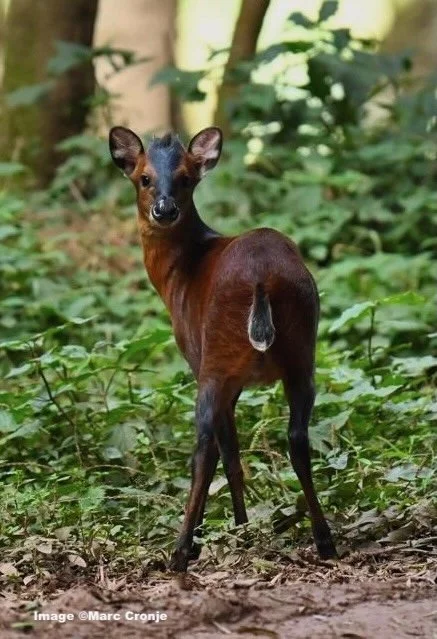
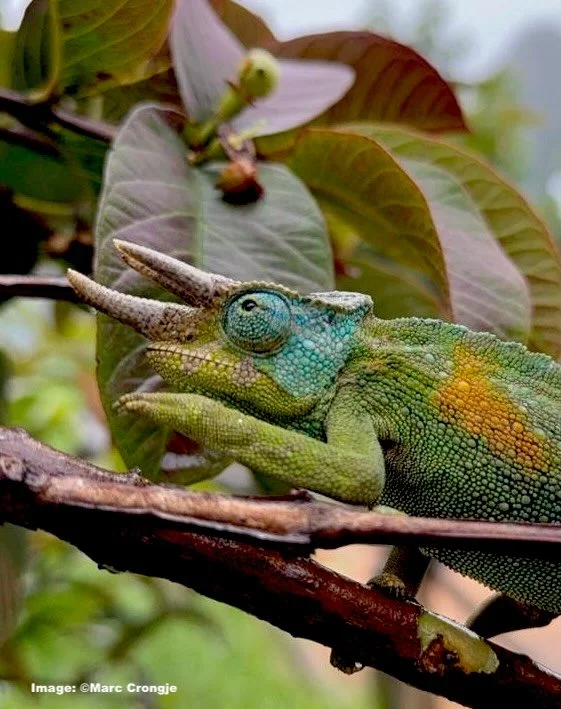
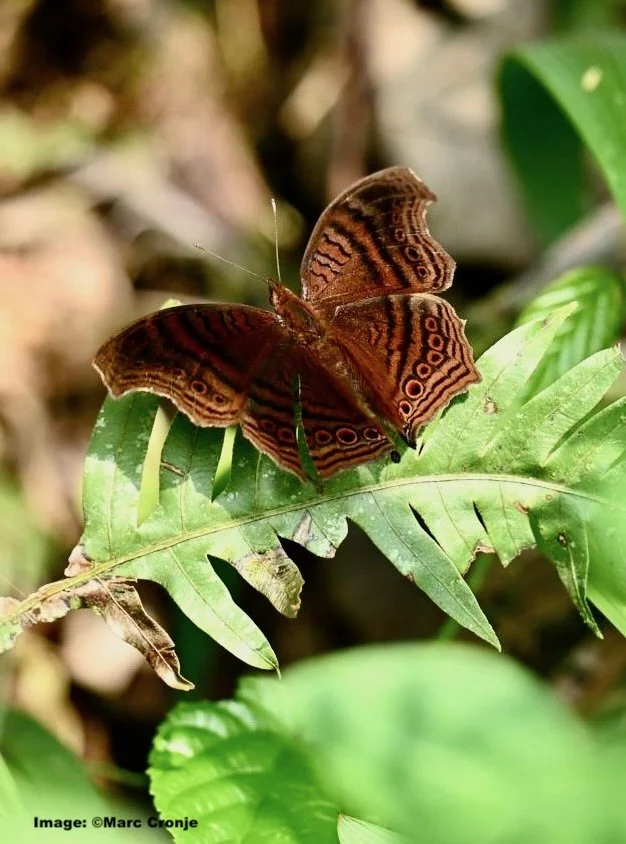
Recognized by UNESCO as a World Heritage site in 1994, Bwindi Impenetrable Forest is home to a remarkable biodiversity. In addition to mountain gorillas, Bwindi hosts over 120 mammal species, including 10 primates. Here you can see chimpanzee, black and white colobus, and the rare l’Hoest monkey, six antelope species, and (if luck is with you) a rare forest elephant as well as 340 bird species, over 200 butterfly species, and 27 different amphibians and about 51 reptiles, including the Three-horned chameleon, darting among the 163 different tree and 19 different fern species, that is you might see them if you are not too dazzled by the brilliance of 1000 different flowering plant species.

Show and Tell
We would love to hear about your responsible wildlife adventure and so would other travelers. Send us your stories and photos and we will publish them as possible.
Controlled Gorilla watching, including the use of masks to prevent disease from spreading to the gorillas, has saved these magnificent creatures from extinction. Join us on our next visit and be part of the solution for humans, wildlife, and our wonderful planet. Image: ©Marc Cronje
We love to hear from you, share your thoughts below!