
Bucket List, Uganda Part 1: Shoebills,Chimpanzees,and A Hero
Portrait of a Shoebill (the Balaeniceps rex may be more closely related to a Hamerkop or pelicans than storks ) in Mabamba Swamp, Uganda. Image: ©Marc Cronje
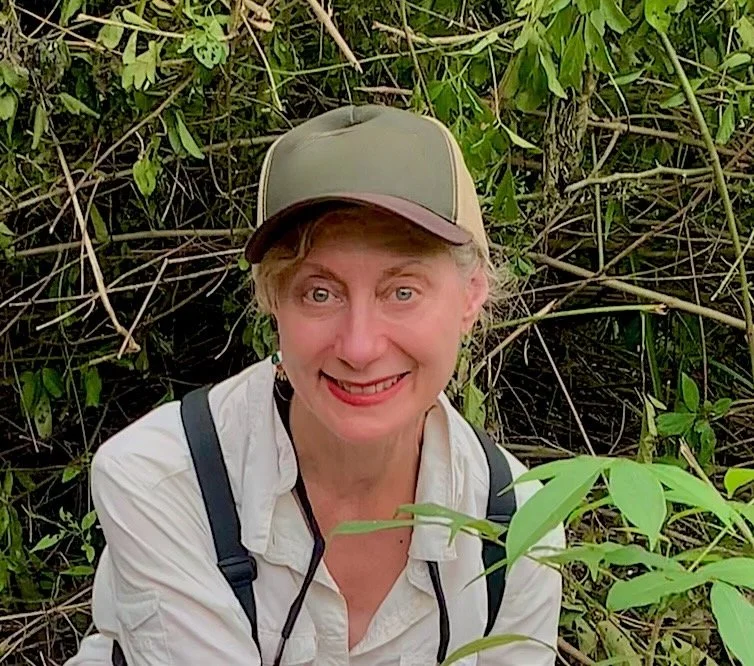
Have you been to Africa?
That question always makes me smile!
Africa, with over 11.7 million square miles (30.4 million sq. kilometers) of desert and wetlands, mountains and plains, rainforests, dry forests, scrubland, rivers, and lakes, makes up 20% of Earth's land surface. (For perspective, the entire US is only 3.8 million sq. miles.) Every one of its 55+ nations has cultures, wildlife, and bird species found nowhere else in the world- each is an entire universe of unique experiences. One visit to Africa is just a drop on the Bucket List!
✓ Trip Tips: Uganda
When: Dry seasons, June-Aug.or Jan.-Feb.
Where: Southwest Uganda. Begin in Entebbe.
How: Local guides, plus our own.
Why: Primates! Including Mountain Gorillas, we feel Uganda is the best place.
Who: Adults relatively fit for trekking; however, porters are a huge help. Let’s talk
This summer, a few friends and I added more unforgettable drops to our Africa Bucket Lists. We journeyed to Uganda!.
Things Tend to Be Extra Large in Uganda..
… and yet have a quiet gentleness, an elegance of sorts, like the mighty (500 lb.) Mountain Gorillas in Uganda’s breathtaking mountains, or lovely Lake Victoria (26,600 sq. miles, surface), a landbound freshwater “ocean”, so vast that it spreads into three countries, – and don’t forget Uganda’s 5-foot birds with the funny name.
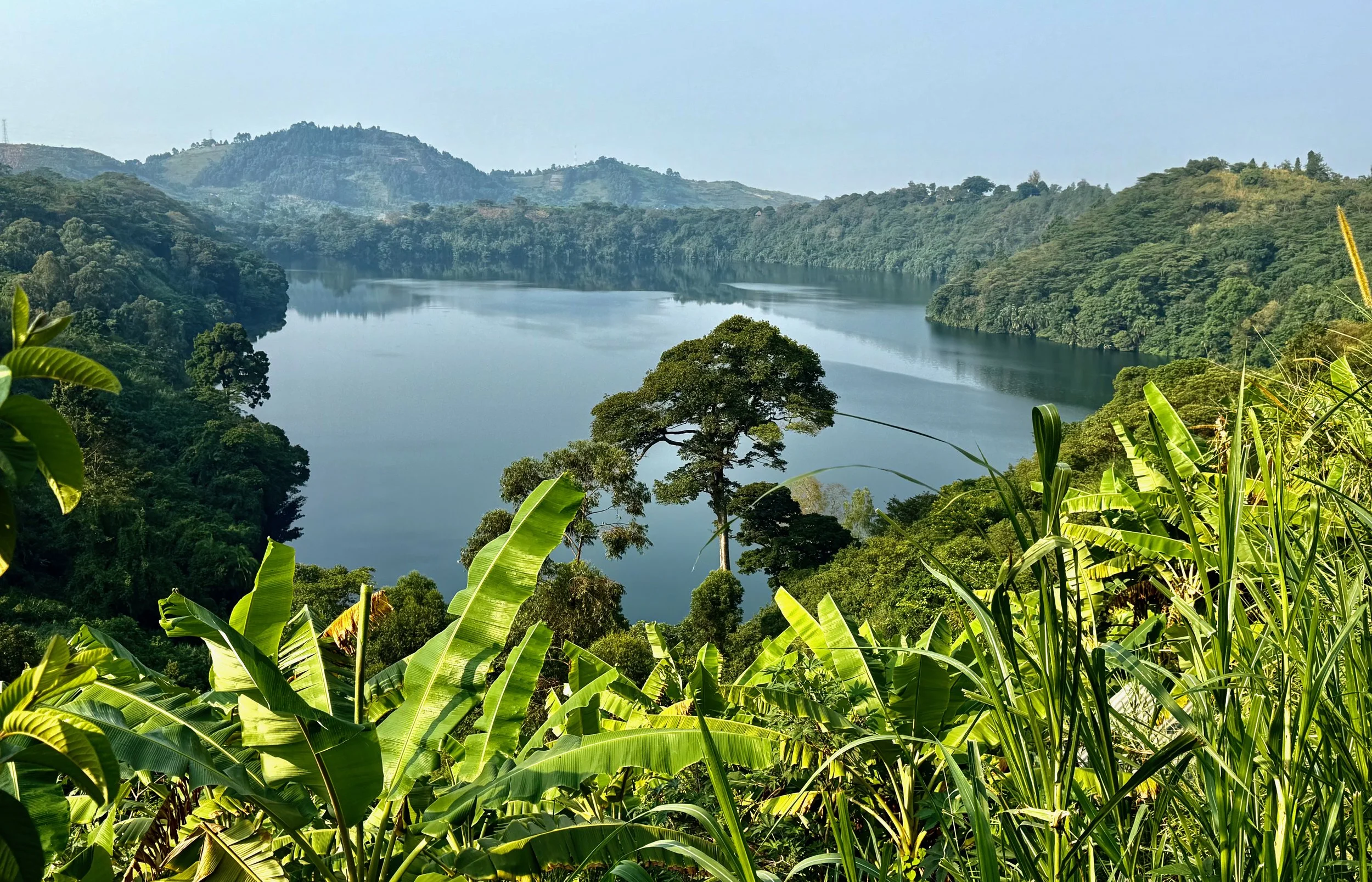
Lakes and wetlands punctuate Uganda’s lush hills and mountains. We stopped here to enjoy the view on way from Mabamba Swamp to Kibali National Park.Image: ©Roberta Kravette
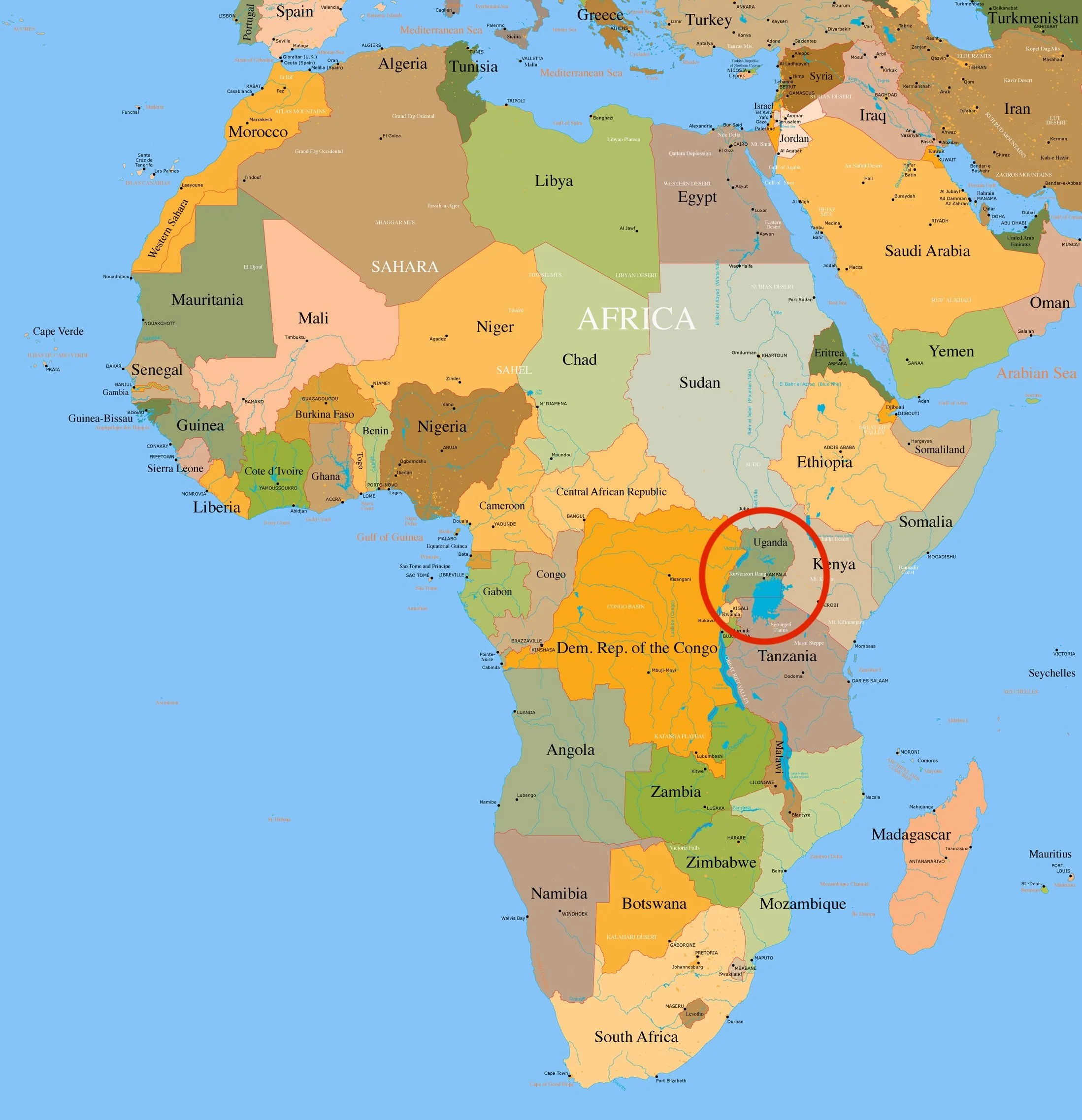
Africa with Uganda circled. Map: Dreamstime
Every Explorer Needs a Plan
We wanted to experience everything, but limited time meant we needed a plan. Seeing Mountain gorillas was a primary goal for my fellow explorers and me, and Uganda’s Bwindi Impenetrable Forest is arguably the best of the only three places on earth to see them.
So, we focused our exploration on Uganda’s Southwest, beginning in Entebbe and targeting the Mabamba Swamp (Shoebills!), Kibale National Park (Chimpanzees!), Queen Elizabeth National Park ( tree-climbing Lions!) – and Bwindi Impenetrable Forest for the incomparable Mountain Gorillas! A circular route where every day was a different adventure.
Uganda is WAAY too big for one report - so…
Our Uganda Adventure Began with A Hero
After the long journey from New York, we gathered in Entebbe to catch our breath, overnighting at 2 Friends Beach Hotel on the banks of Lake Victoria.
We usually take the first day easy, acclimatizing to time differences, weather, etc. Usually. However, Day One in Uganda began with a lakeshore walk and a dash to a local mall for a quick eyeglasses repair. And then it was off to meet a legend.
I’d met Dr. Gladys Kalema-Zikusoka, the founder and driving force behind the innovative, impactful Conservation Through Public Health, years ago at the Explorers Club in Manhattan. Dr Gladys was the first to link the health and well-being of local community members - and the wildlife that lived around them. The CPTH’s diverse programs address wildlife and human health, plus sustainable livelihoods. It’s a (revolutionary) holistic (and logical) conservation approach. And it works!
Lunch with a Hero! Deb, Louis, Julie, Amy, Brian, Marc, Dr. Gladys Kalema-Zikusoka, me (Roberta), Dr. Gladys’ sons, Ndhego and Tendo, and husband, Richard. We are holding books by the Kalema-Zikusoka family, including “Walking With Gorillas”, Dr Gladys’ story. Image: ©R. Kravette
CTPH trains neighbors to help neighbors through “Village Health and Conservation Teams” that encourage their communities and oversee the programs. Today, over 54,000 villagers participate, with very happy results for people, wildlife, and the environment.
Destination: Wildlife always gives back 10% of the trip cost (in the traveler’s name) to a conservation-missioned non-profit organization. Our group decided unanimously to name CTPH as our trip’s beneficiary. The money came at exactly the right moment: The organization is working tirelessly to tamp down the Ebola outbreak in the DRC and keep it out of Uganda.
Lunch with Dr. Gladys and her family- husband Richard and sons Ndhego and Tendo was delightful, full of stories and multiple cups of Gorilla Conservation Coffee; then it was off to the National Botanical Gardens.
Uganda – The Primate Capital of the World, Even in Entebbe!
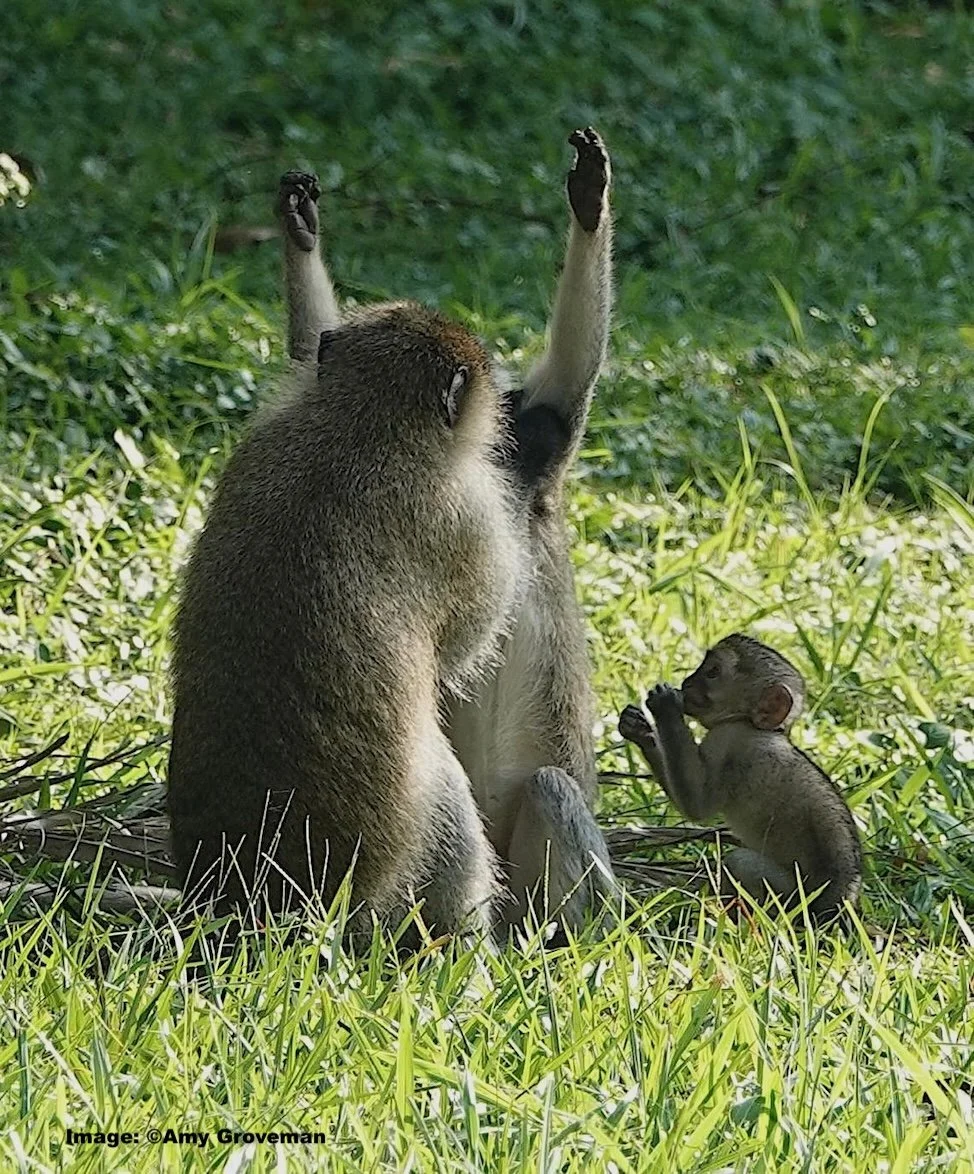
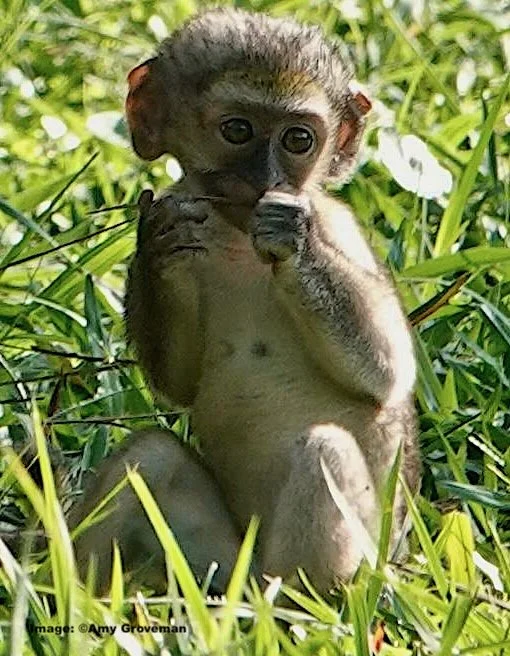
A Vervet Monkey takes a break from foraging in the garden to see what we are up to. Image: ©Amy Groveman
The National Botanical Gardens, An Introduction to Uganda’s Natural Side
The Entebbe Botanical Gardens were the perfect introduction to Uganda’s unique nature. There, on the grass, just meters from relaxing families, their kids playing and chasing each other, was a troop of Vervet monkeys, also relaxing, playing and chasing each other – and providing great photo-ops! Neither group seemed to pay any attention to the other – or to us. Nor did the Black-and-white Casqued Hornbill watching it all from above.
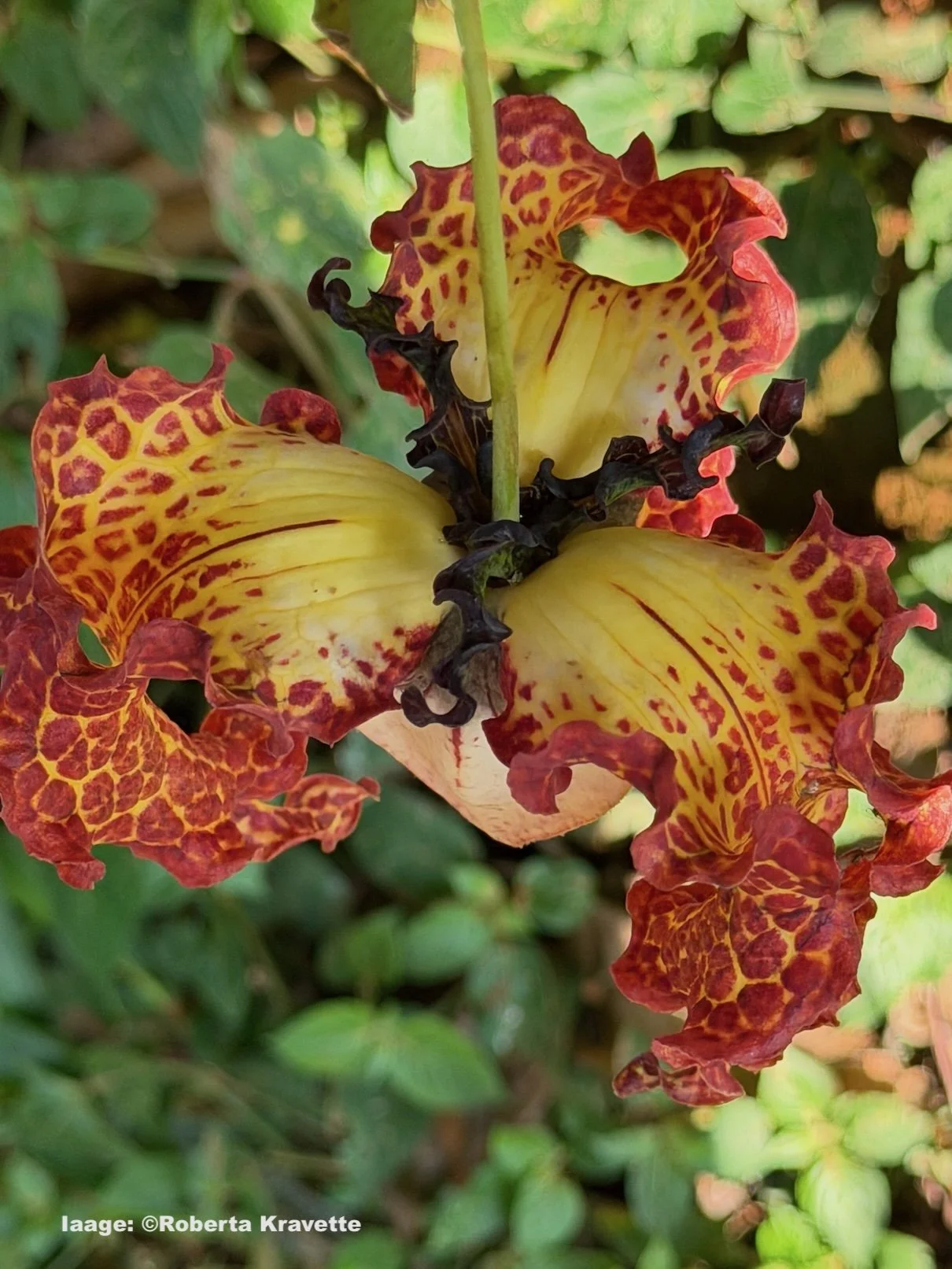

Discovering the Shoebill!
The next morning, the dawn’s early light saw us headed for the ferry to Mabamba Swamp, (a Ramsar wetland) on a search for the iconic Shoebill!
Even at that early hour, the dock was teeming with people waiting to cross, doing business, and living. Waves of school kids in neat uniforms; locals heading to work or market; trucks, bikes, and baskets overloaded with every kind of goods from jackfruit to furniture; and ladies in bright dresses stacking snacks or merchandise onto little plastic tables in an amazing, organized confusion. On the shoreline, a few men used homemade poles in the hope of catching a meal in the oily, dirty water.
Metropolitan Entebbe, with its urban ethos and shopping malls, shows only one side of Uganda. This dock, with its noise, movement, and determination, told another story- it was beautiful, but not pretty or easy or comfortable.
The lone ferry finally arrived, loaded – and left. We waited for it to return and reload – this time with us included in the “cargo.”
On the other side, a short drive brought us to a second, quieter dock.
When the Shoebill stretched its wings we were amazed at the 8ft+ (2.6m) wingspan!
The Mabamba Swamp (a Ramsar site) is one of the world’s most important wetlands. It is also one of the only places on Earth where the rare Shoebill stork still exists.
Uganda takes its role as guardian of endangered species very seriously, strictly regulating its tourism industry and ensuring local communities are involved and benefit directly. The policy has improved the well-being of both wildlife and communities nationwide, including right there in Mabamba Swamp.
A whole local industry of canoe-paddlers and guides caters to folks hoping to see this rare bird and the other 300 avian species that call Mabamba home.
Our guide was a delightful gentleman who navigated winding marsh channels thick with pink and purple blooming water lilies, framed by tall papyrus alive with colorful birds and flitting dragonflies. We floated peacefully in the almost still water, warm under a delightfully blue sky.
After a while, we rounded a bend, and there it was!
A Shoebill stood in all its glory, preening in a little opening in a papyrus grove.
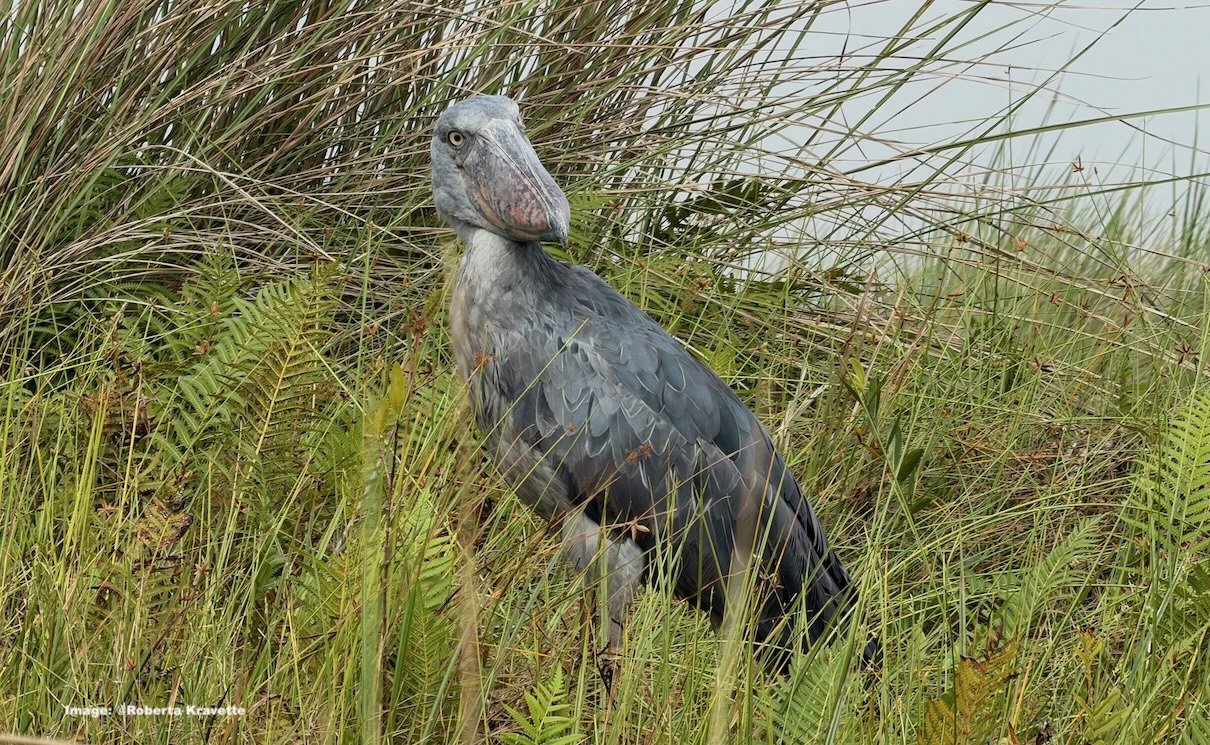
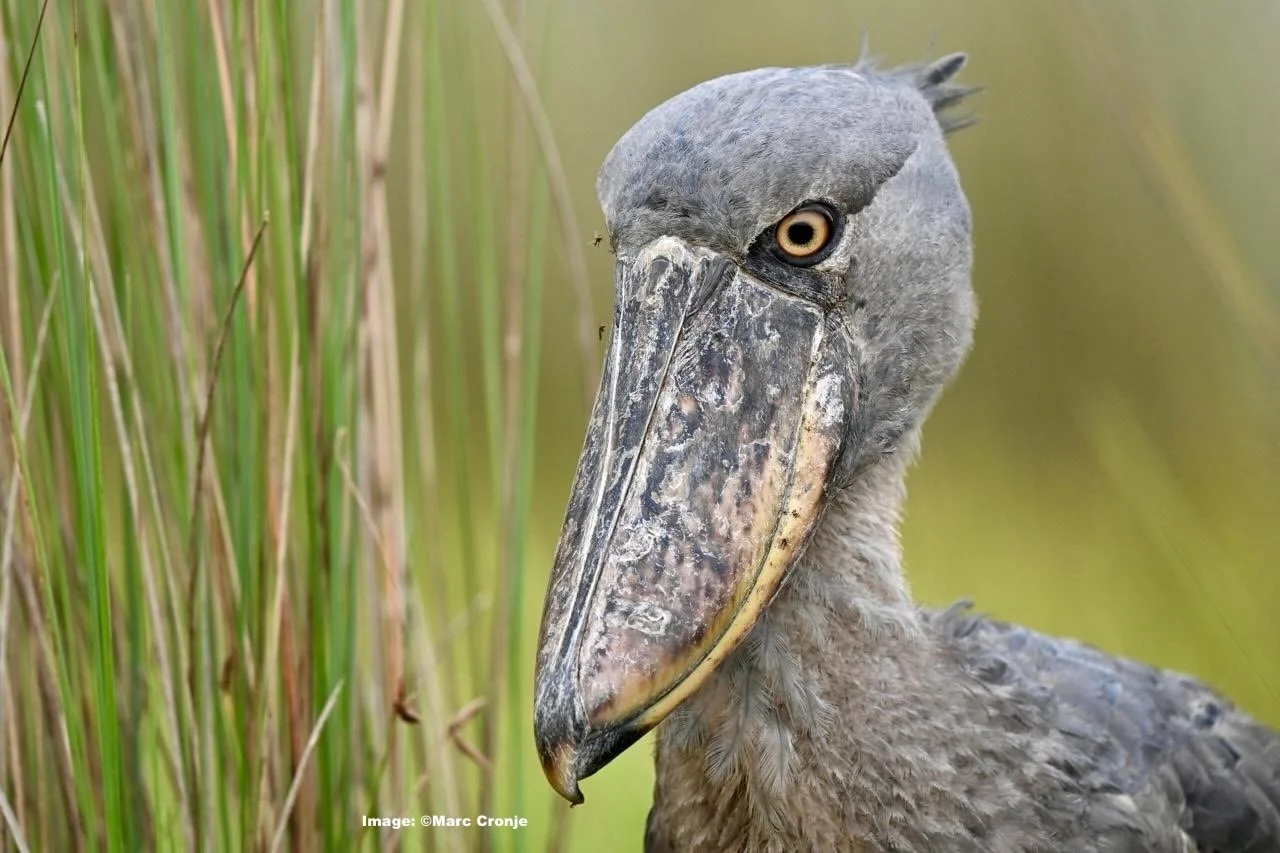
Mabamba Swamp is one of the few places on Earth where Shoebills thrive. Our guide proudly explained that poaching has nearly disappeared since the local Shoebill tourism industry has grown. This bird is sustainably feeding families.
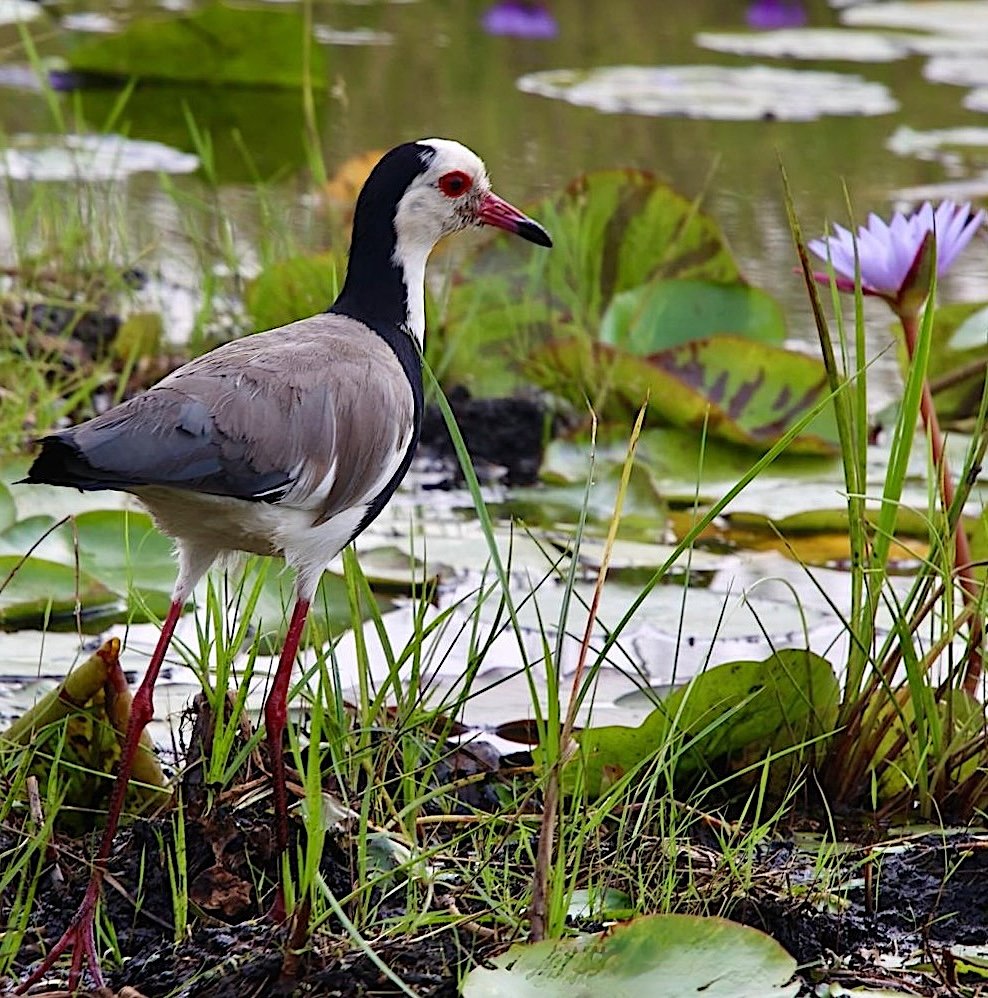
Mabamba Swamp is filled with waterbirds (and butterflies!) but my favorite on that day - aside from the Shoebill - was the wonderful African Jacana! Image: ©Marc Cronje
Sometimes dubbed “Jesus Birds,” African Jacanas appear to walk on water. We stopped to watch this one hunt for insects among the lily pads, coming so close that it brushed the side of our canoe. When wildlife is unafraid, there are magical benefits.
We could easily have stayed all day, floating among the tall papyrus, but sadly, it was time to leave Mabamba Swamp and start our journey to Kibale National Park.
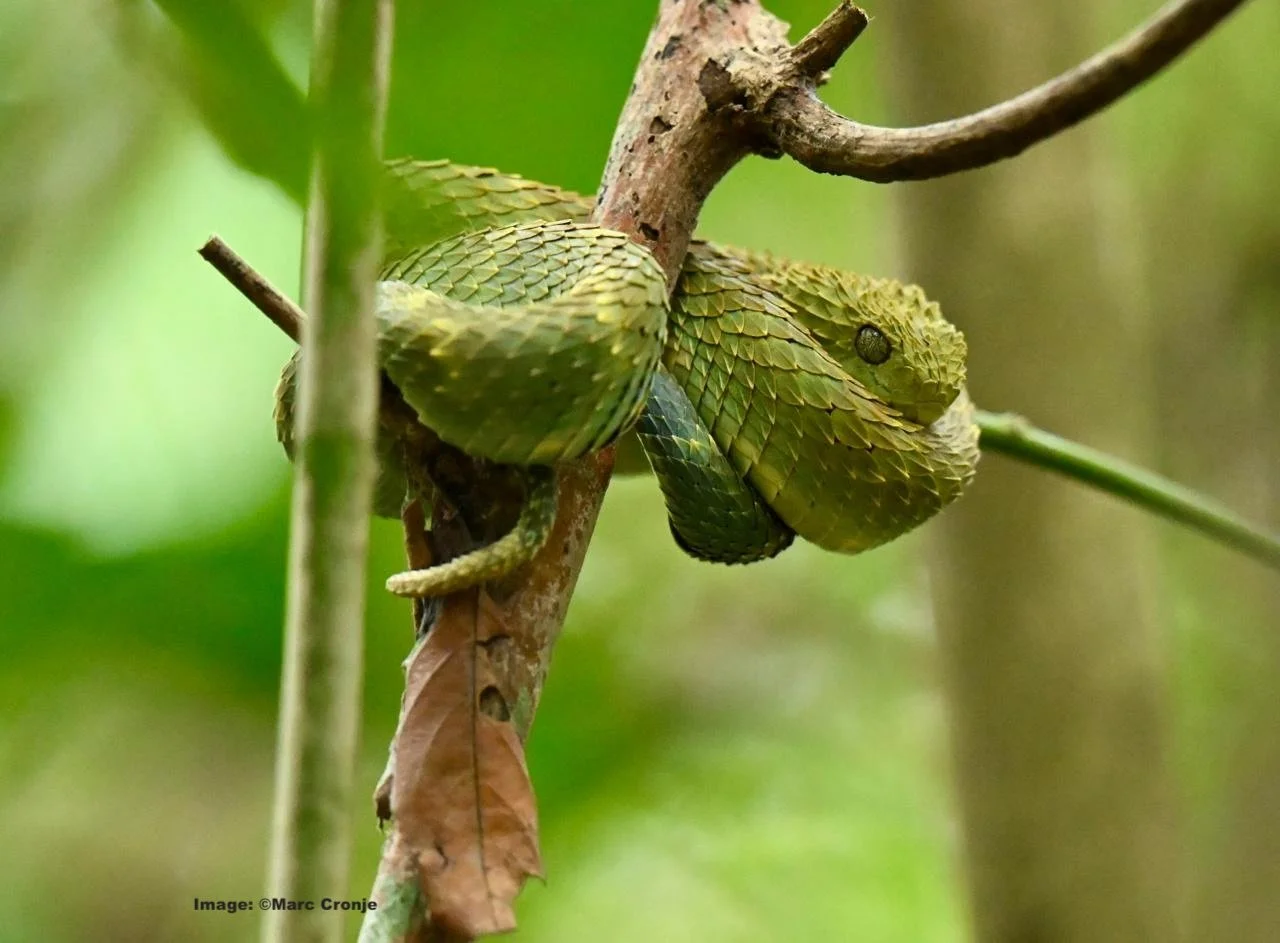
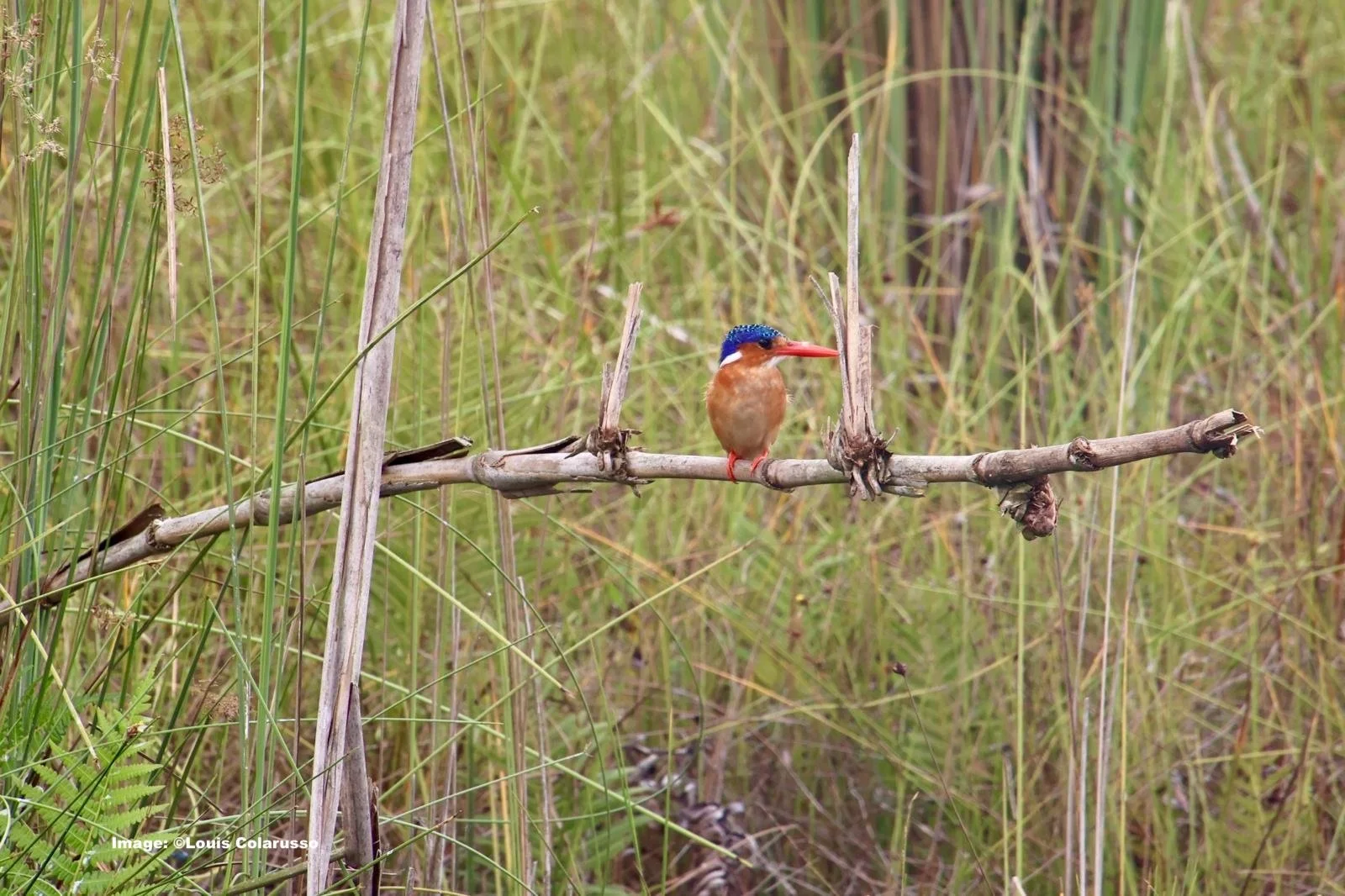
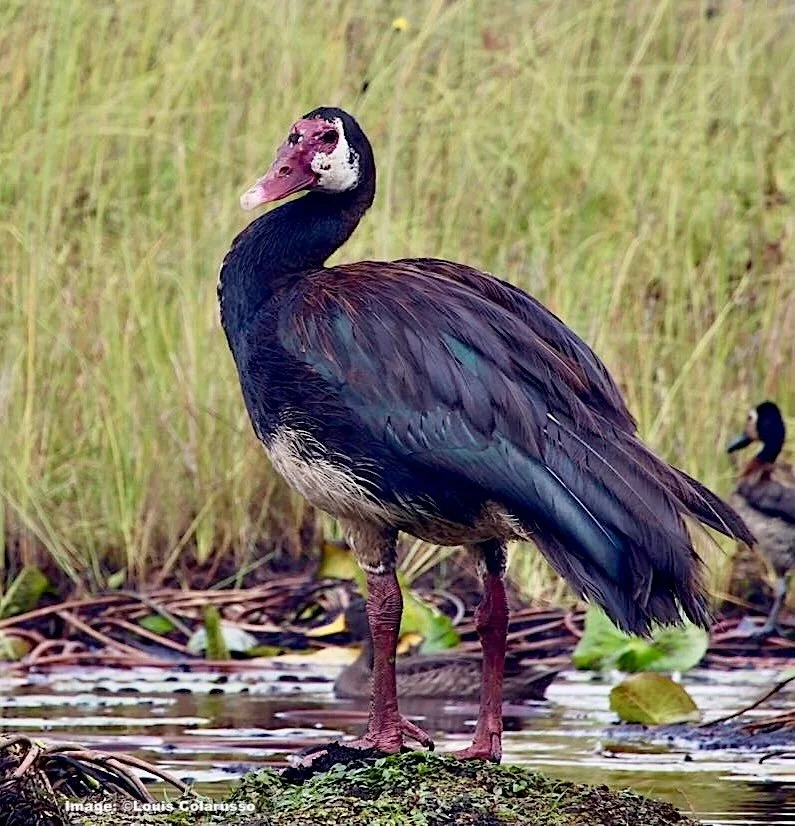
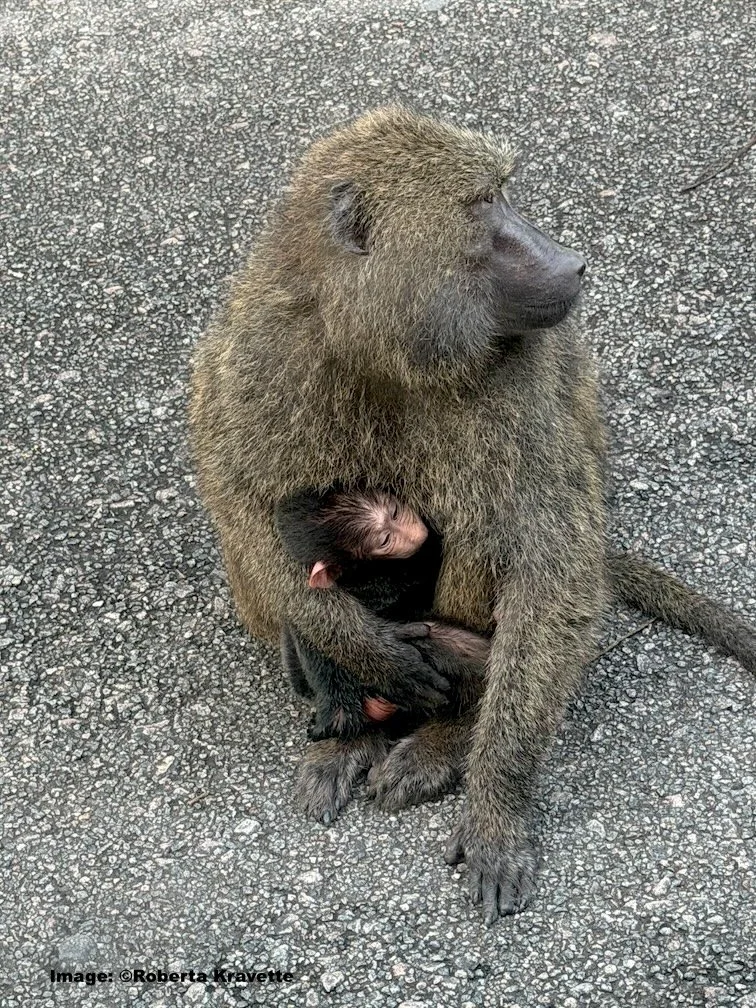
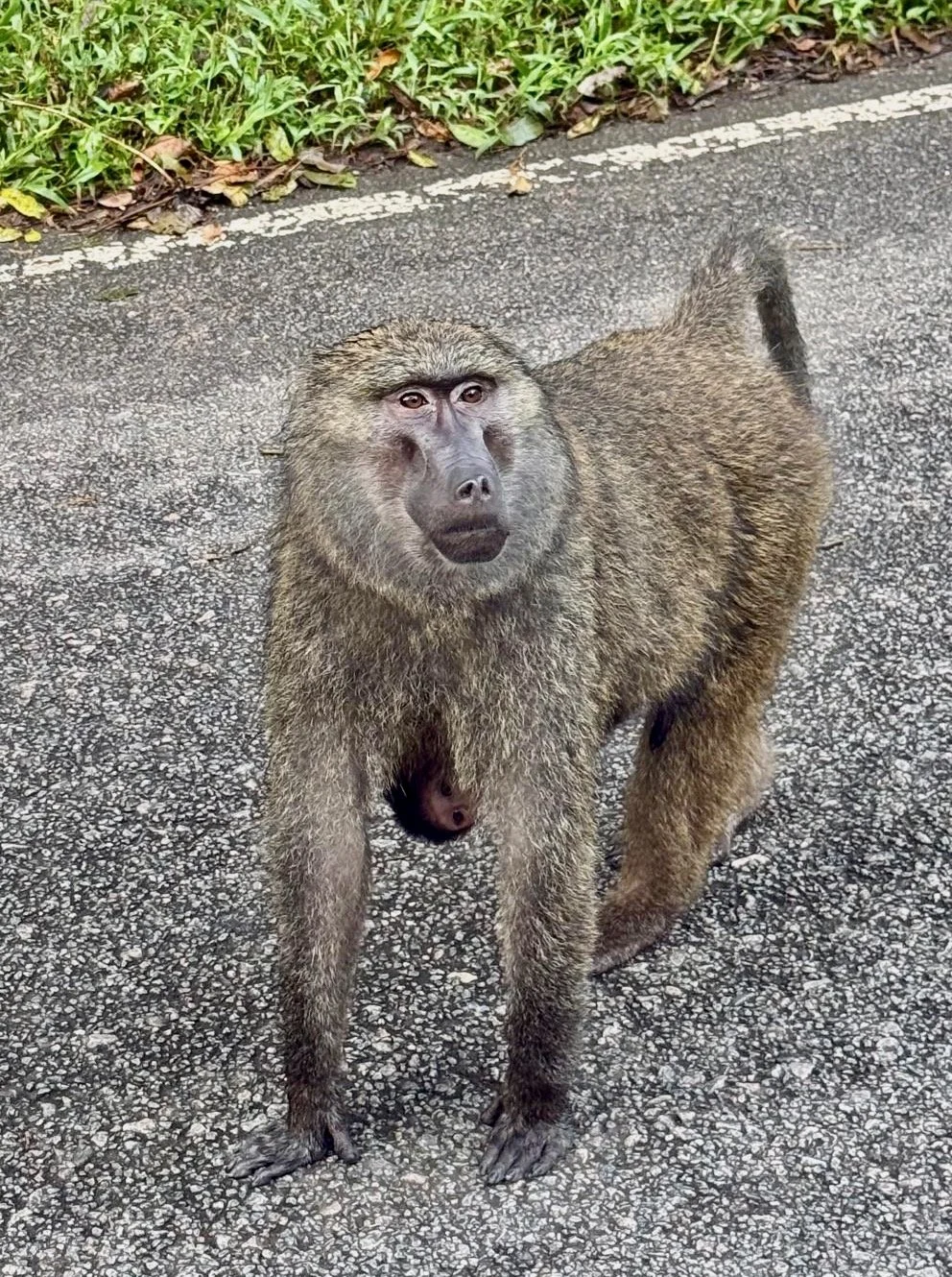
For many species, the Earth’s protected spaces are their only hope for survival - and our only opportunity to see them, but these vital sanctuaries are usually not connected to or near each other. Distances between Parks and sanctuaries can be quite significant (and inconvenient for wildlife and humans). Uganda is no exception; however, sometimes something extraordinary happens along the way. Like meeting about 75 wild Olive Baboons coming toward you, for example.
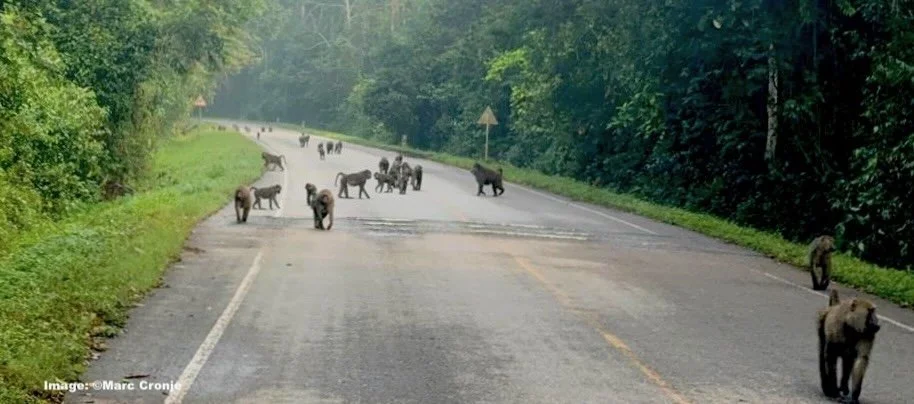
First rule about meeting a troop of baboons: Keep the windows closed unless you want to be raided and robbed by these opportunistic (and fast) Primates! We did. They seemed a bit disappointed. Image: ©Marc Cronje
Welcome to Kibale National Park – The Primate Capital of the World
After Entebbe and Mabamba Swamp, Kibale is a whole new world! At each stop, we met privately with conservation experts. At Kibale, we were fortunate to have Senior Ranger, tracking specialist, and conservationist Richard Alicwamou as our private guide for chimpanzee tracking. Later, he joined us for dinner at our lodge, where he shared insights on the conservation challenges and the initiatives underway in Kibale.
Chimp Trekking in Kibali National Park with a watchful guard, our guide Marc Cronje, Deb, Amy, Juie, Louis, and Senior Ranger, Richard Alicwamu, in front of a huge Ficus Varifolia, a fig tree. These are a favorite food of Chimpanzees. Image: ©Roberta Kravette
Some BIG “Challenges” Are Tiny!
After a brief introduction to chimp-trekking rules, behavior, and habitat, we set off. Kibale’s forest is dense, with layers of thick vegetation. The steep, slippery “paths” are strewn with stones, braided with roots - and crisscrossed by huge marching columns of tiny Driver or Siafu ants, a type of aggressive army ant, with sharp mandibles and no sense of humor. Step on one of those columns, and your day can quickly take a downturn. (Names and Images have been omitted out of respect for the newly ant-initiated) Luckily, one experience is enough to learn the lesson forever!
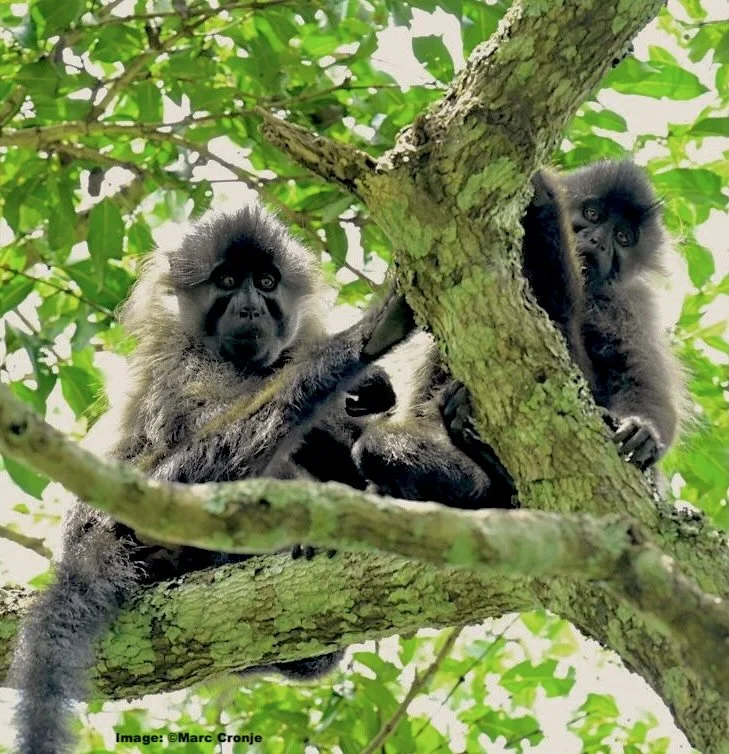
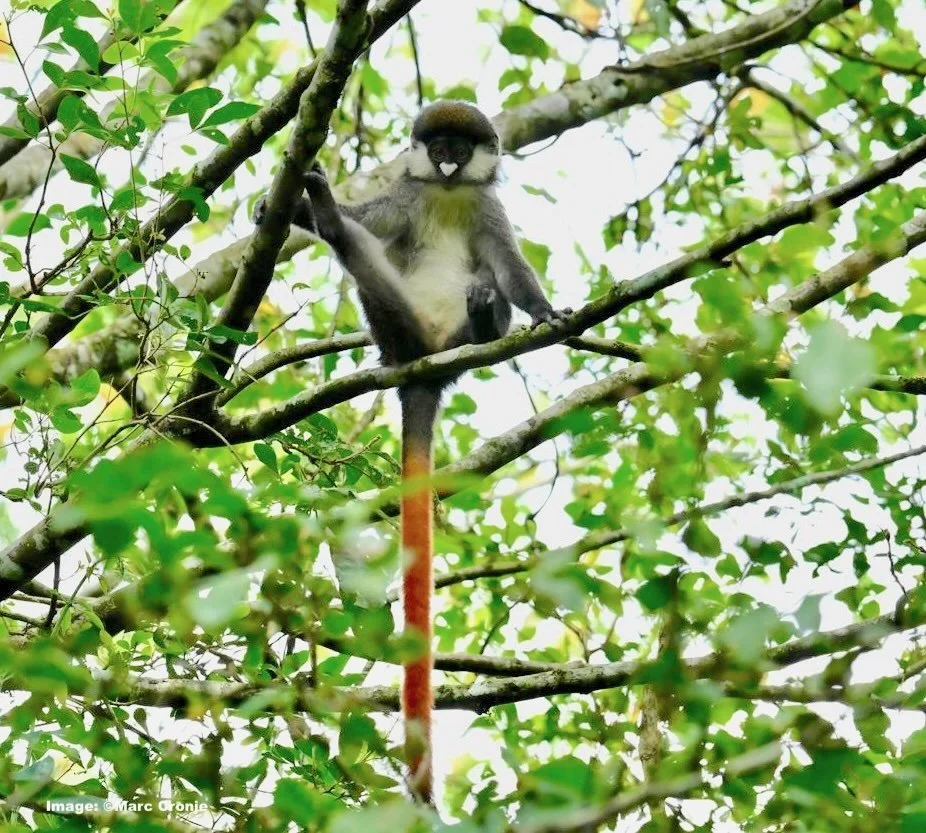
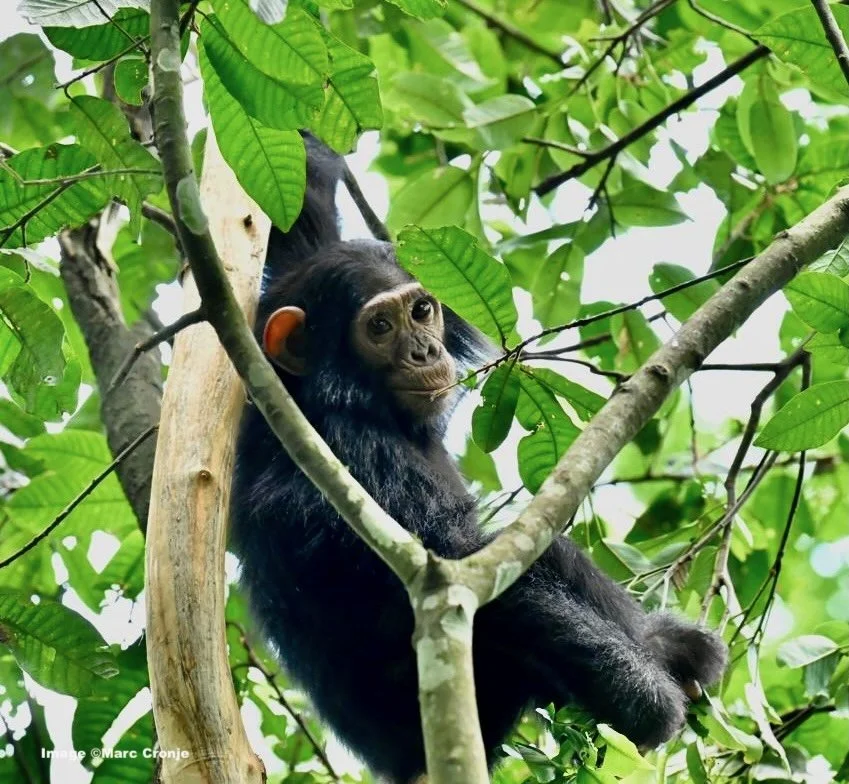
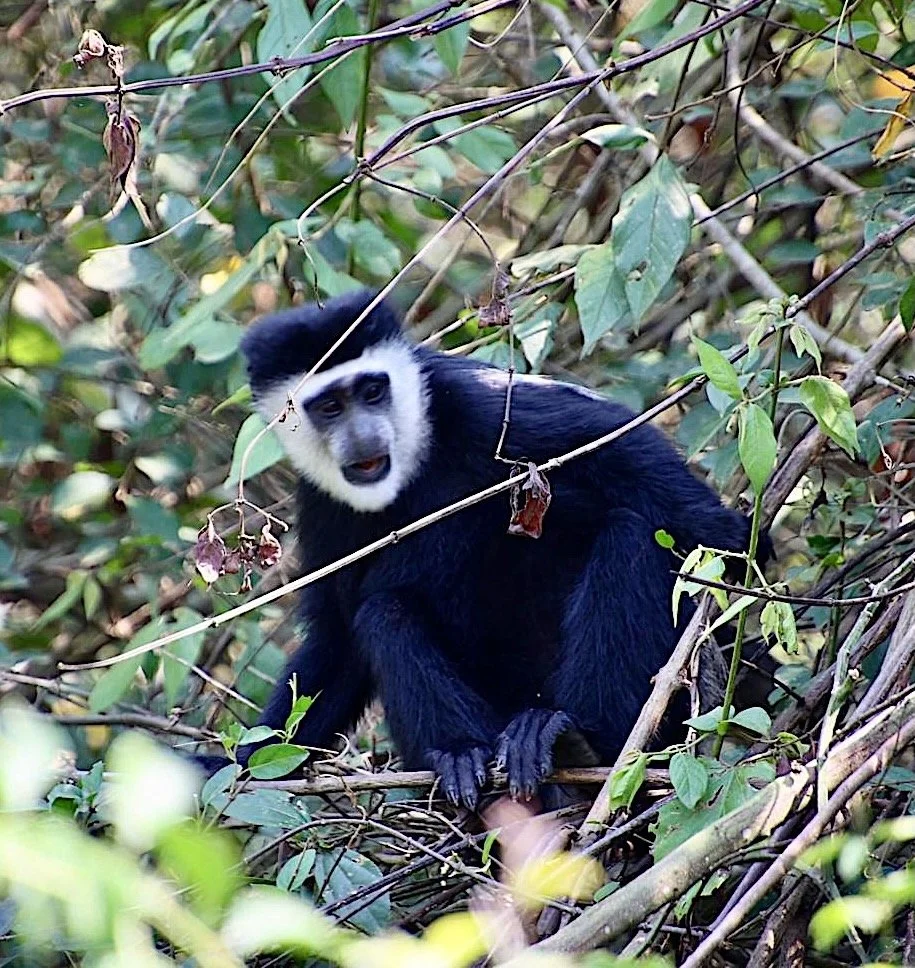
After you acclimate to the conditions (and, if necessary, remove the ants from your pants), the forest is wonderful.
Ranger Richard and our guide and friend, naturalist Marc Cronje, shared secrets about some of Kibale’s fascinating trees, fungi, and insects. We saw a Boehm’s Bush squirrel and a few more of Uganda’s 14 different primate species, including an Ashy Red Colobus, Red-tailed Colobus, Guereza or Black-and-White Colobus (on my personal Bucket List), Ugandan Grey-Cheeked Mangabey, and more Olive baboons, plus another 39 bird species!
As we went deeper into the forest, Ranger Richard stopped to point out a pile of … Chimp poop! He warned us again NOT to stand under any chimp-inhabited trees. They love “showering” down or throwing anything handy at you – including the aforementioned poop!
We walked hopefully (and carefully) on – deeper and deeper into the forest, listening for the (usually) vocal chimpanzees. Nothing.
Chimpanzee faces are so expressive. This is a dominant male of the troop we “met” in Kibale National Forest. Image: ©Louis Colarusso
Just When We Thought The Chimps Must Have Moved On…
…there they were, all around us, high in the canopy – munching on fruit, grooming each other, lounging and sleeping, while little ones chasing performed death-defying leaps, branch to branch at dizzying heights! Chimpanzees!
We caught our breath and laughed – Richard reminded us to stay still and quiet. “They are very aware that we are here,” he said, “and may allow us to stay – if we don’t disturb them”.
We watched in awe until Richard signaled us to follow deeper. If there was a trail here, it was not meant for homo sapiens. After about 50 feet, he pointed into the canopy. A lone chimp, much bigger than the others, was watching us. He allowed us to approach his tree, waited until we were just feet away - and made his move.
The huge male jumped up, standing straight in all his glory, and broke the forest peace with roaring screeches that reverberated through the trees. He then raced halfway down the trunk. “Don’t move,” cautioned Richard.
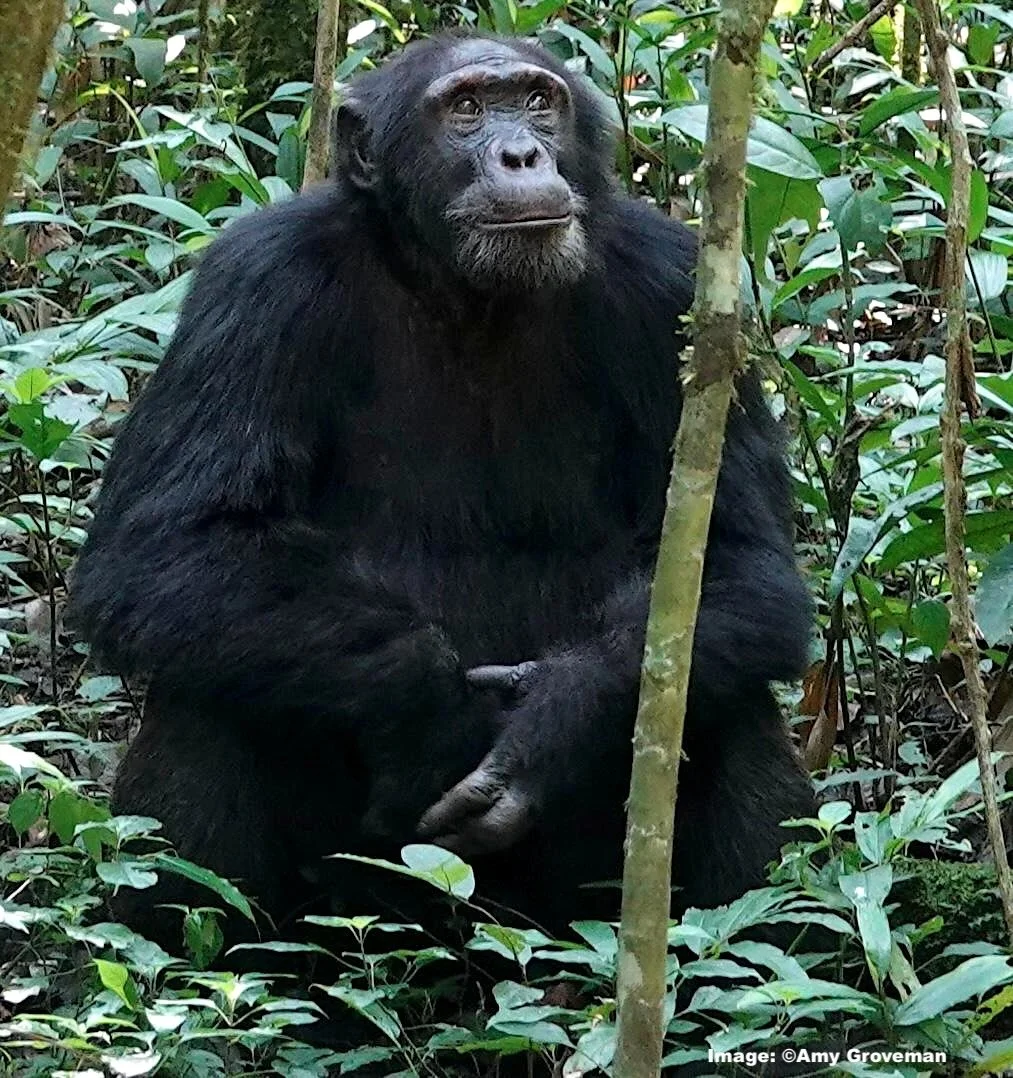

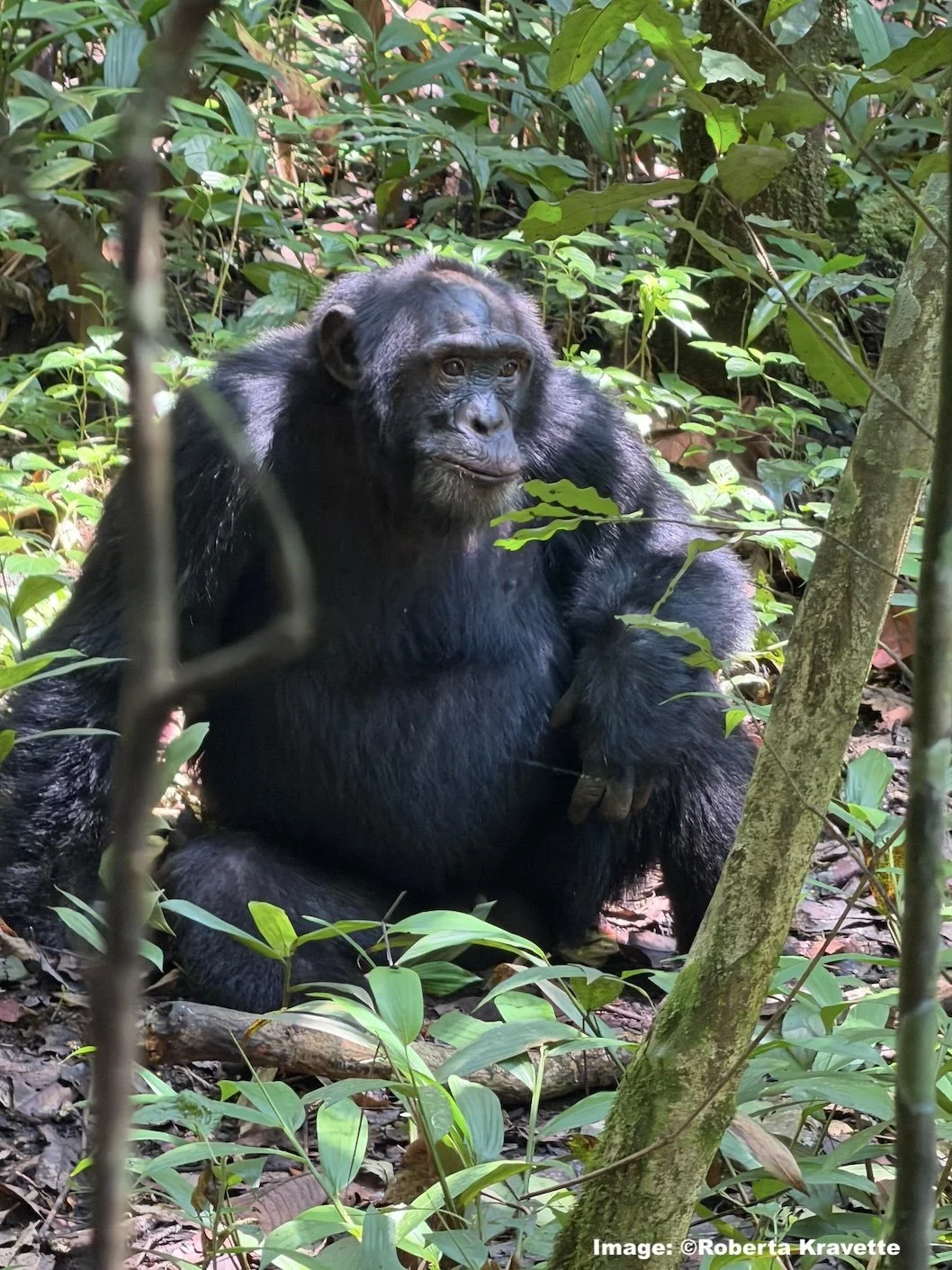
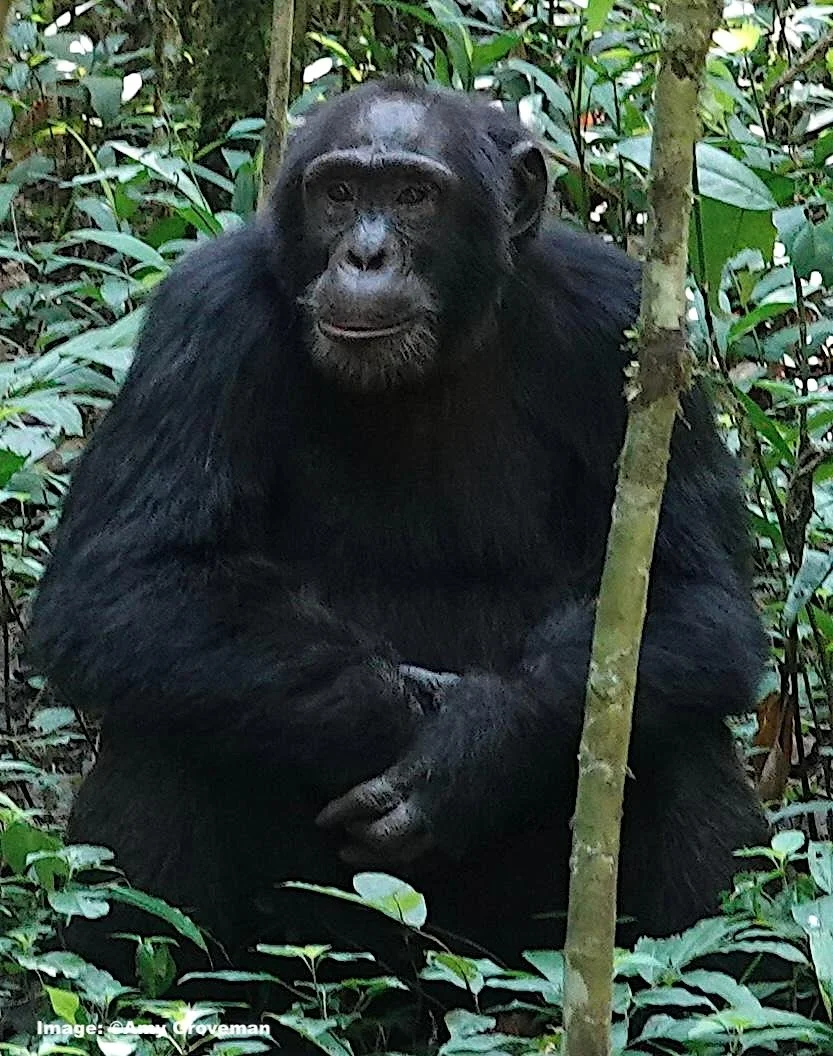
The chimp leaped to the ground, landing with a thud, directly in front of us, and in one motion, raced about 10 feet ahead, tearing at the vegetation, hooting and screaming. Then he stopped, turned, and silently looked back at us, as if to gauge our reaction.
This was the dominant male.
It happened so fast we were stunned.
The Big Guy sat down and spread his legs, obviously pleased with himself.
We smiled.
This adult’s teeth turned red from the fruit he was eating, peacefully on the forest floor. He paid no attention to us. Image: ©Louis Colarussp
Chimpanzees are at least 1.35 times stronger than an adult man; they can easily tear you to bits – and yet this big guy relaxed, lounging on the ground just feet away, his back against a tree. And there we all were. Together. In his once more peaceable kingdom.
The troop, obviously used to their leader’s theatrics, went about its business. Leaves rustled with unseen life on the forest floor and the soft breezes above it. The occasional bird – or something else - called. We stayed with the Big Guy for about an hour, then it was time to head back.
It’s Not Easy Hiking These Rainforested Mountains.
They are kept for the wildlife – not people. Back at the Welcome Center, we were each presented with a well-earned Chimp Trekking Certificate, solid proof of an unforgettable experience almost too magical to be real.
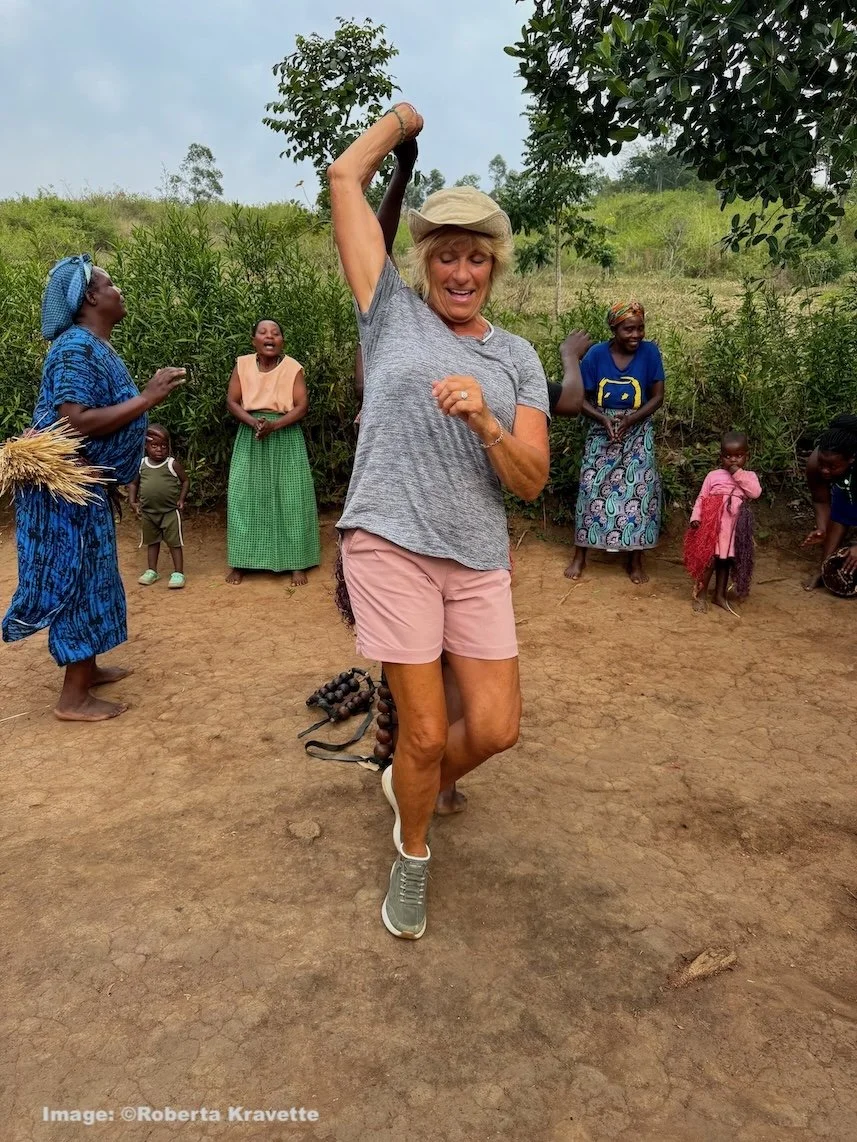
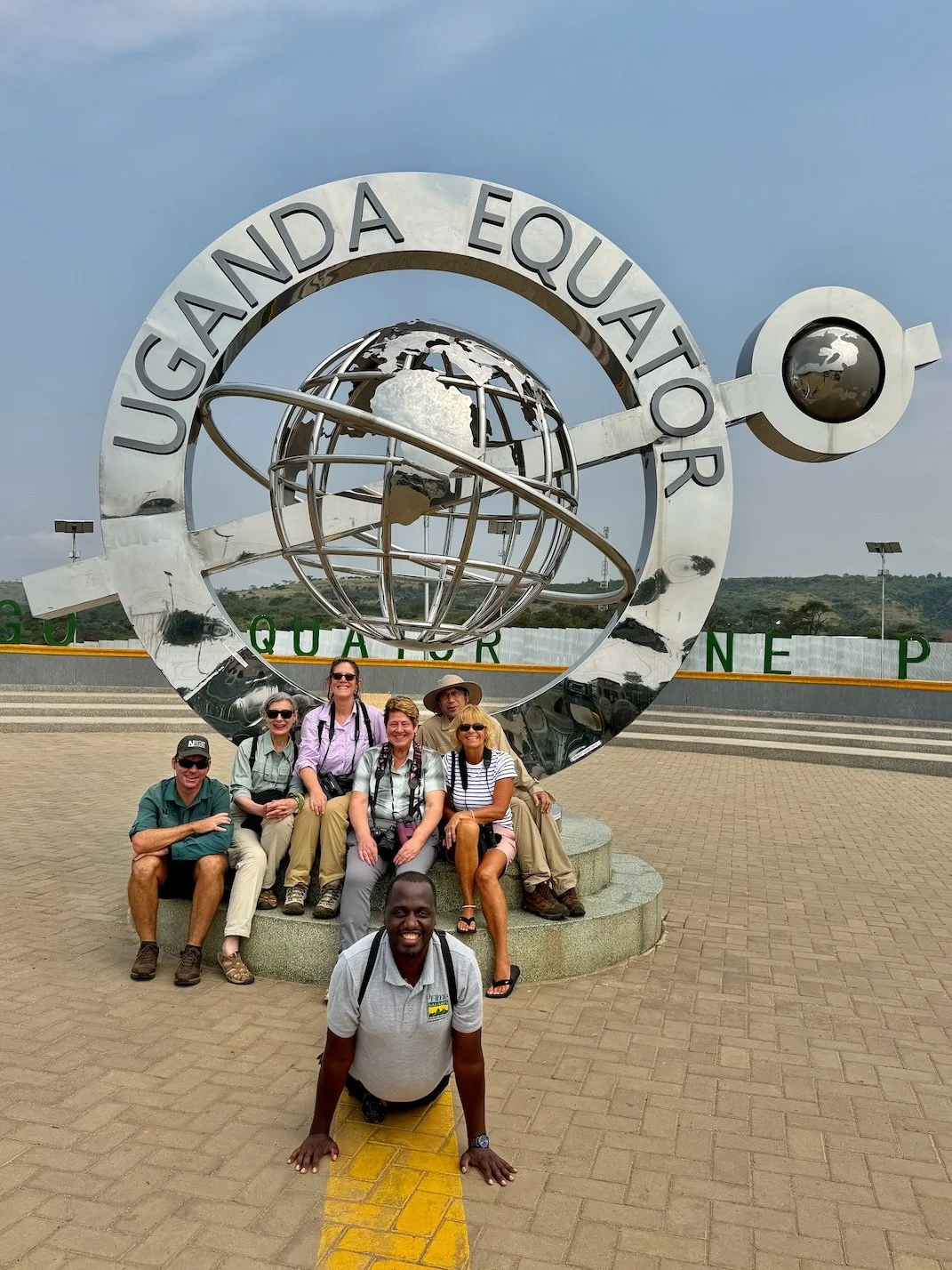
This tour was packed with fun times!
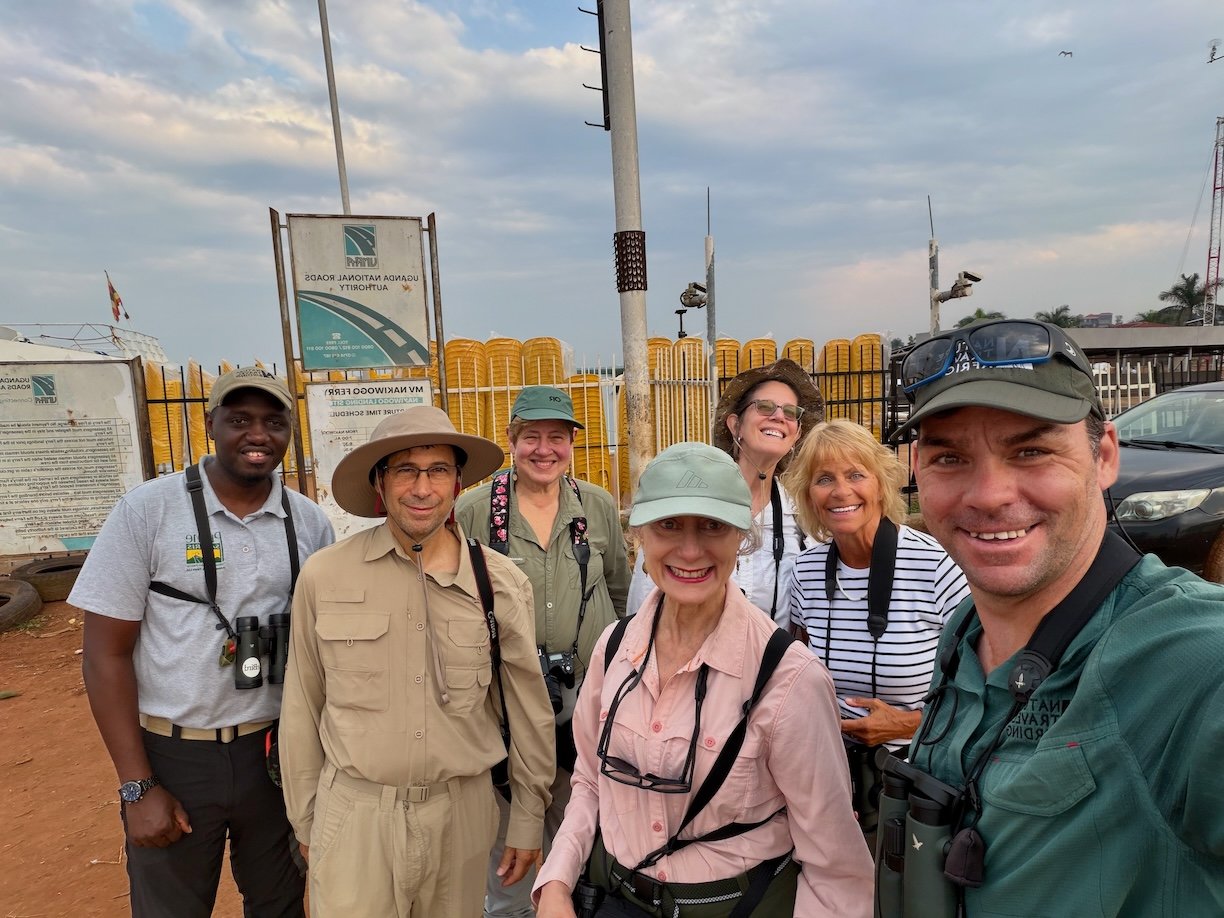
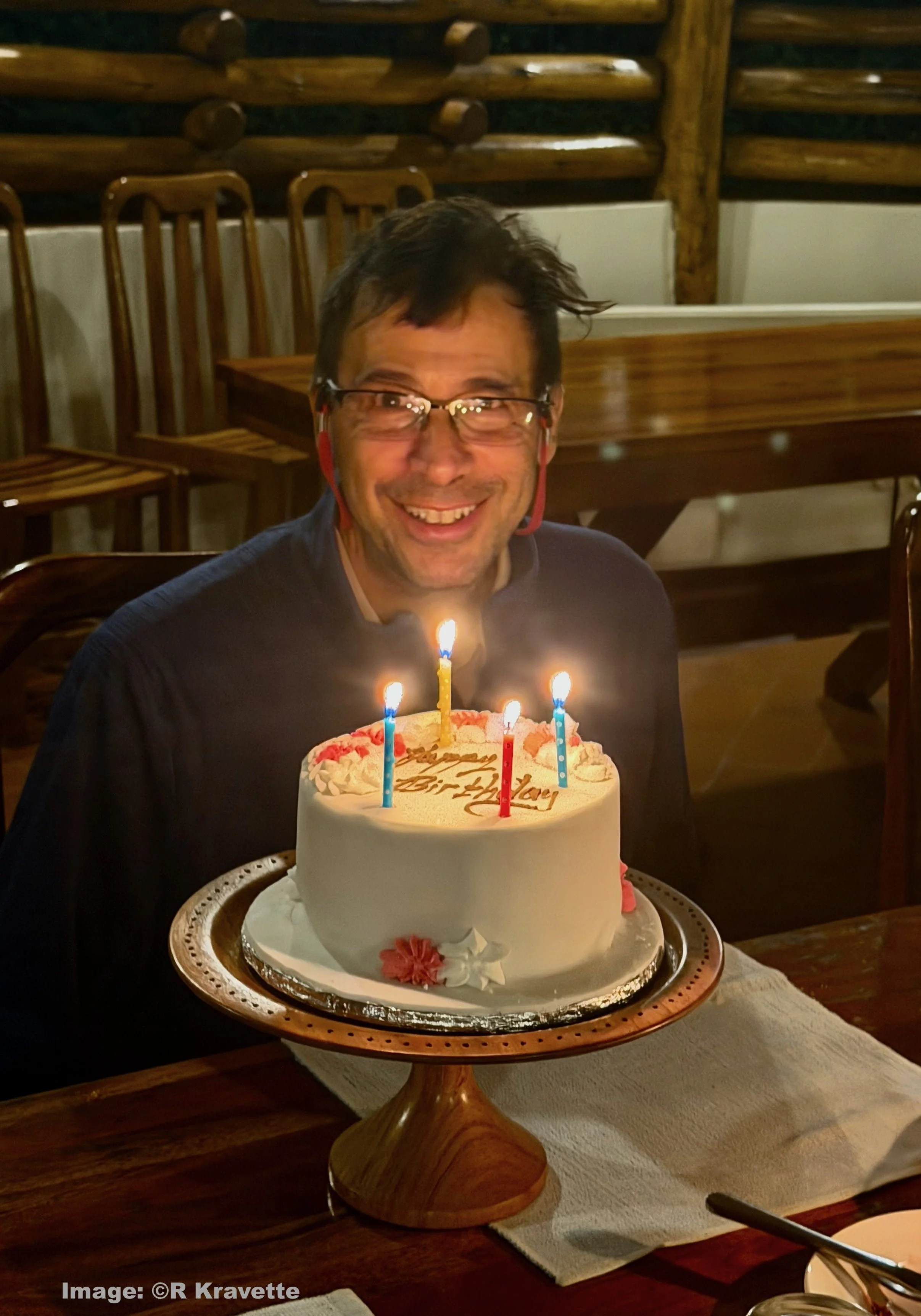
Enjoy some last looks at our first few days and keep your eye open for Uganda Part 2: Tree Climbing Lions, Mountain Gorillas and more.
To be continued…