The Superpowers of Predator and Prey in Yellowstone National Park
Winter in Yellowstone is Not for the Feint of Heart. To Survive Here, You Need a Superpower.
The Yellowstone ecosystem is home to the greatest concentration of wildlife in the lower 48 states. But life isn’t always easy in these mountains and valleys. Yellowstone’s unique geography, weather, and other conditions make it a survival challenge.
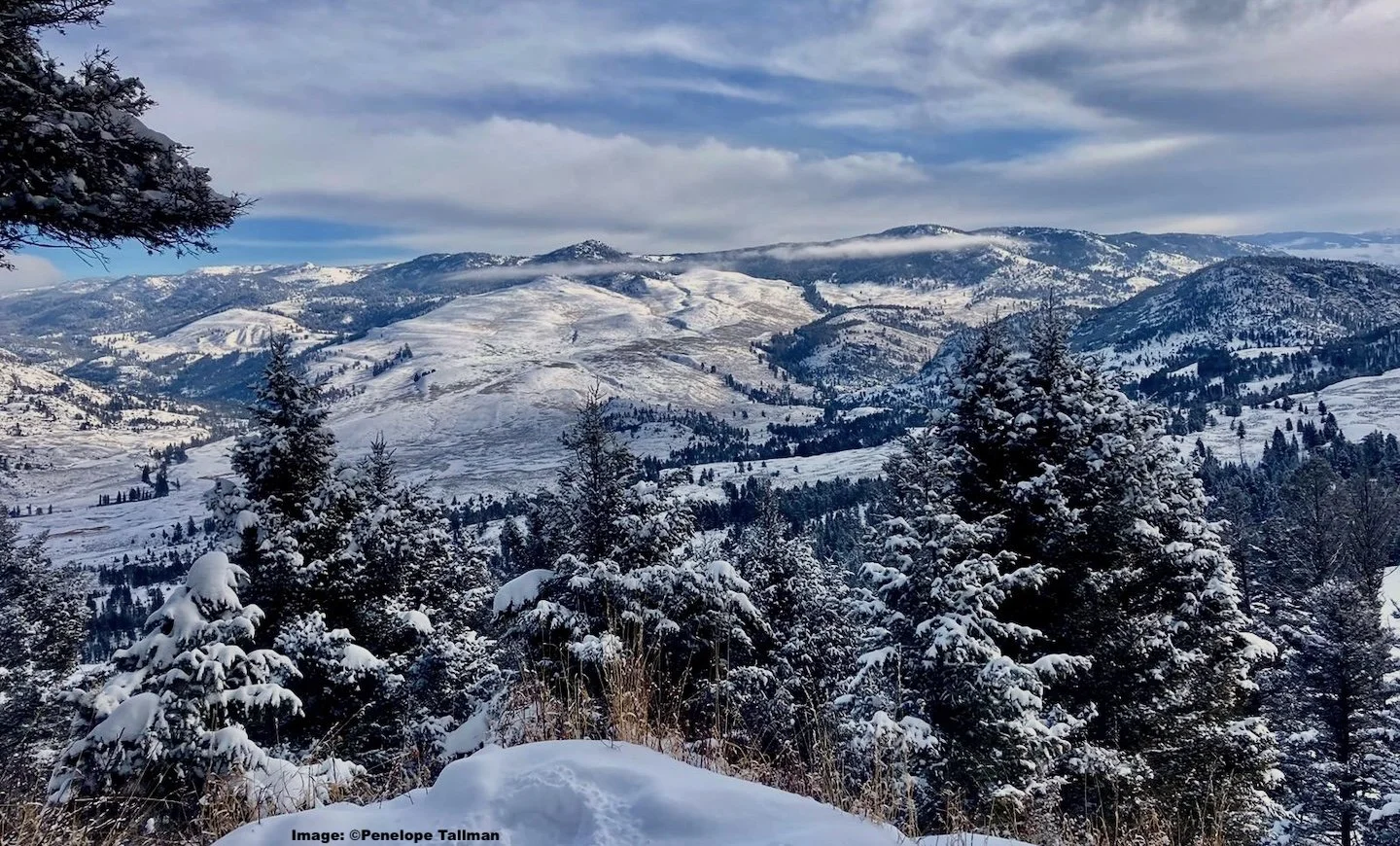
The view from a pullout on Yellowstone’s only open road in the winter. This was considered an “easy” winter, not much snow, but nobody had asked us - or the wildlife. Image: ©Penelope Tallman

Roberta Kravette. Image: M. Groveman
Although summer is considered peak wildlife-watching season, to understand its most charismatic residents, you need to watch them when billions of tiny ice crystals glisten in the rising sun, when their steps leave telltale tracks in the crusty snow, frosty gusts of wind race across the valleys, and moonlight is a long, dark night’s only beacon. Winter.
If they could, Yellowstone’s 67 resident badass mammals, both predators and prey, would agree…
Surviving Yellowstone’s winter requires a Superpower.
We examined the Superpowers of five charismatic resident prey species and two apex predators, but which has the greatest Superpower? You might be surprised.
Yellowstone’s Five Most Charismatic Prey Animals
Winter is a hungry time for all Yellowstone’s residents – but if you are on the menu, it is especially fraught. Watching and listening isn’t enough to keep these mammals safe from two of North America’s greatest predators. They need something more…
1. Pronghorn - The Fastest Land Mammal in North America!
Their vision is extraordinary, but the Pronghorn’s superpower is speed! Image: Thanks to Yellowstone National Park.
Pronghorn (Antilocapra americana)
Conservation Status: Endangered, Endemic to North America
The Pronghorn Facts:
Endemic to North America and the only surviving member of the family “Antilocapridae”, Pronghorn are neither sheep nor antelope but are most closely related to giraffes. In winter, the slightly stocky (90–100–pound).
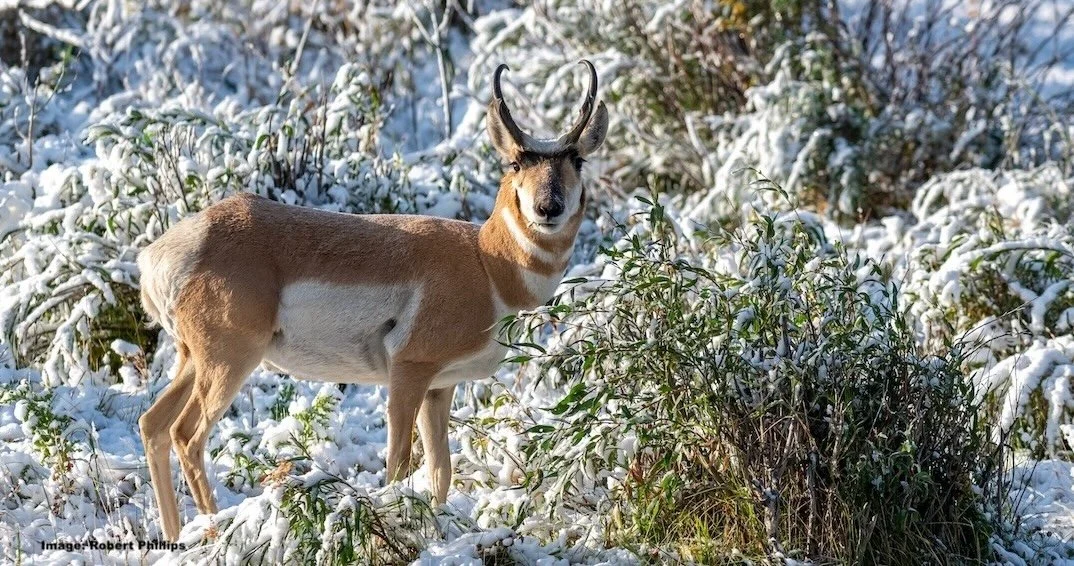
Pronghorn wait out the weather in Yellowstone’s lower elevations, quietly feeding on sagebrush and rabbitbrush in the open. Image: ©Kristen Cooney
Their big, dark eyes, framed by lovely, long lashes, look up at you with a placid gaze. You wouldn’t be the first to think, “easy prey”. Don’t be fooled.
Pronghorn Survival Superpower: Speed
The fastest land mammal in the Western Hemisphere, Pronghorns sprint at speeds of up to 60 mph – only the Cheetah is faster on land – but while the cheetah is a sprinter, the pronghorn’s oversized heart and lungs, large windpipe, and light bone structure allow it to maintain 30–50 mph for longer across open grasslands. Still, they crawl, don’t jump, over fences!
Best Place in Yellowstone to see Pronghorn in Winter:
Look for pronghorn between Yellowstone’s North Gate and Reese Creek and outside the Park on the road through Paradise Valley.
2. Bighorn Sheep
Bighorn sheep, like these two rams in Yellowstone, can be aged using the rings on their horns. Image: Sam Sherman
Bighorn Sheep (Ovis canadensis canadensis)
Conservation Status: Endangered
The Bighorn Sheep Facts.
The largest wild sheep in North America; Bighorn Sheep rams can weigh as much as 300 pounds, with 10% of their weight from their magnificent horns. The males curling horns grow continuously throughout their lives, but the females’ stop at about 4 or 5 years. Those horns are super impressive – but …
Bighorn Sheep Survival Superpower – Mountain climbing.
Unique hooves give Bighorn sheep their mountain-climbing superpower, allowing them to easily traverse rocky slopes and ledges less than 2 inches wide, thanks to the hard outer edge and soft, rubber-like inner pads of their split hooves. Most predators don't dare follow.
Best Place in Yellowstone to See Bighorn Sheep in Winter
Look to the cliffs. The pullout on the new road between Mammoth Springs and Gardiner is a good bet for Bighorn Sheep in winter, as is the confluence of the Lamar River and Soda Butte Creek. December is when Big Horn males battle it out – they move fast. Stay in your car, keep a distance, be ready to move.
3. Rocky Mountain Elk or Wapiti
Rocky Mountain Elk, male, standing against the winter sky in Yellowstone. Their antler make them prime hunting targets when they venture out of the protected Park. Image: Michael Overstreet
Rocky Mountain Elk (Cervus canadensis nelsoni)
Conservation Status: Least Concern
The Elk Facts:
Rocky Mountain Elk are big, weighing up to 1000 pounds; they reach speeds of up to 45 mph and clear an astounding 8 vertical feet in one leap. However, Elk are also the primary prey of Yellowstone’s most famous predator, Grey Wolves, and a favorite of human hunters – a big problem for large mammals that tend to congregate in open pastures and lawns in the winter. But Elk females have a superpower that helps.
Rocky Mountain Elk Survival Superpower - Wisdom
Super (Elk) Women. Female elk live longer than males, helped by their ability to learn and react to hunter’s habits. Image: ©Lightpoet
Grandma Knows Best. A new study cited by the Sierra Club and Earthly Mission suggests that elk learn hunters’ patterns. If females, which can live up to 20 years, evade hunters for 10 years, they become “almost invulnerable”. Males learn too, but their shorter lifespans—5–12 years—give them less time to master those skills. Follow Grandma, young ones!
Best Place in Yellowstone to See Elk in Winter
In winter, look along the road from Bozeman, through Paradise Valley to the North Gate and in Gardiner just outside the gate. Lower elevations and less snowfall make foraging easier.
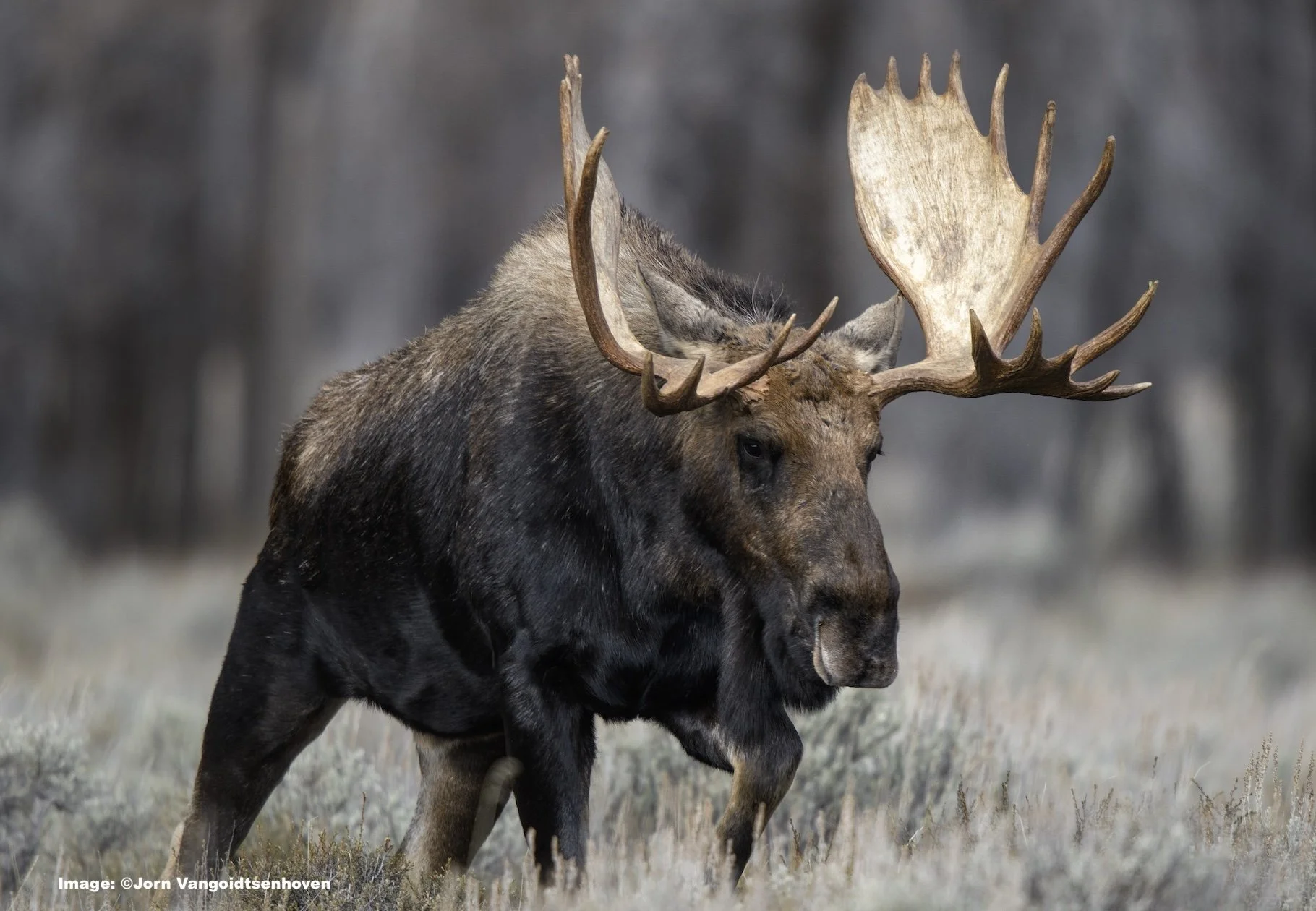
4. Moose (Shiras Moose, Yellowstone Moose, or Wyoming Moose)
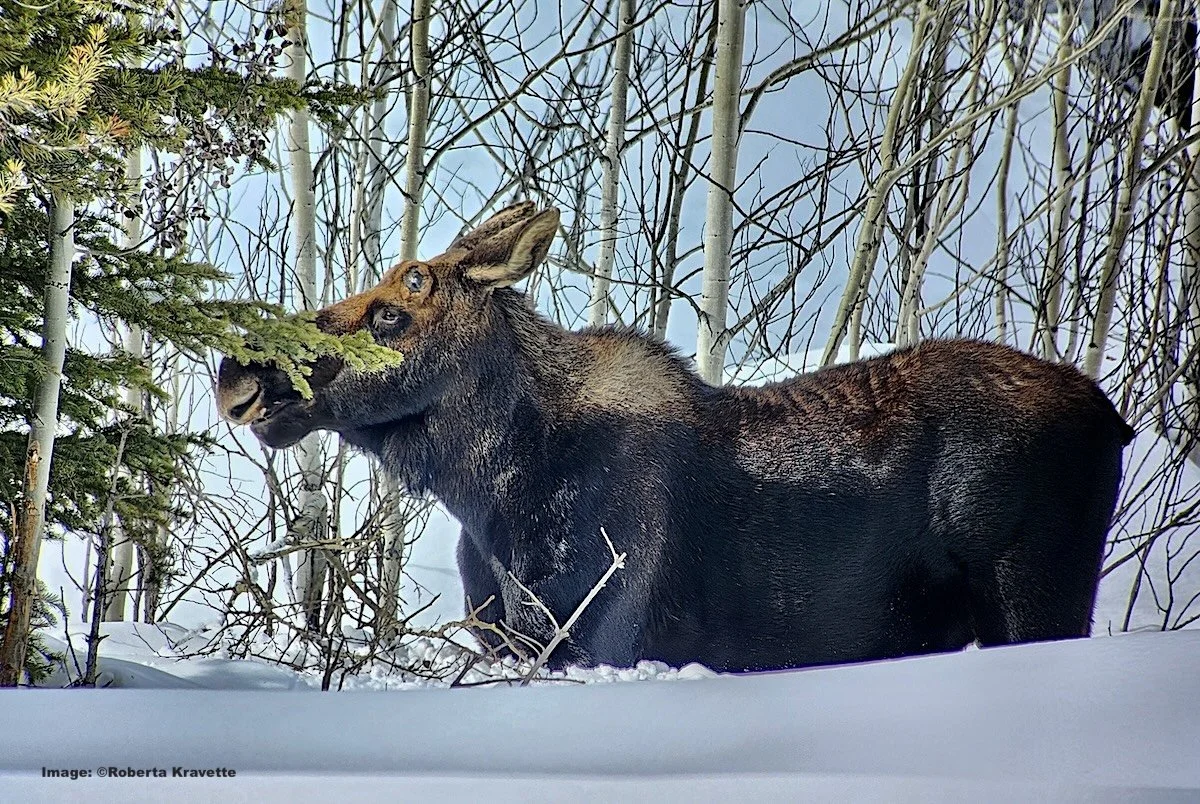
The largest member of the deer family, moose can grow to 2.1 meters at the shoulder and weigh from 800 to 1500 pounds (700 kg)! Cold can be hard to survive when you’re too big to hide; adaptation is key. Filmed by ©Roberta Kravette
Yellowstone Moose (Alces alces shirasi)
Conservation Status IUCN: Globally, Least Concern, but declining due to heat stress, habitat changes, and rising tick numbers from climate change.
The Moose Facts: . Moose weigh between 800 and 1,500 pounds and stand 5 to 7 feet tall at the shoulder.
Cold can be hard to survive when you’re too big to hide; adaptation is key. Adult males usually drop their formidable antlers after the fall rut to save energy, but that’s just the beginning of their winter survival story. Moose hooves act like snowshoes, splaying under their weight, and their undercoat, topped with hollow guard hairs, is so efficient that, when the air is warmer than 24 degrees Fahrenheit, the big browsers look for shade or roll in the snow. All that helps, but paramount to survival, is slowing down.
Their seasonal slacking allows for great moose viewing (look under willow stands), but also makes them vulnerable to frigid conditions. Thankfully, they have their nose.
Moose Survival Superpower: A Nose Built for Cold
A moose’s long nose is a built-in heater, helping keep its core warm and protecting its lungs by warming incoming frigid air through a complex network of blood vessels and long, winding nasal passages.
Best Places to See for Moose in Yellowstone in Winter
Soda Butte Creek, the Lamar Valley, and Pebble Creek are the most likely places to see moose in winter. I can attest to that! I’ve seen Yellowstone’s very limited moose population (150-250 individuals) every winter I have visited.
5. Bison (American Bison, Plains Bison)
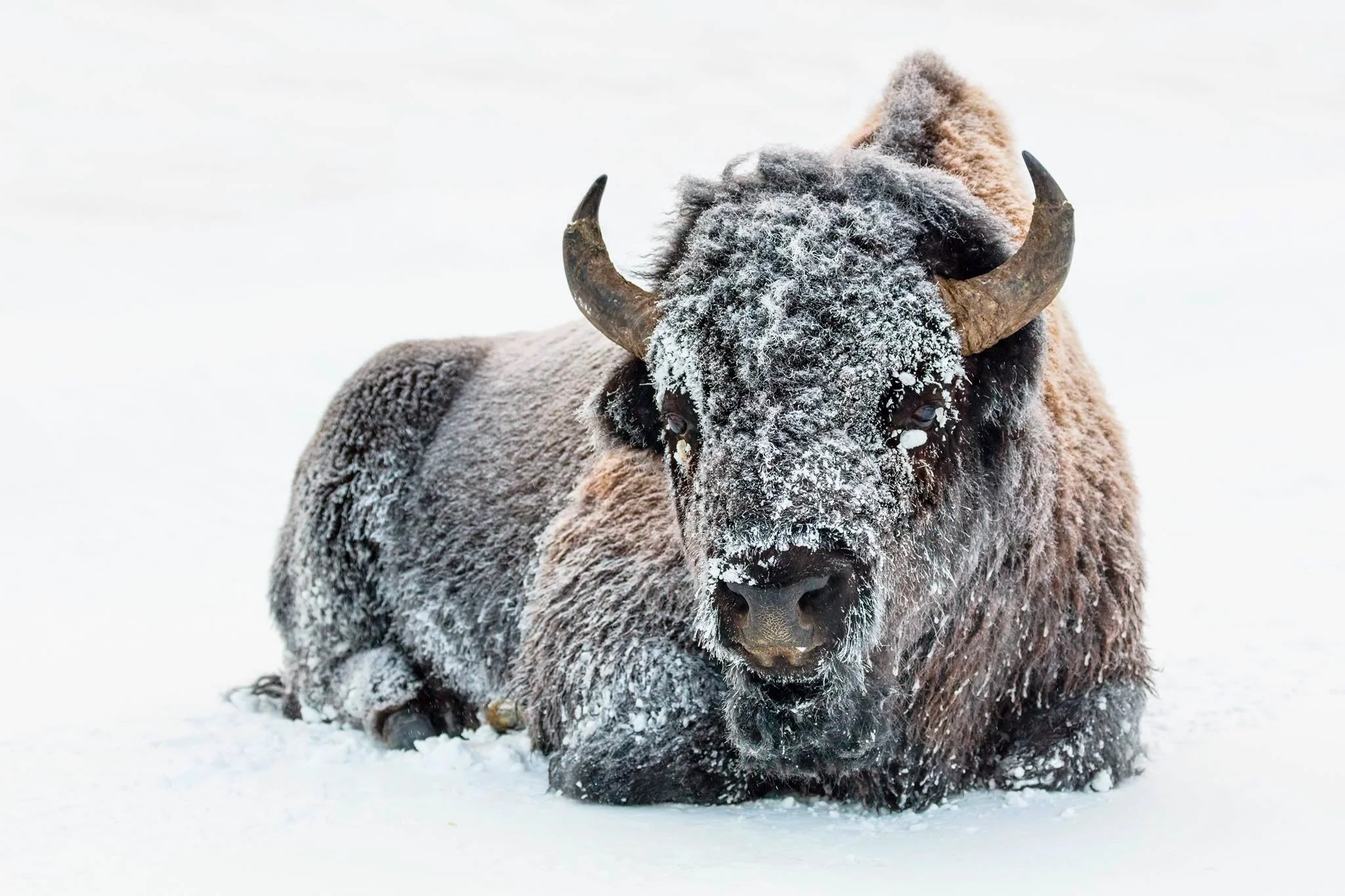
A Bison’s Superpower comes from its size and character. Built like a mountain with an attitude, this animal shapes its environment. Image: ©Kristen Rose Cooney
Conservation Status (bison bison bison)
Classified as “Near Threatened” on the IUCN Red List and “Critically Depleted” on its Green Status.
The Bison Facts.
Weighing up to 2400 pounds, Bison are the largest mammal in Yellowstone, where they have lived continuously since prehistoric times. Once numbering in the hundreds of thousands, by 1902, there were fewer than 2 dozen bison left in the Park. Thankfully, they were gathered and protected at the historic Lamar Buffalo Ranch, a place to visit when you are there.
Today, although actively managed, they number over 5000 in the Park.
The Plains bison’s size and natural habits have proven them ecosystem engineers (another superpower!), boosting biodiversity and helping to mitigate Climate Change – however, that is a different article.
Plains Bison Survival Superpower - Staying Power
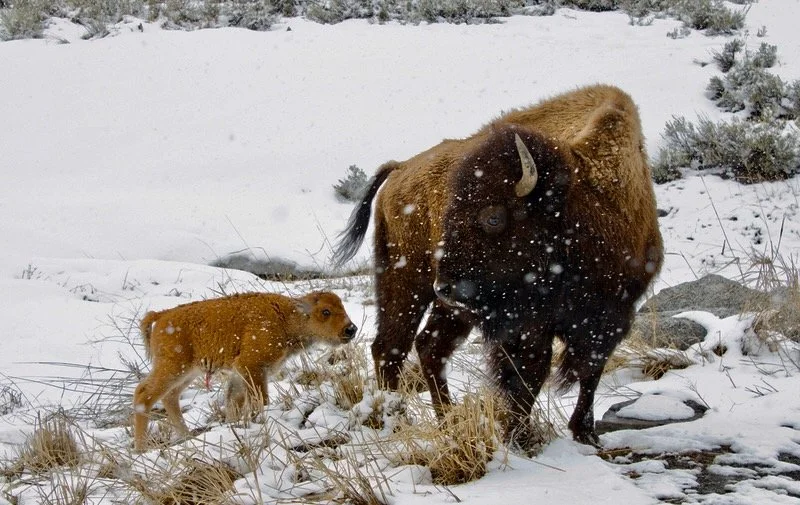
The Bison is an Extreme Winter Survival Machine. Massive shoulder humps, made of elongated vertebrae and muscle, allow them to swing their heads like snowplows. But the Bison’s winter survival superpower is its ability to look a storm in the eye, literally and figuratively – and wait it out. Bison turn into the storm, facing the worst of it with a thick coat so efficient that snow does not melt on their backs. They stare down the storm until the storm is no more.
One of our guests on our Winter Wolf Watching and Learning in Yellowstone tour was photographing this Bison when a little badass traveling with him caught his eye. Thanks: ©Ed Ballings
Best Place to See Bison in Yellowstone in Winter:
The Lamar Valley and Hayden Valley are the best places to see bison. But in winter, I have seen them congregate around the North Gate both inside and outside the Park.
The Super Powers of Yellowstone’s Apex Winter Predators
No amount of prey superpower can stop Yellowstone’s two mighty land predators. These are Yellowstone's bad-ass winter predators.
6. Mountain Lions (Puma, Cougar, Panther)
Mountain Lion Conservation Status: (Puma concolor)
(IUCN), Least Concern, globally, but extirpated in some former ranges.
Mountain Lion Facts
Elusive and solitary (except during mating), these cats are the animals most likely not to be seen – but they are there.
Extirpated in 1930, they self-recolonized Northern Yellowstone in the early 1980s. Like wolves, Mountain Lions prey on deer and elk, which they bring down solo and then must defend against the wolves and bears that regularly steal their kill.
According to The Yellowstone Cougar Project, there are presently between 29 and 45 Mountain Lions in the Park. Image: ©Dennis Donohue
One goal of The Yellowstone Cougar Study is to understand how these top predators manage in their limited protected habitat, surrounded by an avid hunting Averaging 160 pounds for a male and 103 for a female, most Mountain Lions are bigger, heavier, and more agile than wolves (90-110 pounds), but against a pack, their best defense is to high-tail it up a tree and wait them out.
One goal of The Yellowstone Cougar Study is to understand how these top predators manage in their limited protected habitat, surrounded by an avid hunting culture and habitat changes brought about by human encroachment and a warming climate.
Mountain Lion Survival Superpowers - Olympic Worthy Track and Field Skills
World-Class (Track and Field) Athleticism! A human with the same ability would be standing on a gold-medal platform. A Mountain Lion’s sprinting speed reaches up to 50 MPH; over long distances, they can maintain a 10 MPH run. But their jumping is truly super: Mountain Lions can leap 45 feet horizontally and 18 feet straight up.
All of these Superpowers are amazing – but the greatest Superpower of all belongs to Yellowstone’s Apex Predator – and the most charismatic of all its winter mammals.
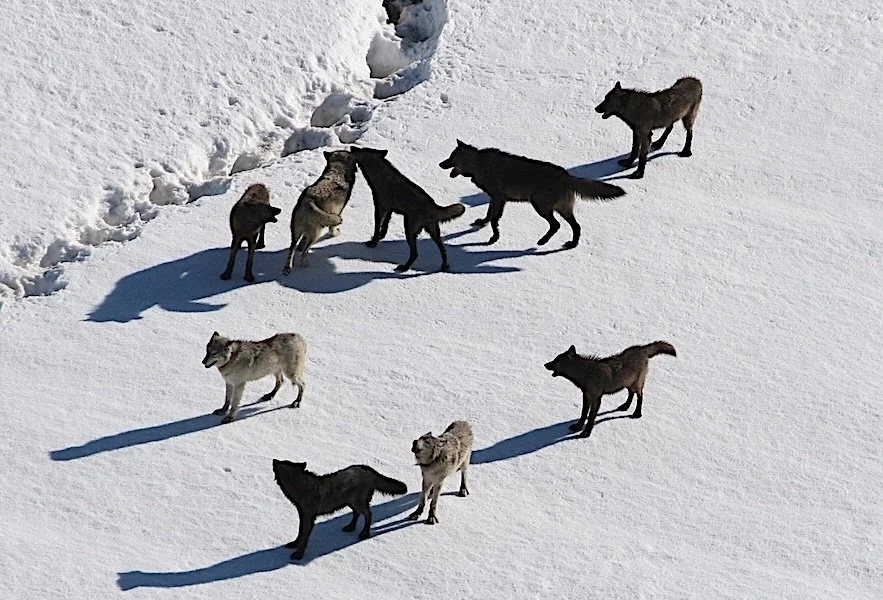
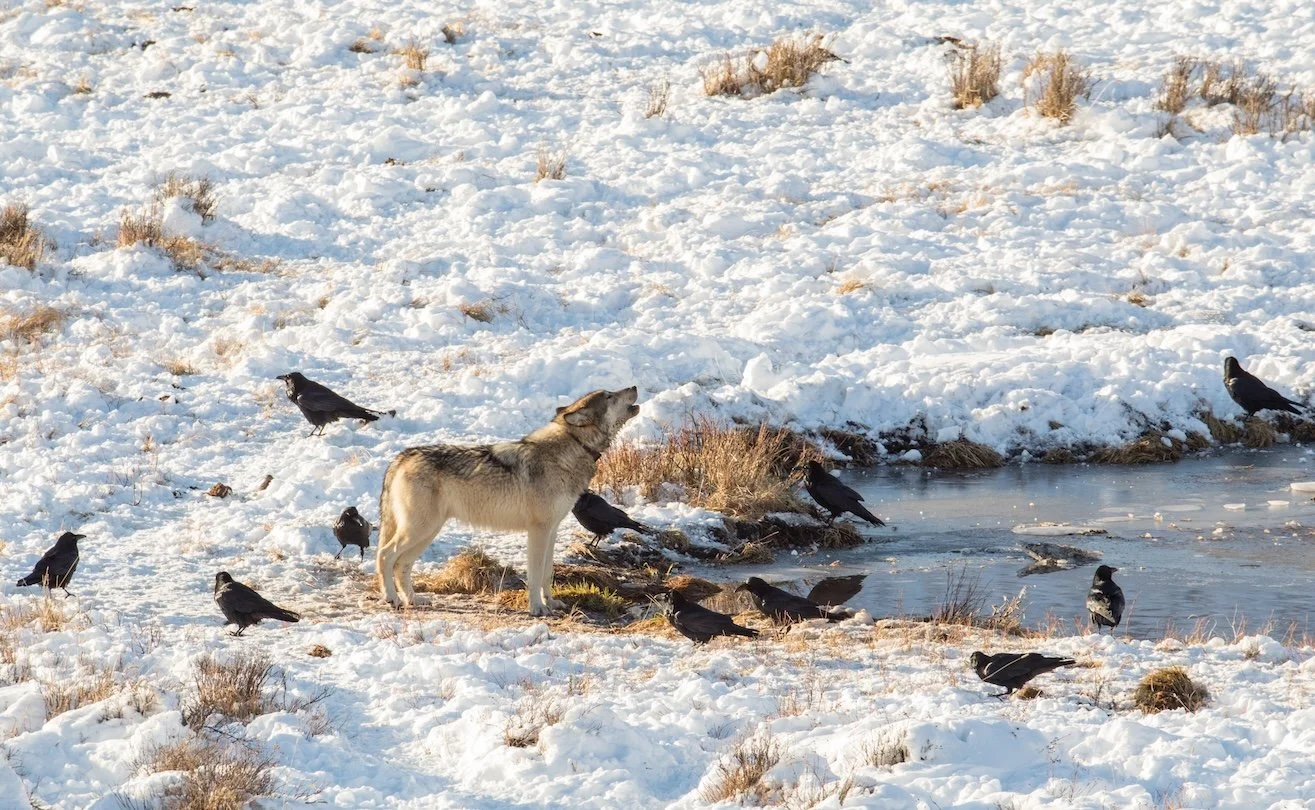
7. Grey Wolf: The Ultimate Survivor
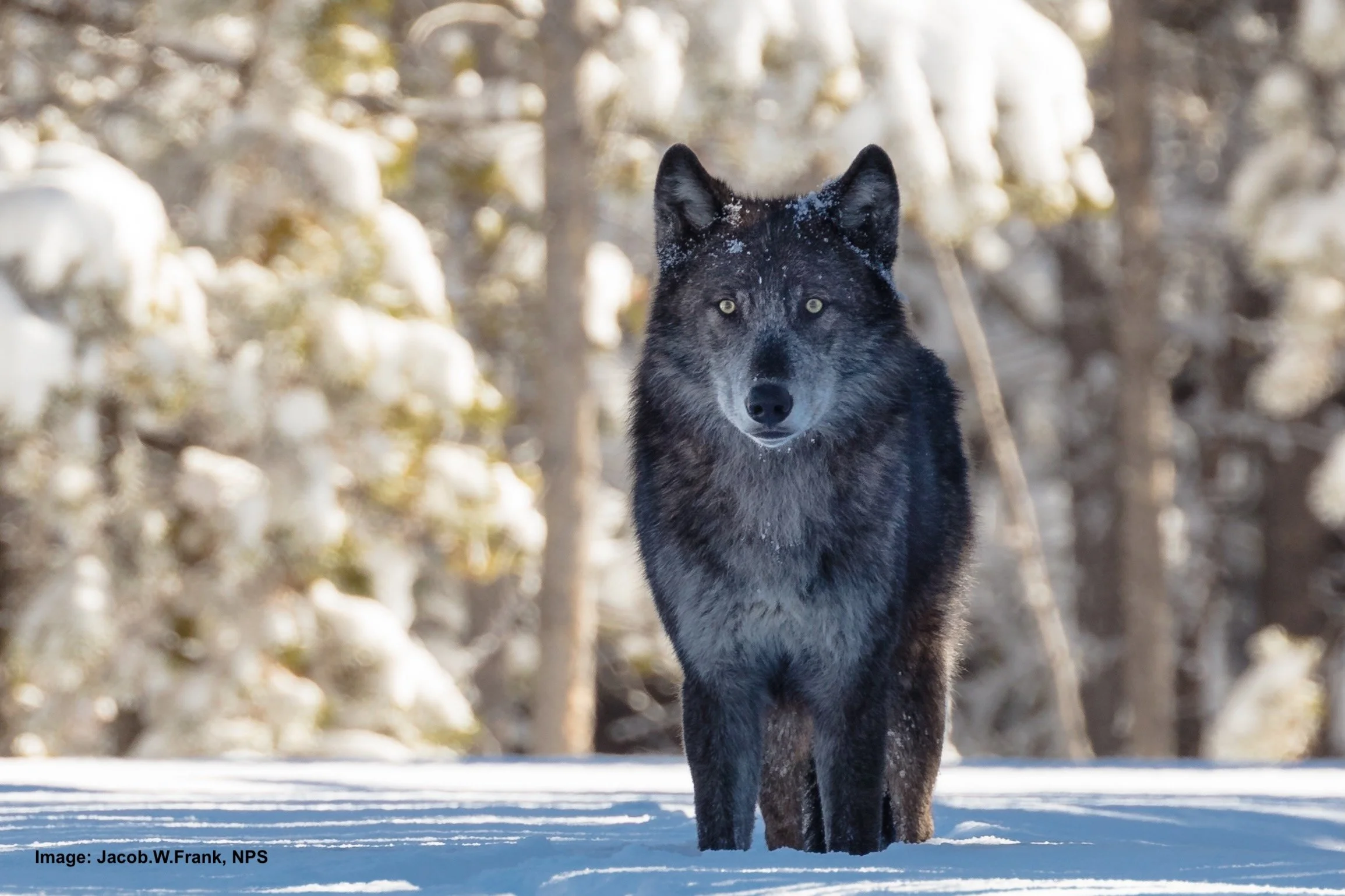
Extinct in Yellowstone National Park in 1926, and reintroduced (31 wolves) between 1995-97, there are presently 84 (Aug. 2026) Grey wolves in Yellowstone. Image: Jacob W. Frank NPS
Conservation Status: Canis Lupis
Globally (IUCN): Least Concern, but extirpated in most former ranges; legally hunted and poached in others.
Grey Wolf Facts
The Grey wolf is the largest wild member of the canine family, but still, the biggest grey wolf recorded in Yellowstone topped out at only 145 pounds – smaller than Mountain Lions and every animal listed in this story.
Size is clearly not the wolf’s superpower, nor is its bite force, which, at 400 PSI (pounds per square inch), is about equal to a mountain lion's (350- 400 PSI), but significantly less than a black bear's (600-800 PSI) or a Grizzly/brown bear (975-1160 PSI). So…
Grey Wolf – The Greatest Superpower: Teamwork!
The wolf’s Superpower is forged in play that strengthens bonds and molds the pack (family) into an unbreakable team. Image: ©Walter Arce
Teamwork, or “cooperative pack intelligence,” is the maximum superpower that makes the Grey Wolf the ultimate survivor.
Working as a team, wolf packs are families that raise pups, give injured or sick pack members time to recover, find lost members, protect territory and each other, successfully bring down animals many times the size and strength of an individual, train new leaders, and generally sustain the pack, including in times of stress like the long, cold winters of Yellowstone.
One sweet Superpower manifestation is the wolf’s propensity to play. As 30+ years of close daily observation in the Park has shown, unless a situation requires full attention, there is always time for a good time.
Best Places to See Grey Wolves in Yellowstone in Winter – Join us!
Look for wolves in the Lamar Valley, Hayden Valley, Slough Creek, in Little America, and on the road from Gardiner to Cooke City – which is exactly where we spend our Annual Winter Wolf Watching and Learning time. Witness all these Superpowers for yourself. Join us!