
How We Found Wintering Owls in Minnesota’s Wonderland, the Sax-Zim Bog
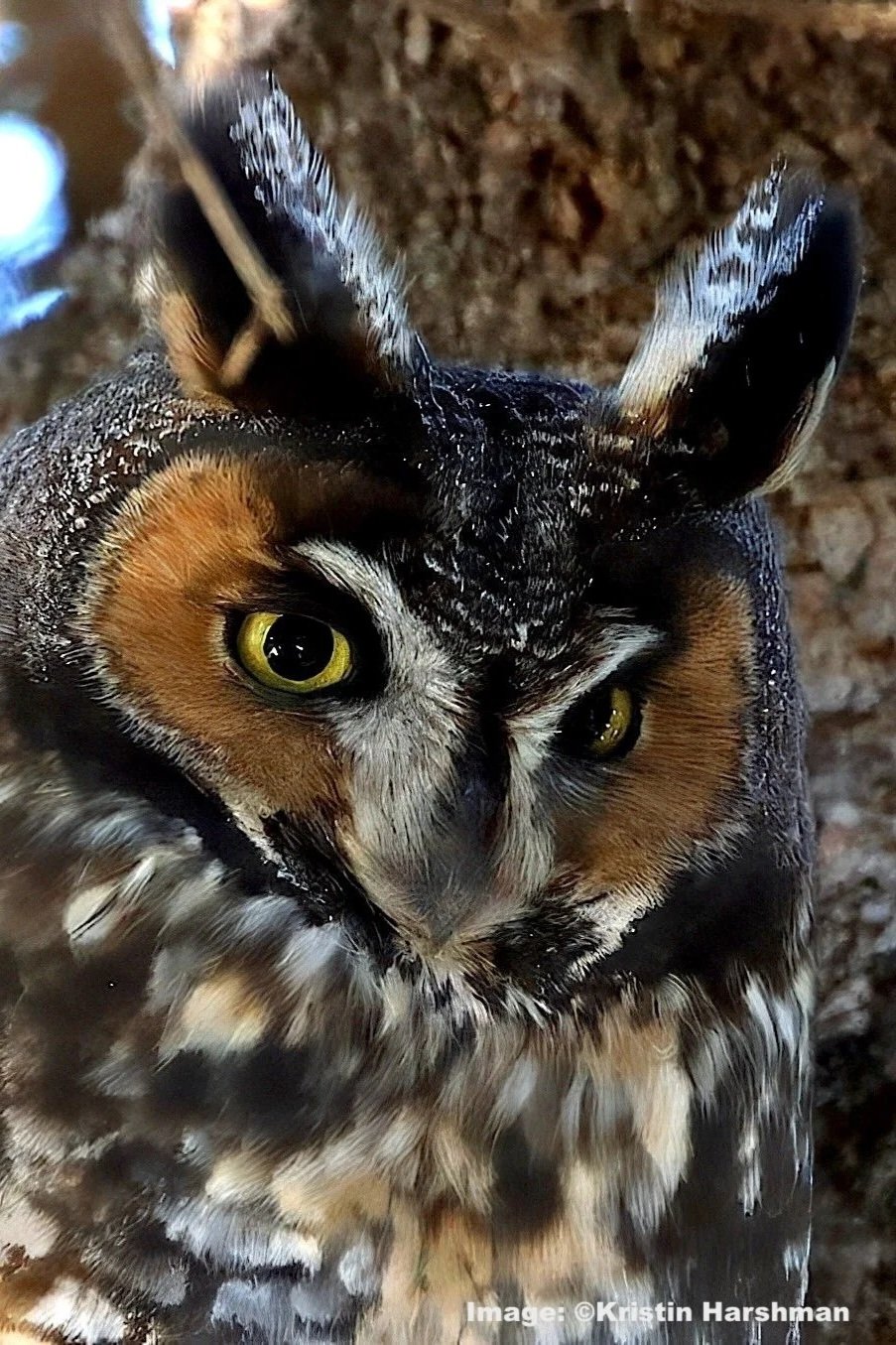
We were so excited to see 8 Long-eared owls on our first afternoon in Minnesota, including this handsome guy - all images were taken with long lenses. Image: ©Kristin Harshman

Follow the birds, and they will lead you to the most beautiful places on earth.
In January, our 2026 annual fundraising trip for Project SNOWstorm brought us to Northeastern Minnesota’s winter wonderland, between the snowy, bio-rich Sax-Zim Bog and the North Woods’ seemingly endless conifers. All bird images were taken with a long lens.
Editor’s Note: 10% of every ticket sold for all responsible wildlife and birding adventures goes to a US-based conservation-missioned nonprofit organization in the name of the traveler. Project SNOWstorm monitors and studies threatened Snowy Owls. Our trip to Minnesota raised 9% of its 2027 fundraising goal.
A Surprise Welcome by Eight Long-Eared Owls
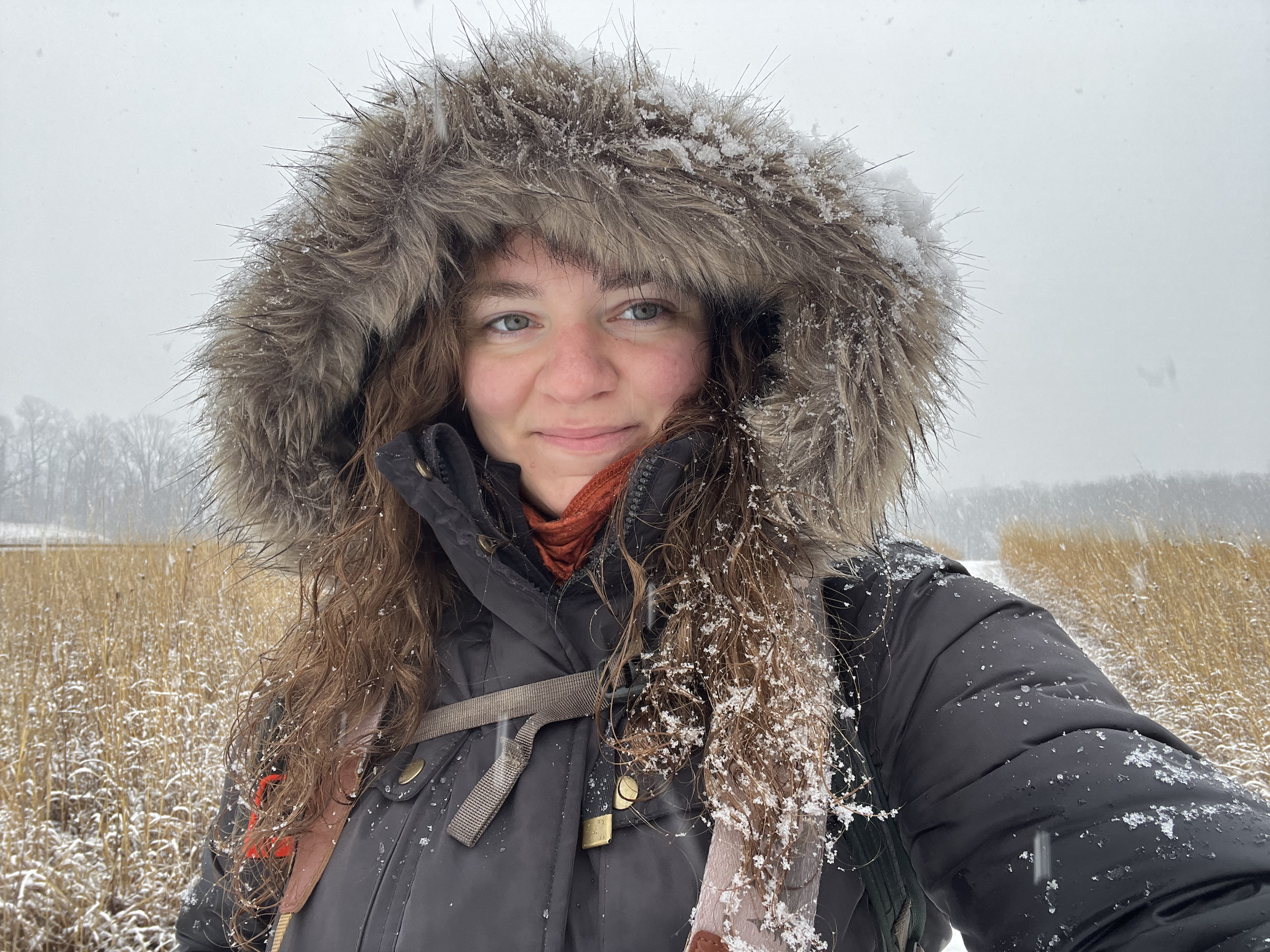
Kristen Cooney, Destination: Wildlife Adventure Leader, conservationist, author.
It was freezing cold, below freezing actually, when our group, arriving from five different states, gathered at our hotel on the outskirts of Minneapolis. The idea was to settle in for one night and rest before the start of our adventure in the morning – but the birds called. Instead of staying warm and comfortable inside, we set off with our guide, Kim Risen, for a quick, brisk owling session in the city’s nearby parks.
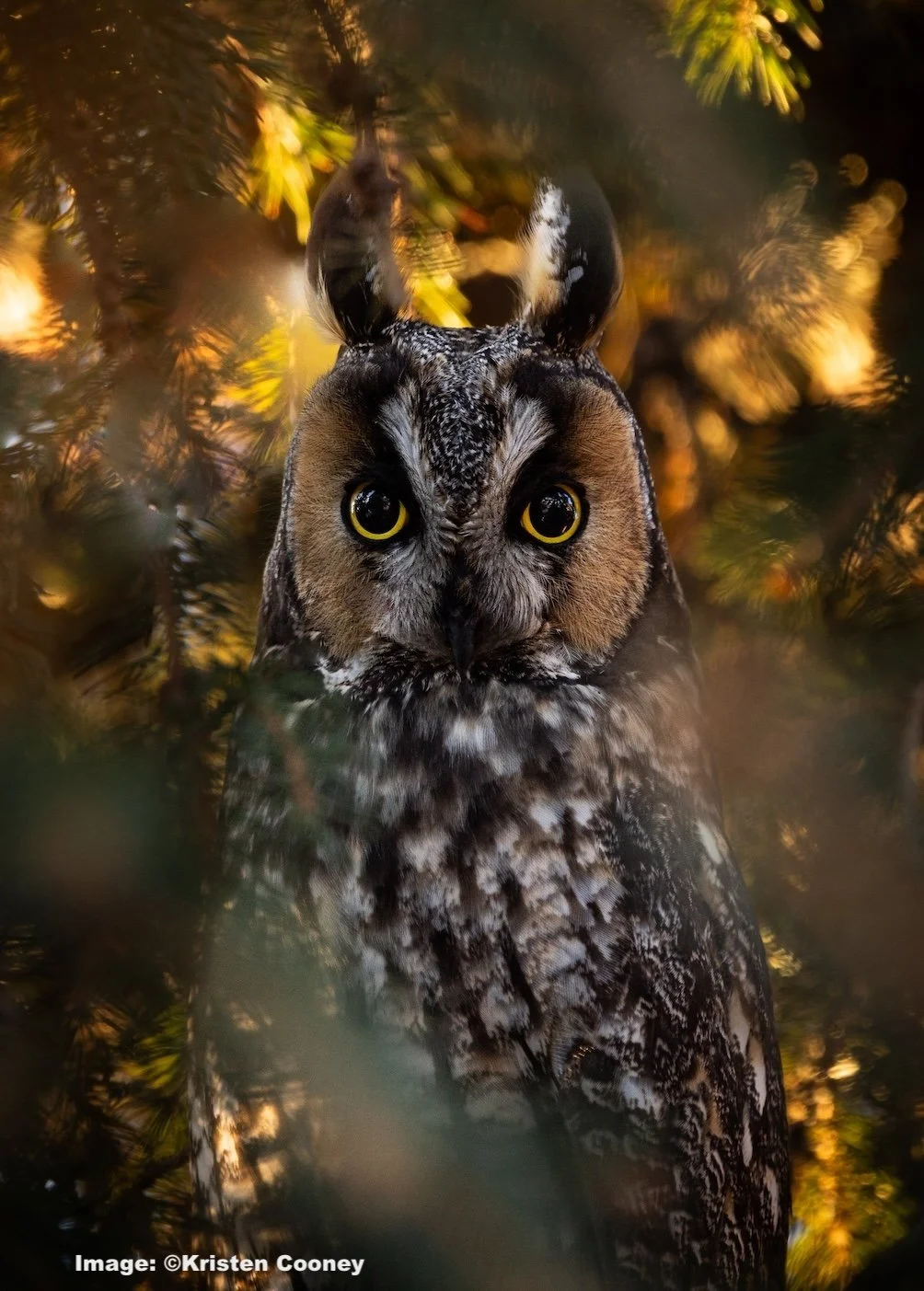
We looked straight to the park’s pine trees, carefully scanning each tree between boughs and the dappled light of the frigid late afternoon winter sun until …a pair of stunning, large yellow eyes staring back at us was revealed!.
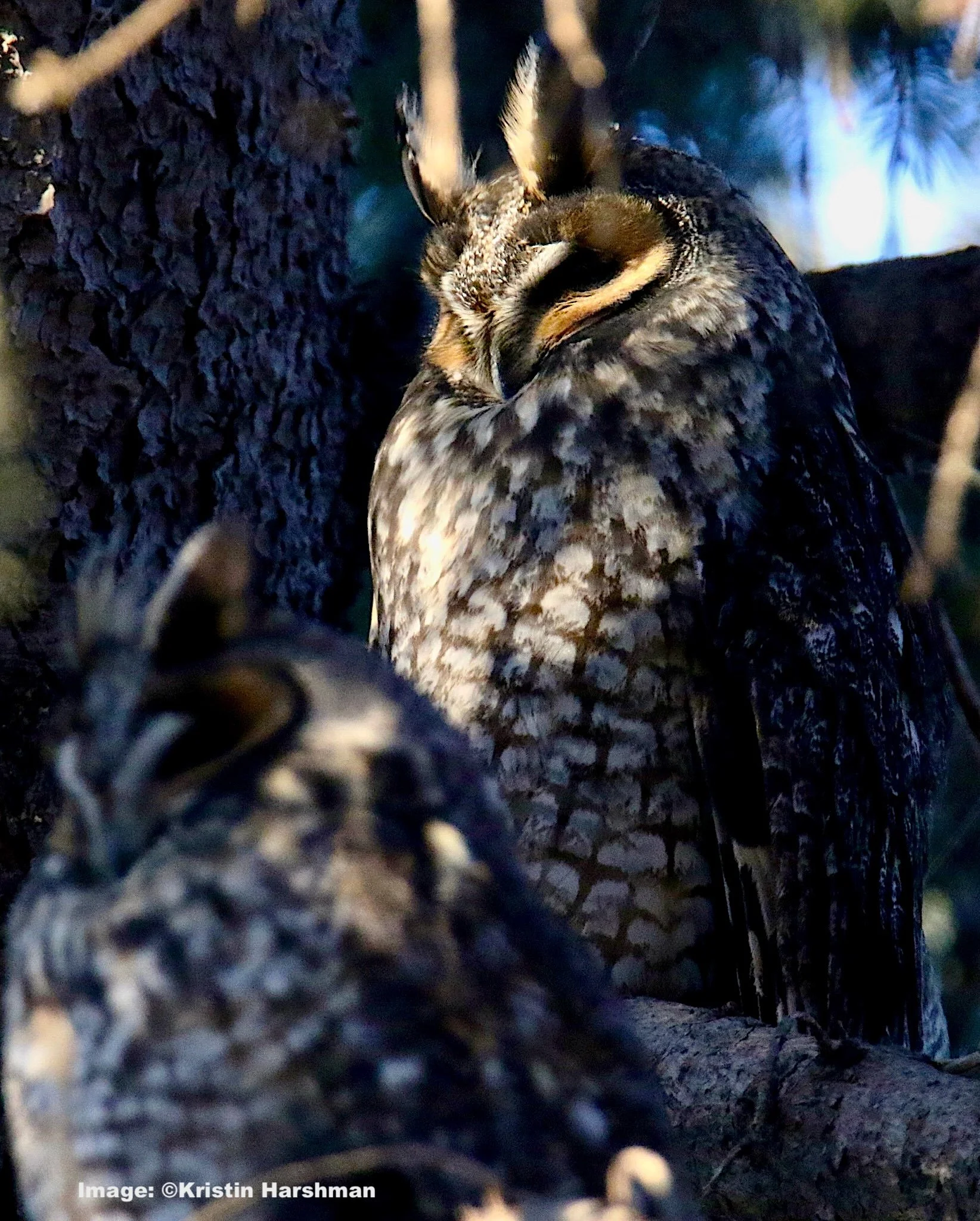
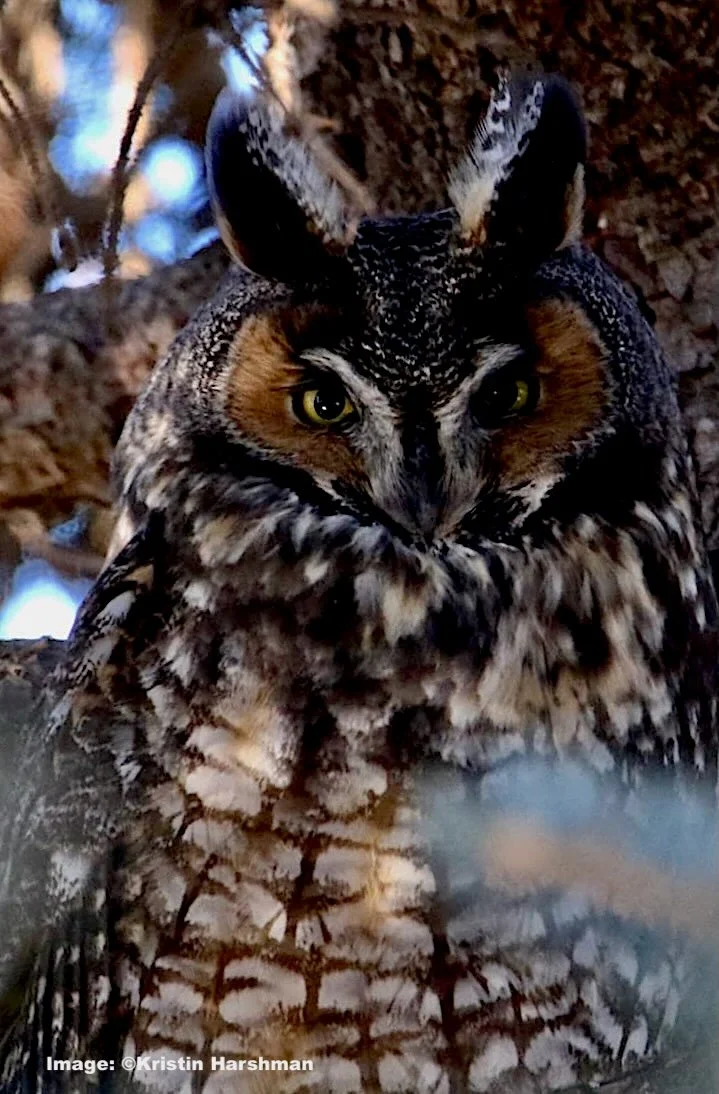
Observing and photographing from the edge of the parking lot so as not to disturb them, we were able to find a total of 8 Long-eared Owls roosting along the tree line! We celebrated our successful start to the trip with quiet, excited whispers and smiles.
The owls swayed gently in the afternoon winds and began to stir as the sun lowered. Dusk was falling on the frozen park. After everyone had their chance to quietly observe them, we left the owls to let them prepare for their evening hunt.
A Saw-whet owl scanned the ground for prey as we watched the little owl in awe. Image: ©Kristin Harshman
We hustled back to our vehicle and headed off to our Welcome dinner at Ciao Bella, a cozy local Italian restaurant. The place was a hit with our group and, clearly, a favorite with Minnesotans as well; it was packed on a Wednesday! The air was full of warm chatter, and we lucked out being seated next to the working and welcoming stone fireplace. Seeing the owls in our first minutes in Minneapolis made this “welcome dinner” a real celebration.
We shed some layers, enjoyed a few drinks, and savored a tasty array of entrees. The group ordered everything from seared tuna to warm, homey lasagna. With full bellies, we returned to our rooms for a good night’s rest before pushing northward towards Duluth the following morning.
The next day, after an early breakfast, we began our trek north towards Duluth, our “base camp” for exploration of the Sax-Zim Bog and surrounding area. We made a few stops, including in a snug little local cafe to fuel up for lunch, arriving in Duluth with just enough daylight to cruise and check for Snowy Owls in some open habitat outside of town.
We Found Snowy Owls, Arctic Royalty!
We discovered this Snowy Owl high atop a mound of plowed snow - the perfect throne from which our winter guest could start the evening’s hunt. Image: ©Kristen Cooney
Luck was with us again! We spotted multiple Snowy Owls in the overcast, heavy snow that slowly clouded out the sun's light. Bird watching brings us to the most beautiful places – but they also make the un-beautiful, wonderful. In a fairly industrial area with the hum of machinery in the air, there she was, a gorgeous Snowy owl on a plowed pile of snow. The perfect “throne” for our winter visitor to hunt from. What a treat!
The thick lake-effect snow was relentless, but it made for a quiet, magical encounter. With no wind and few people around, it was just our group and this female owl, with the snowfall shrouding the rest of the landscape around us.
Exploring the Inconic Sax-Zim Bog
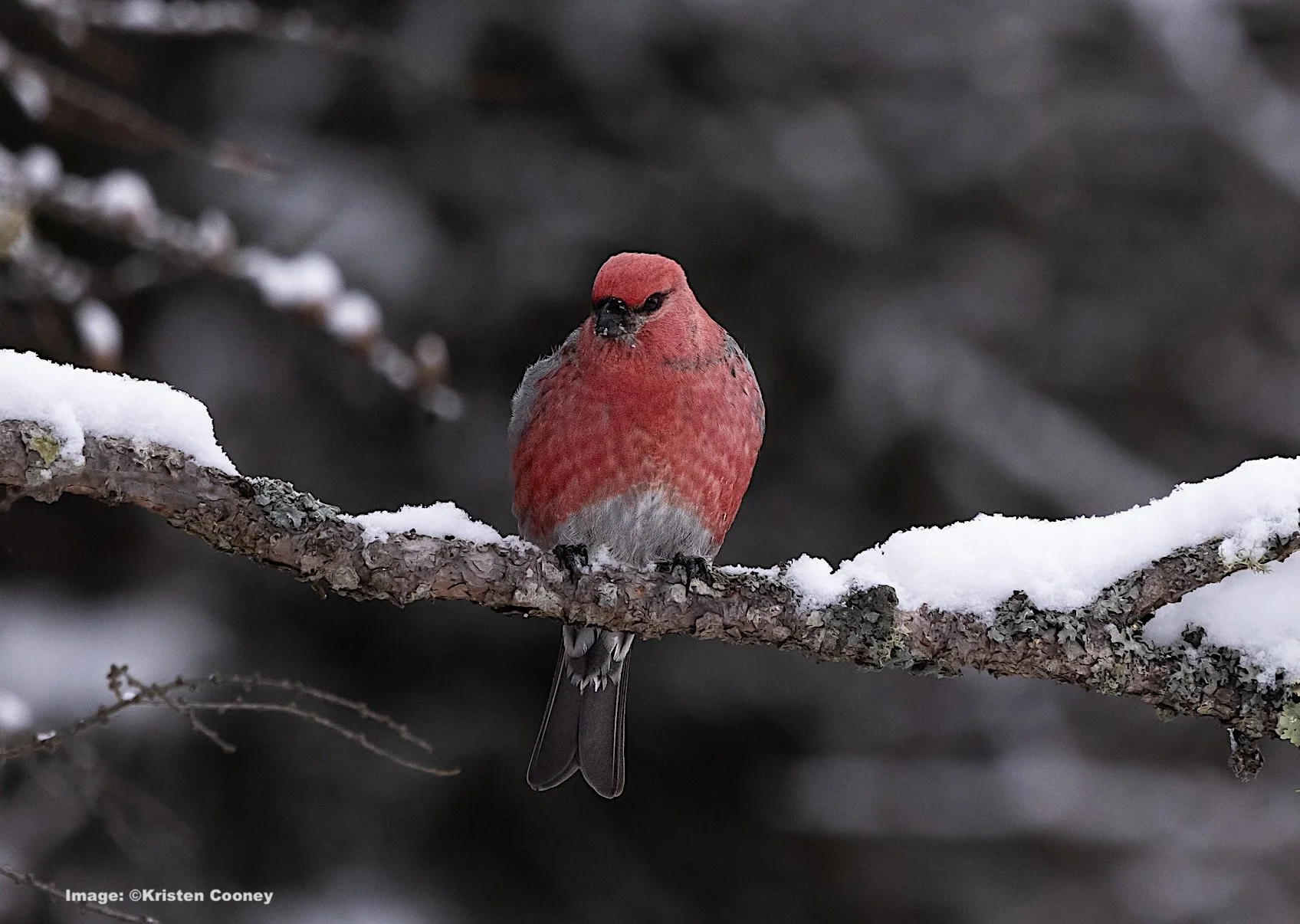
This Pine Grosbeak provided a wonderful splash of color against the wintery background. Image ©Kristin Harshman
On our second morning, we left before sunrise and headed straight for the iconic Sax-Zim Bog. There, we drove the roads that cross through the bog and stopped at several bird feeder stations. The snow continued to pitter-patter all around us, and like a frosty blanket, enveloped us and obscured the landscape. This is where we were treated to some delightful pops of color in Minnesota’s often gray winter landscape when the Pine and Evening Grosbeaks appeared. They are showstoppers!
After watching and photographing the energetic little grosbeaks for a while, we continued down adjacent rural snow-covered roads and found a powerful female Rough-legged hawk on a post. We watched as she searched the grassland below for her next meal. Then, she took off. We didn’t move as she hovered in place, continuing to scan the field. We observed her do this over and over. Her behavior, seemingly suspended in the air, is called kiting and is performed by many raptors.
Warming up in the visitor center at the Sax Zim Bog. Carol, Jeff, Kris, and our guide, Kim Risen Image: ©Kristen Cooney
We stopped at the visitor center, fragrant and warmed by the wood stove. The center offers a good array of educational materials on the bog's habitat and species, and, encouraged by the wood stove, we took our time perusing them.
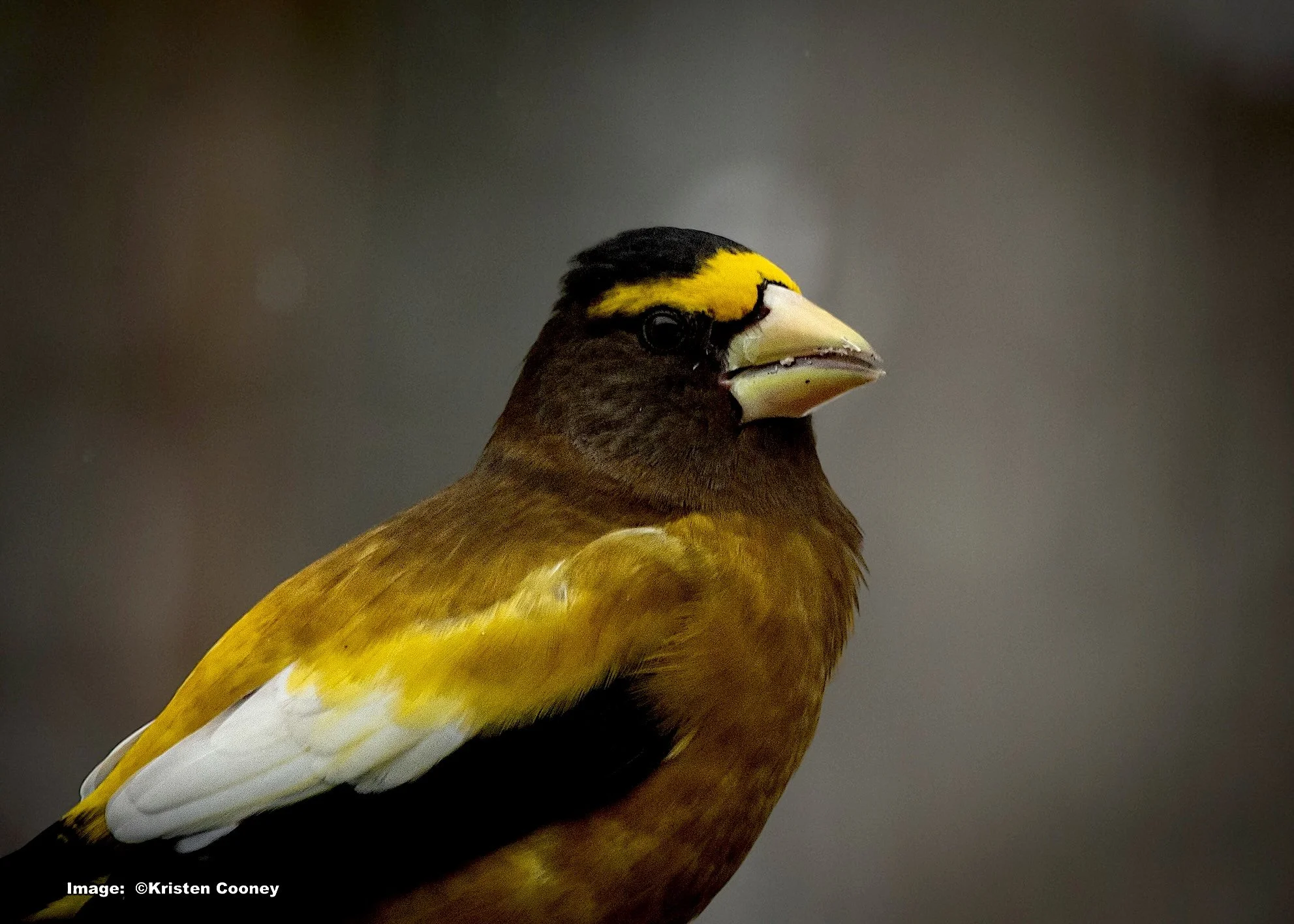
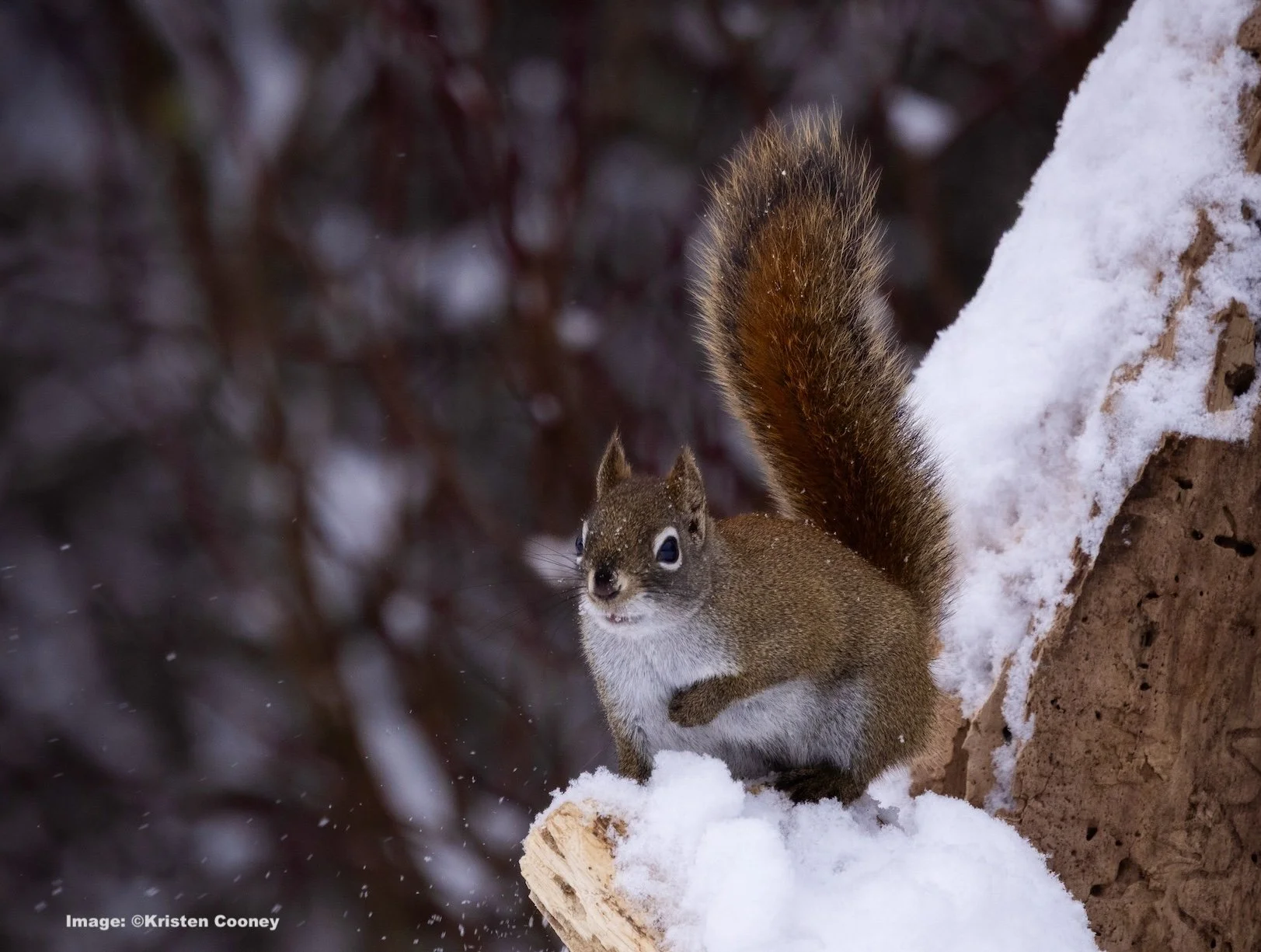
The building included feeder stations and a gift shop. We all picked up a few souvenirs, and in the overcast weather, were once again treated to the brilliant male Evening Grosbeaks, like pops of sunshine. A flock of less than a dozen males darted between the snow-covered sprigs of the forest backdrop and back to the feeder for a handful of seeds. The delightful sound of their chattering pierced right through the windowpane.
A Rare Northern Hawk Owl Show His Stuff
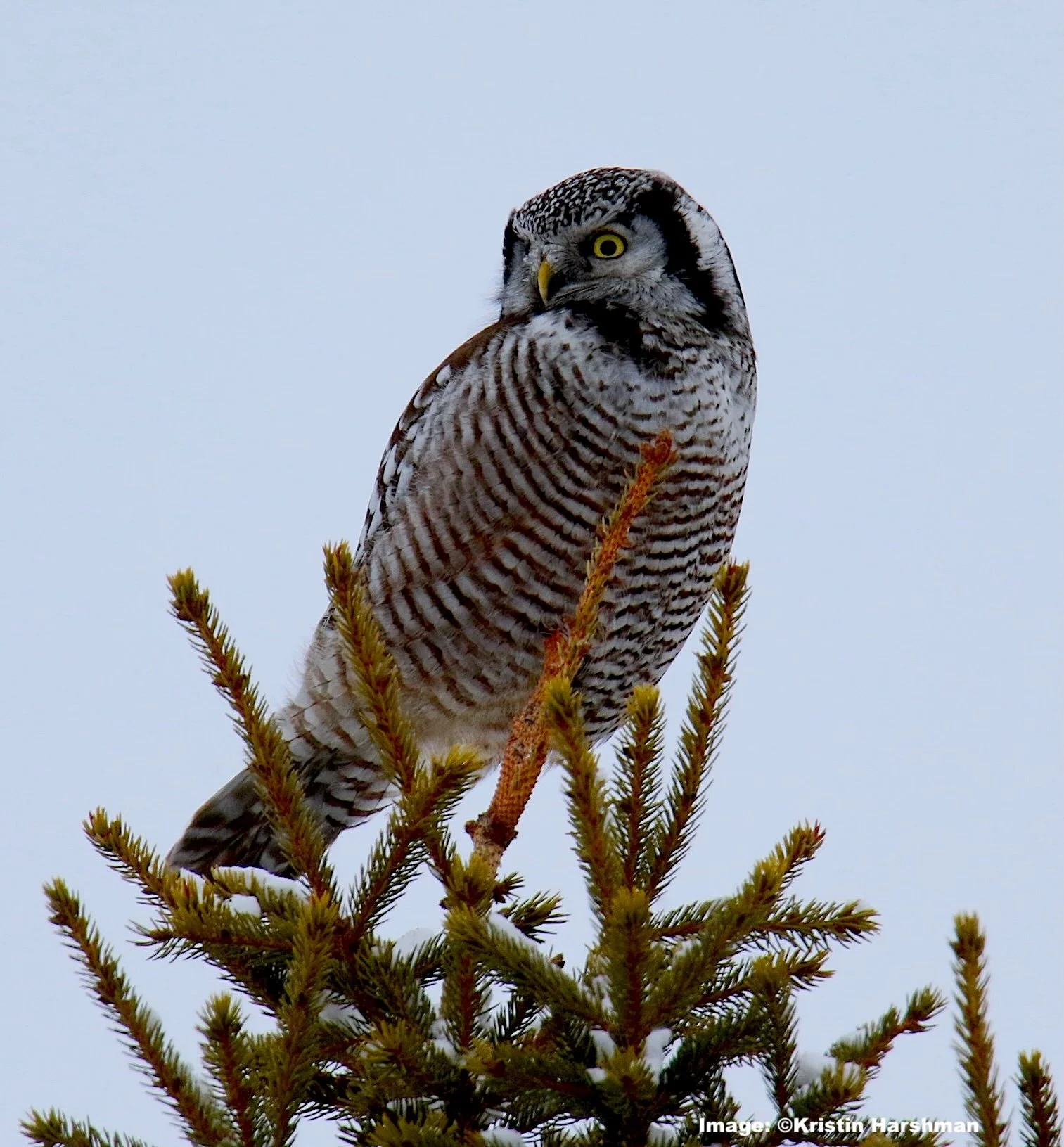
Later, we followed reports of a Northern Hawk Owl, a rare diurnal owl species and a precise and compact hunter. Driving slowly down the road where the owl was reported, we spotted him (we guessed it was a male but could not be sure as hawk owls are not sexually dimorphic) at the very top of a conifer along the side of the road.
We stopped to watch for a while, and like clockwork, the owl moved between perches, hunting for voles with precision. This was the coldest encounter so far, with a-2°F wind chill and unrelenting wind.
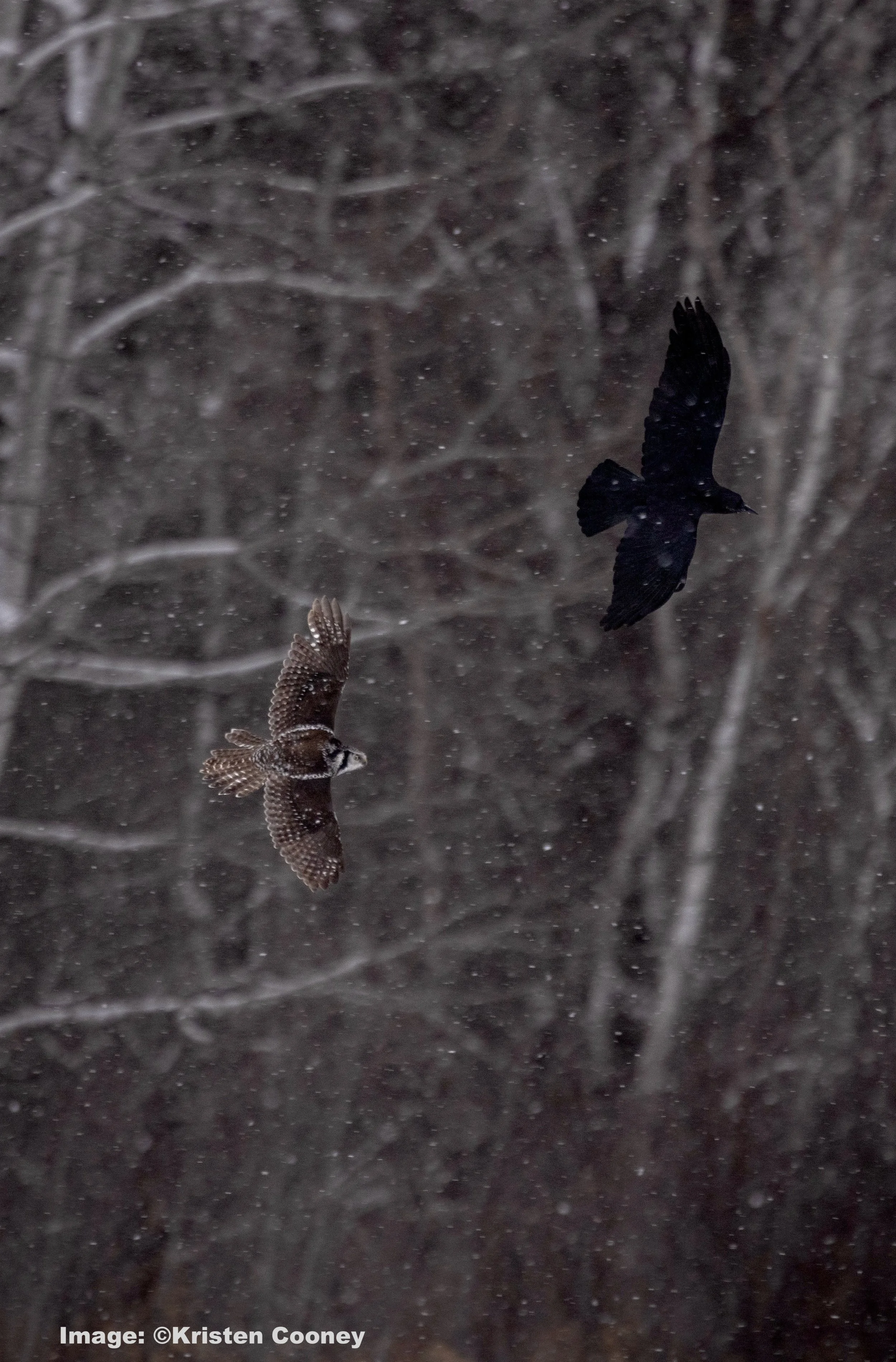
It was impressive to watch this pint-sized hunter unfazed by the cold, wind, and heavy snow as he hunted voles with great success and cached them throughout the landscape, in tree hollows, large tufts of grass, and elsewhere, for later dining. The only other time the owl made a move was to push out intruders, like the raven ( see the image above), who didn’t realize whose territory he’d flown into!
The group's photographers took many photos of this sequence, though it was over in the blink of an eye.
That evening we thawed out at a Minnesota classic: Grandma’s Restaurant. Many of us opted for the wild rice soup. Wild rice grows in the wetlands across this region in Minnesota, and we can attest to it being the perfect cozy dinner meal after a long day in the frigid bog!
A Snowy Owl Turns the Mundane to Magic
A stunning (probably) female Snowy Owl on a fence post near the industrial reaches of town. Image: ©Kristen Cooney
The next morning, we traded the quiet remote habitats of the bog for an industrial road just outside of town, and for good reason. This more developed yet open landscape feels like home to Snowy Owls, who are accustomed to the Arctic's flat, open tundra in Canada’s high latitudes and beyond. In our slow cruise down the road, we spotted several, including one just along the fencepost running parallel to the road.
The calm demeanor of these owls among the very urban landscape made for fantastic observing. Unphased by the hustle and bustle, the distant traffic, and the industrial whirr nearby, she moved between several perches on the landscape - a fencepost, a snow-pile, and even the wing of a plane sitting vacant nearby - waiting and watching for any hint of prey lurking below. (Stress can kill, read How to Watch a Snowy Owl in the Wild.)
Near Grand Marais, a frozen jetty on Lake Superior’s shoreline. Image: ©Kristen Cooney
The following day, we headed for the small town of Grand Marais, along the semi-frozen northern shoreline of Lake Superior. It is incredibly quiet and cozy in this area in mid-winter, and we enjoyed some beautiful scenic drives overlooking the vastness of one of the world’s largest freshwater lakes.
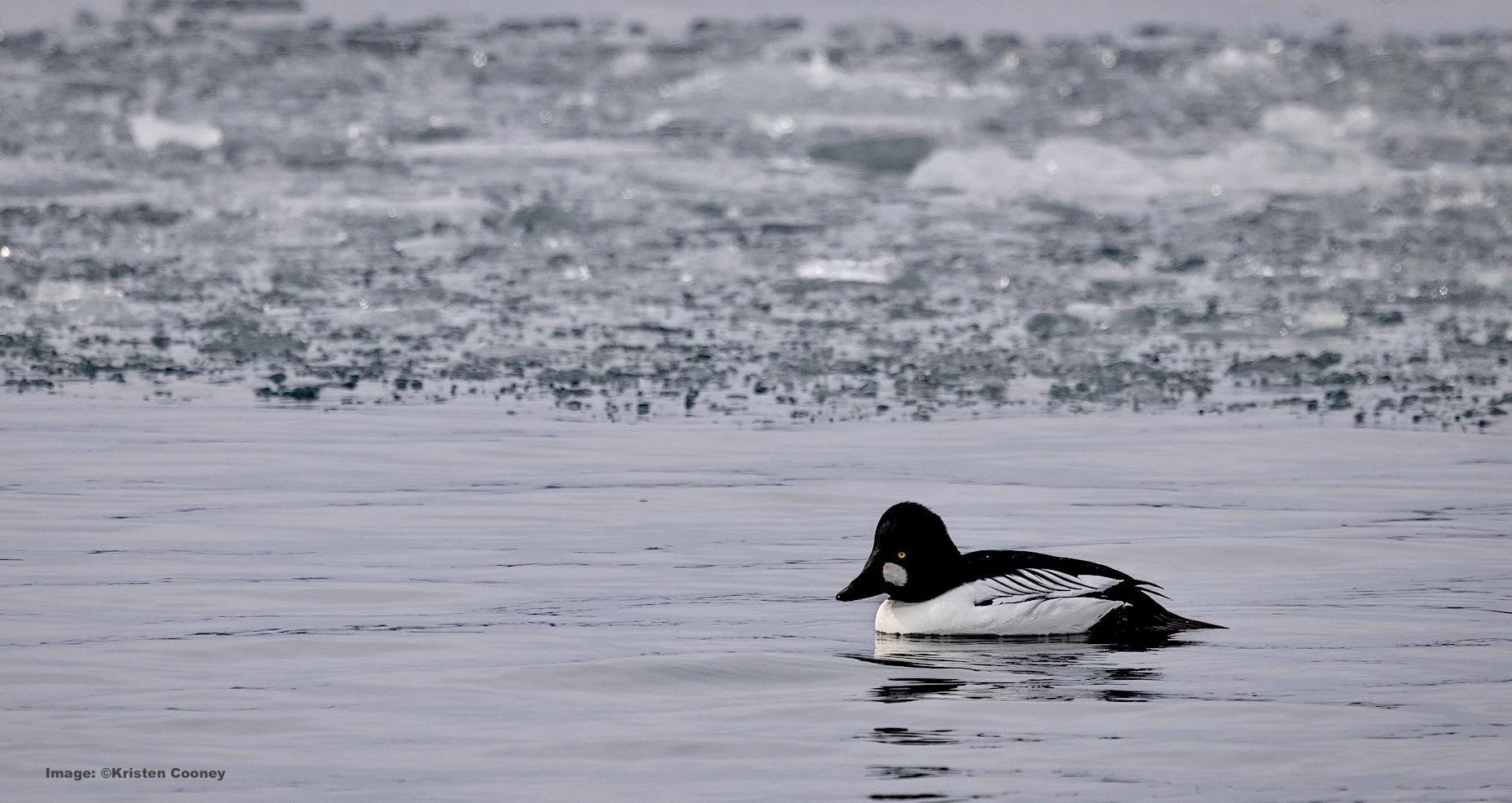
The wind was whipping that morning, a reminder of winter’s harshness here. Our many layers of warm and wind-breaking gear were being put to the test. With a fresh dusting of snow across the land, we stopped a few times for scenic lighthouses and other overlooks. Here, we also stopped to scan the almost-frozen harbors and shorelines for sea ducks and were treated to views of many stunning male Common Goldeneyes in small sections of still-open water in the harbors we visited.
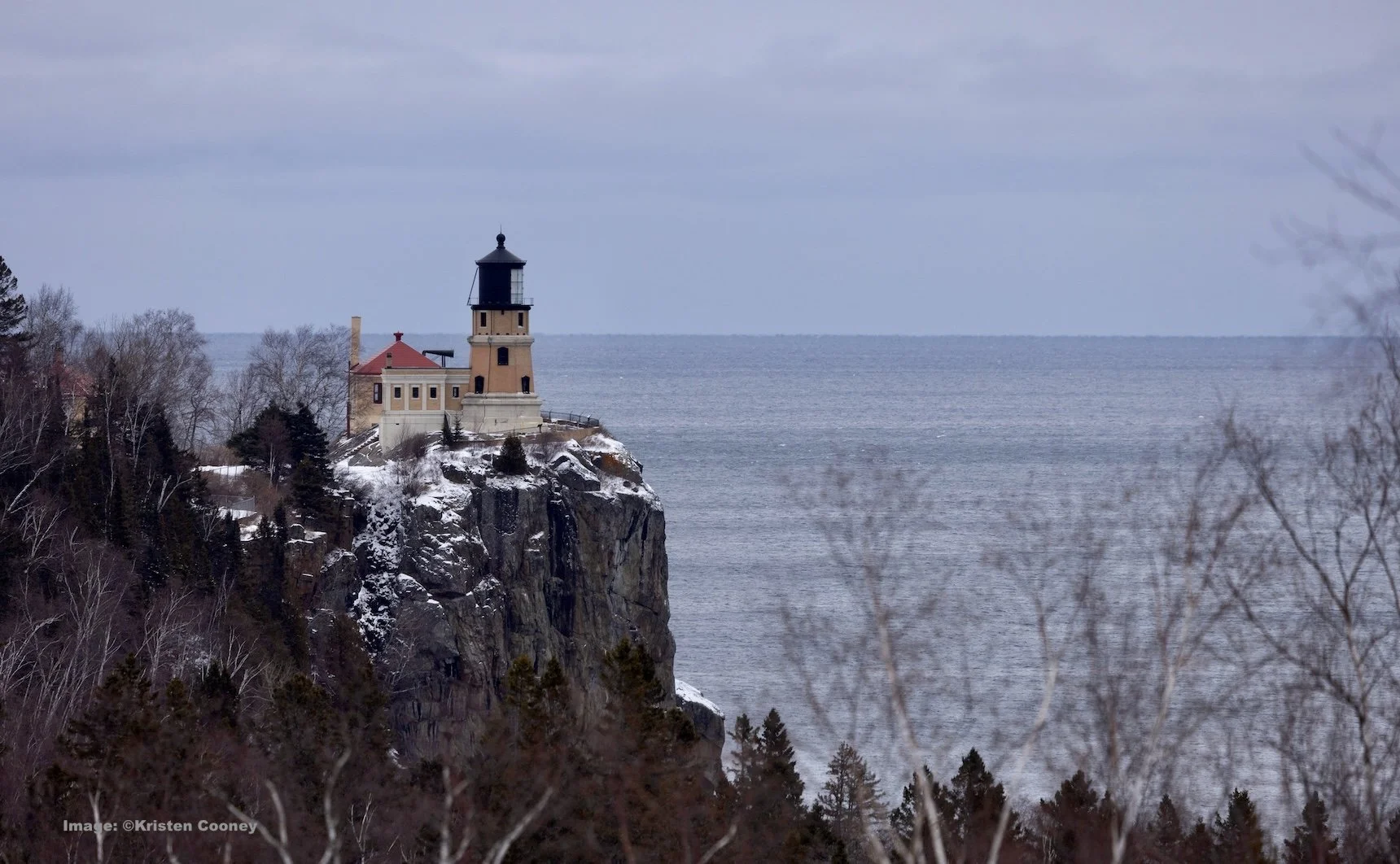
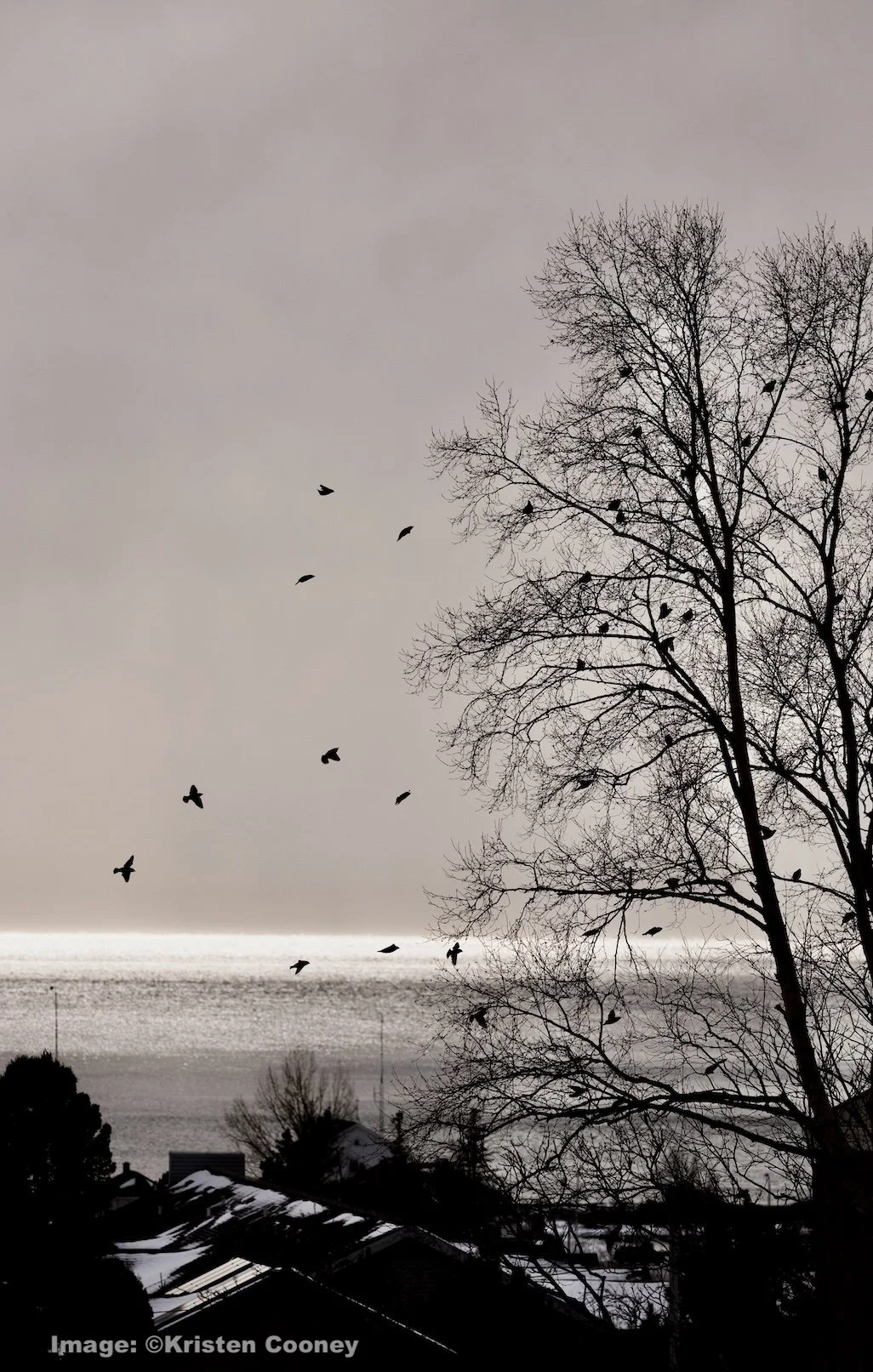
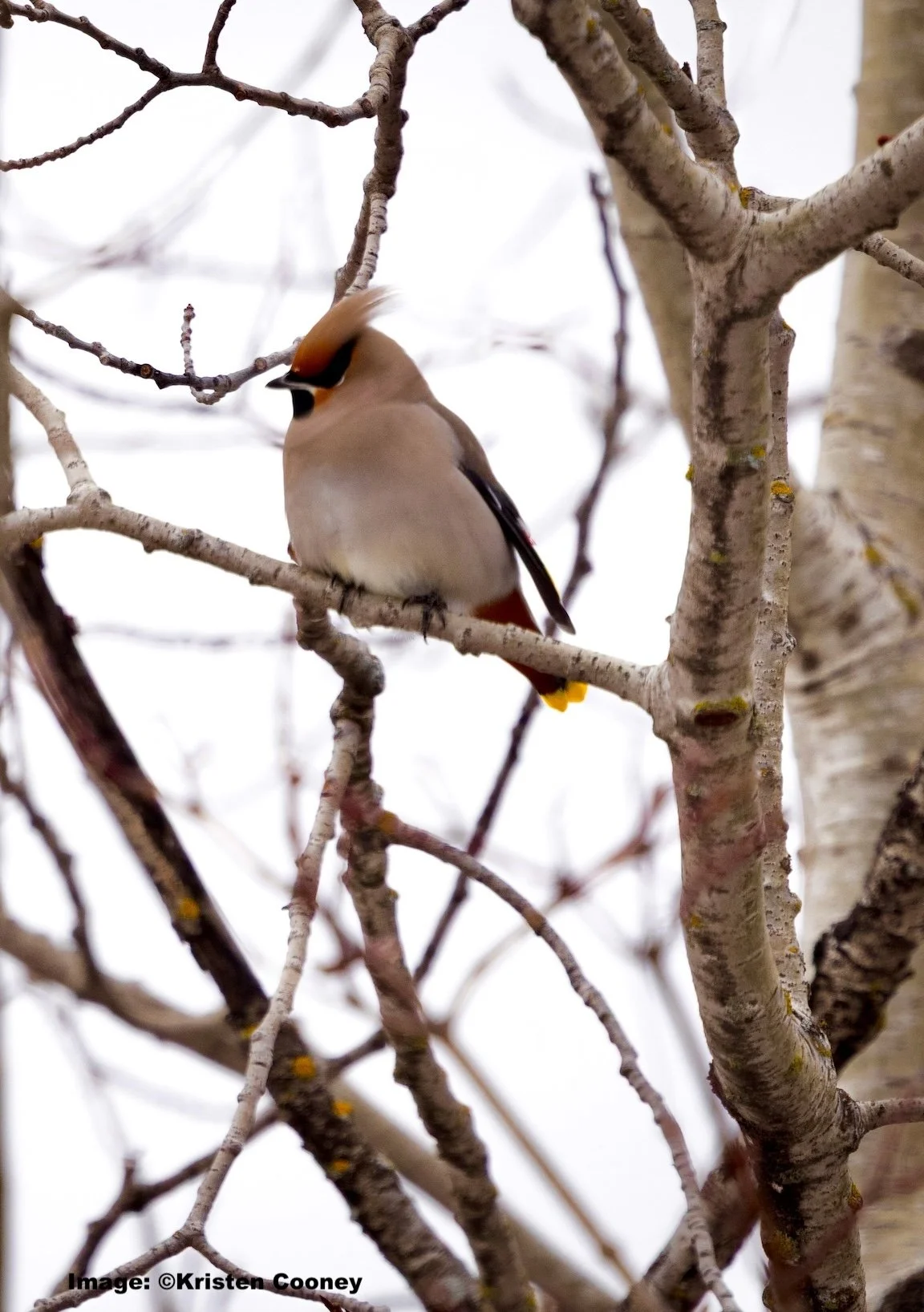
On our return drive to Duluth, we also encountered a massive flock of sleek and stunning Bohemian Waxwings feasting on fruits throughout the town’s treetops. The chatter of almost 300 birds pierced the quiet landscape in a most cheerful way.
Slowly, the lake-effect snow closed in on us, diffusing the sun’s light and making for some beautiful silhouettes of the flock as they flitted between fruit trees around town.
Minnesota, Frozen Landscape and Unforgettable Beauty
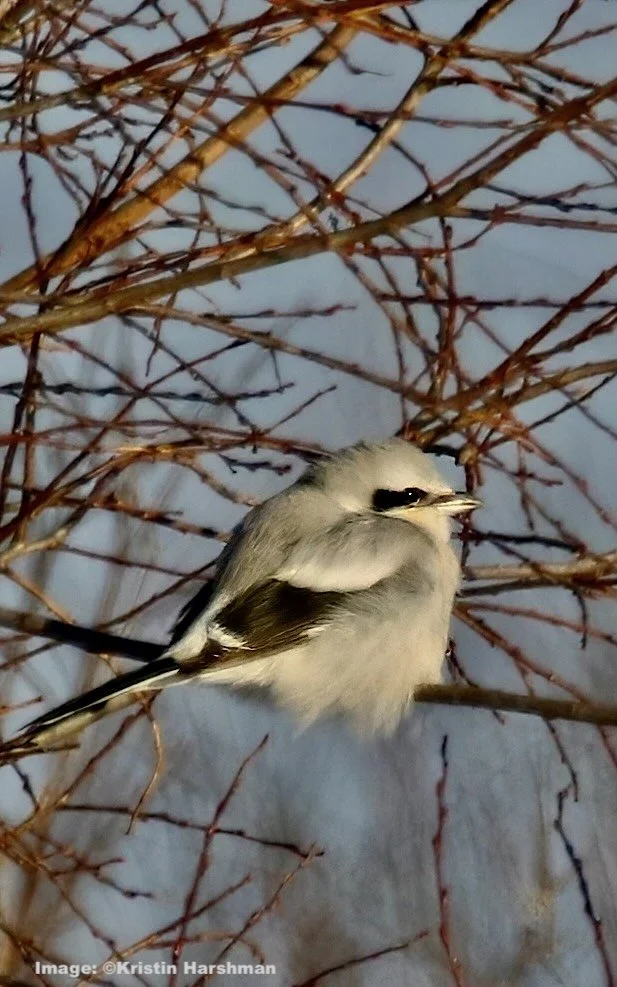
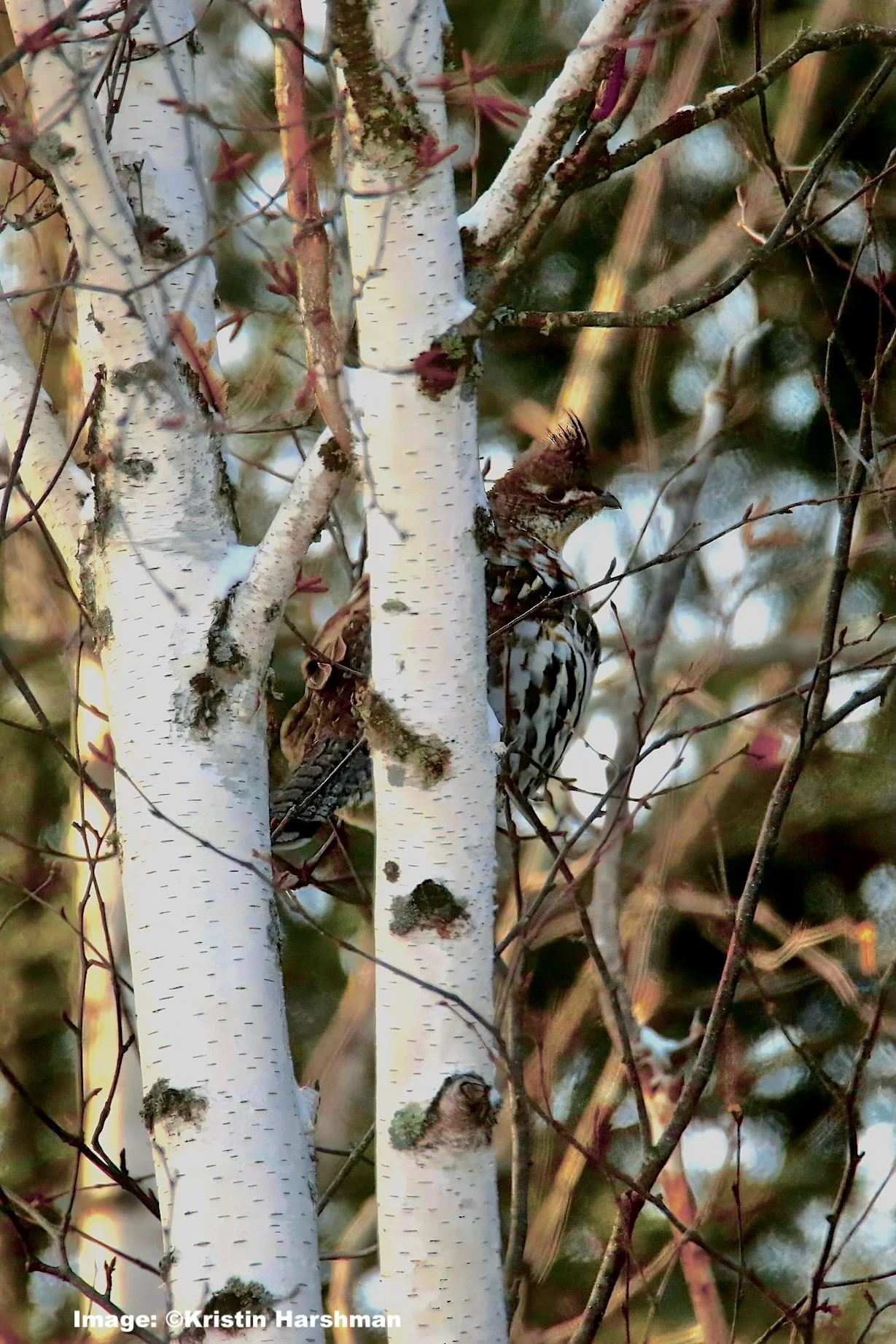
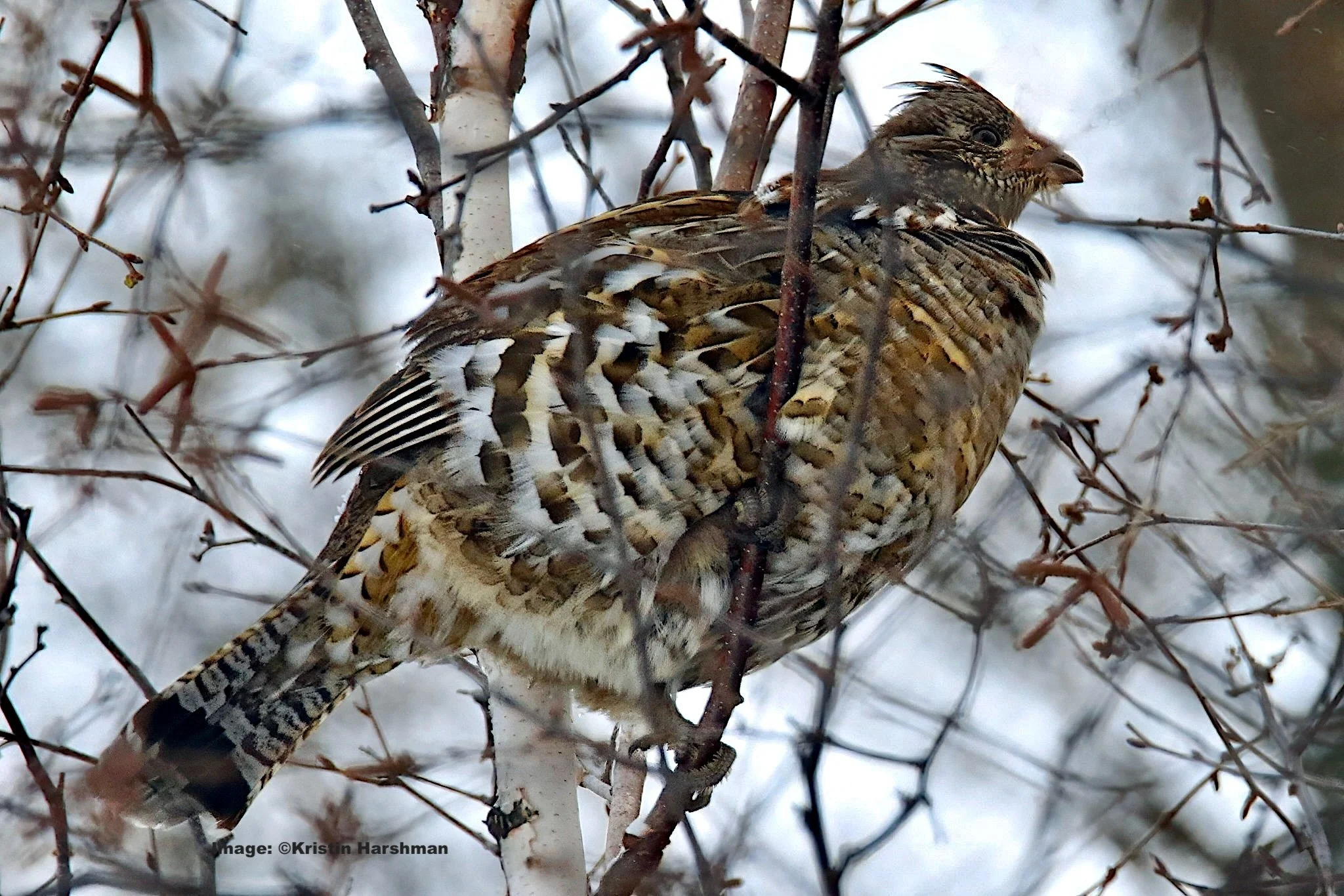
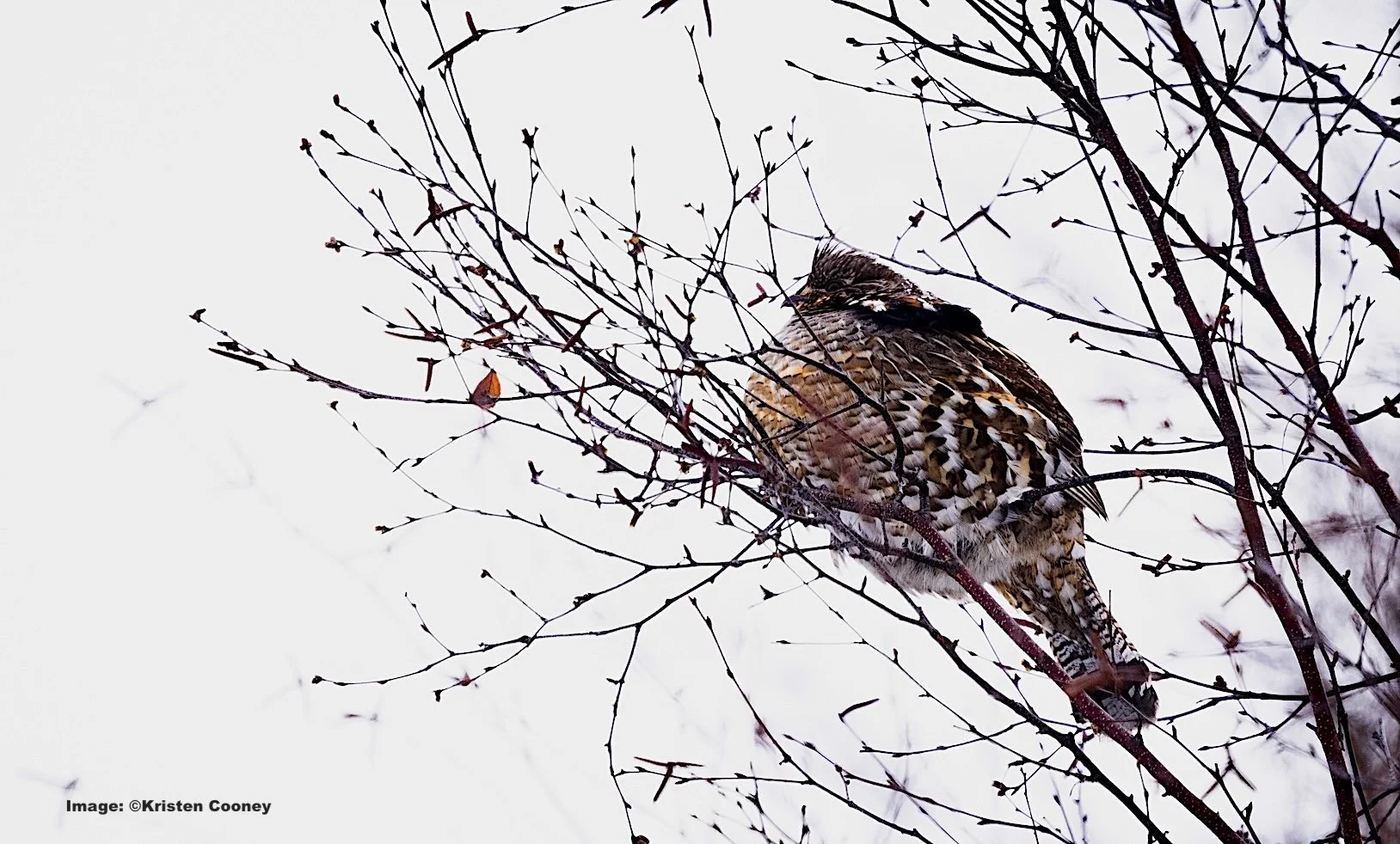
Our week was coming to an end. We spent our remaining time together cruising the bog, quietly traversing the landscape. We found several hardy bird species, including more Pine Grosbeaks and Ruffed Grouse, which stood out as the clear highlights.
This was our coldest day, reaching just below -20 F. Everything was frozen - car windows, our hair, and eyelashes as we stepped out of the car, and a coating of frost over much of the low vegetation in the landscape. And yet, there was life all around.
We took several wildlife drives through the remote, breathtaking Superior National Forest. The nearest town's amenities and signs of urban life disappeared as we headed north. Soon, all we could see were the lake effect snowflakes filling the air and the endless black silhouettes of the North Woods’ conifers.
Our Great Gray Owl Search
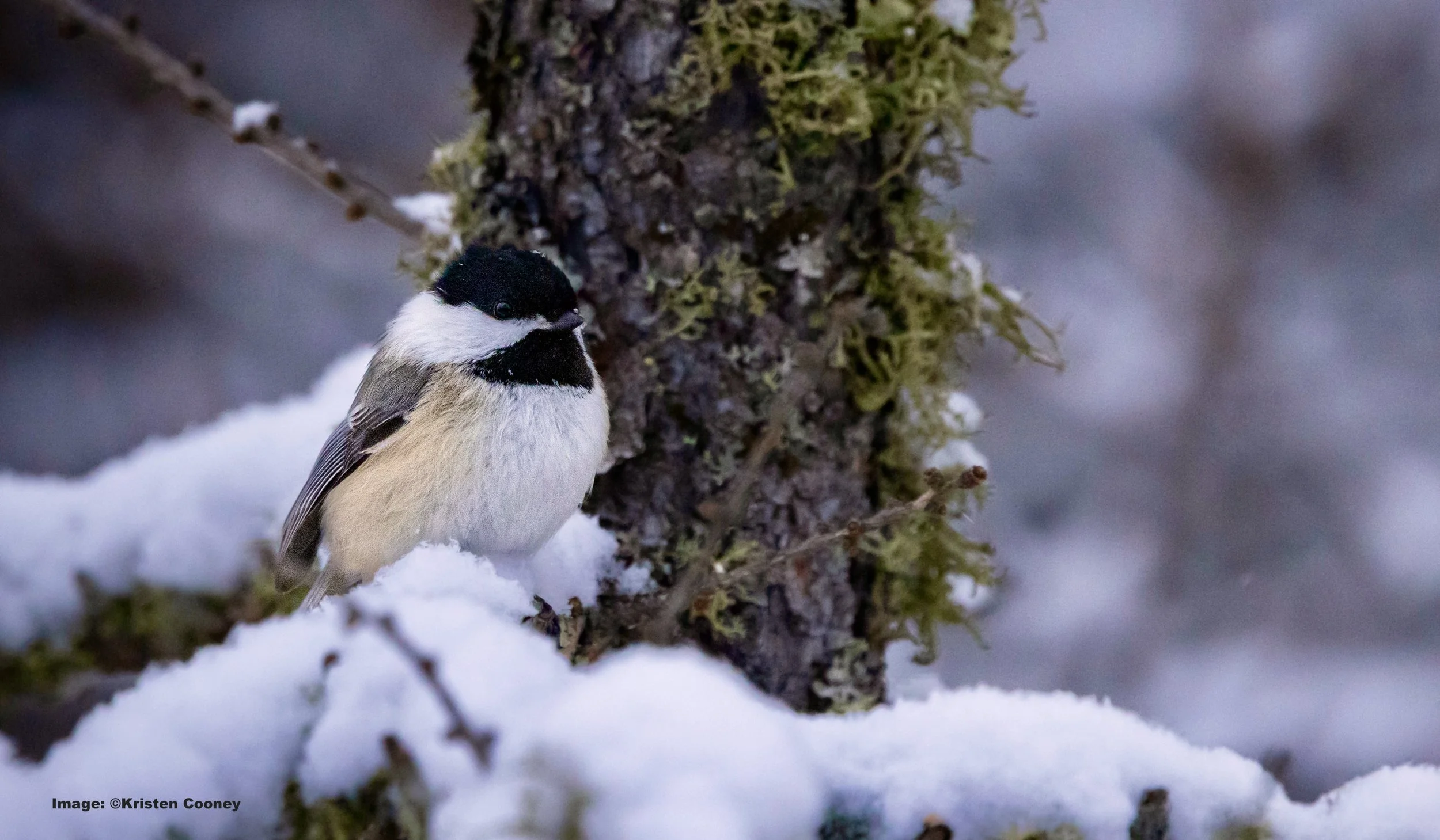
Birding in the winter, especially for visiting Arctic breeders, is not for the faint of heart. We came prepared for the cold, the conditions, and the search, and we all understand that wildlife is wild – and unpredictable. We were thrilled to be able to see – and watch – the impressive Long-eared owls, the remarkable, rare Hawk owl’s behaviors, and we were thrilled with views of adorable Saw-whets and those Arctic royals, Snowy owls. But, still, we all longed to see a Great Gray Owl!
Great Gray owls experience “irruptions.” This is a boom-bust cycle, not easily predictable from year to year, in which many more owls than usual move south after a successful breeding season. The winter of 2025 was a Great Grey irruption year; 2026 was not, and therefore, it was not so easy to spot the magnificent Great Grey owl.
Wildlife is wild - we can’t schedule our sightings! Although we invested significant time searching for Great Gray Owls, we never did find one. (Read more about Minnesota’s owls here) However, we remained true to our responsible watching principles and didn't excessively call, bait, or entice a Great Gray out of its resting place, which stresses and lessens the owl’s chances of survival.
Wildlife watching is unpredictable at best, but despite the lack of Great Gray Owl, we did discover several species we had hoped to encounter and also some surprises, ranging from Black-backed Woodpeckers to an unexpected bobcat!
When Fire Brings New Life to the Forest
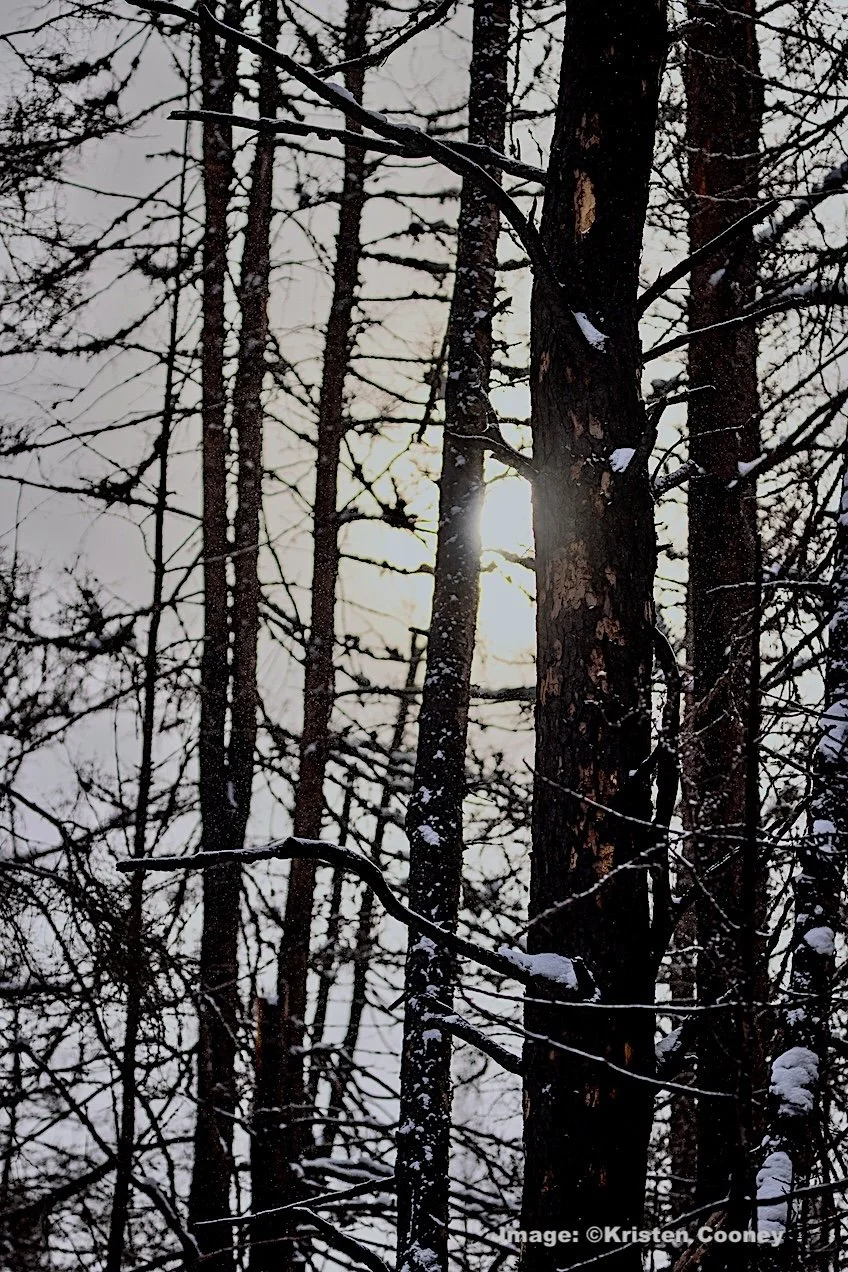
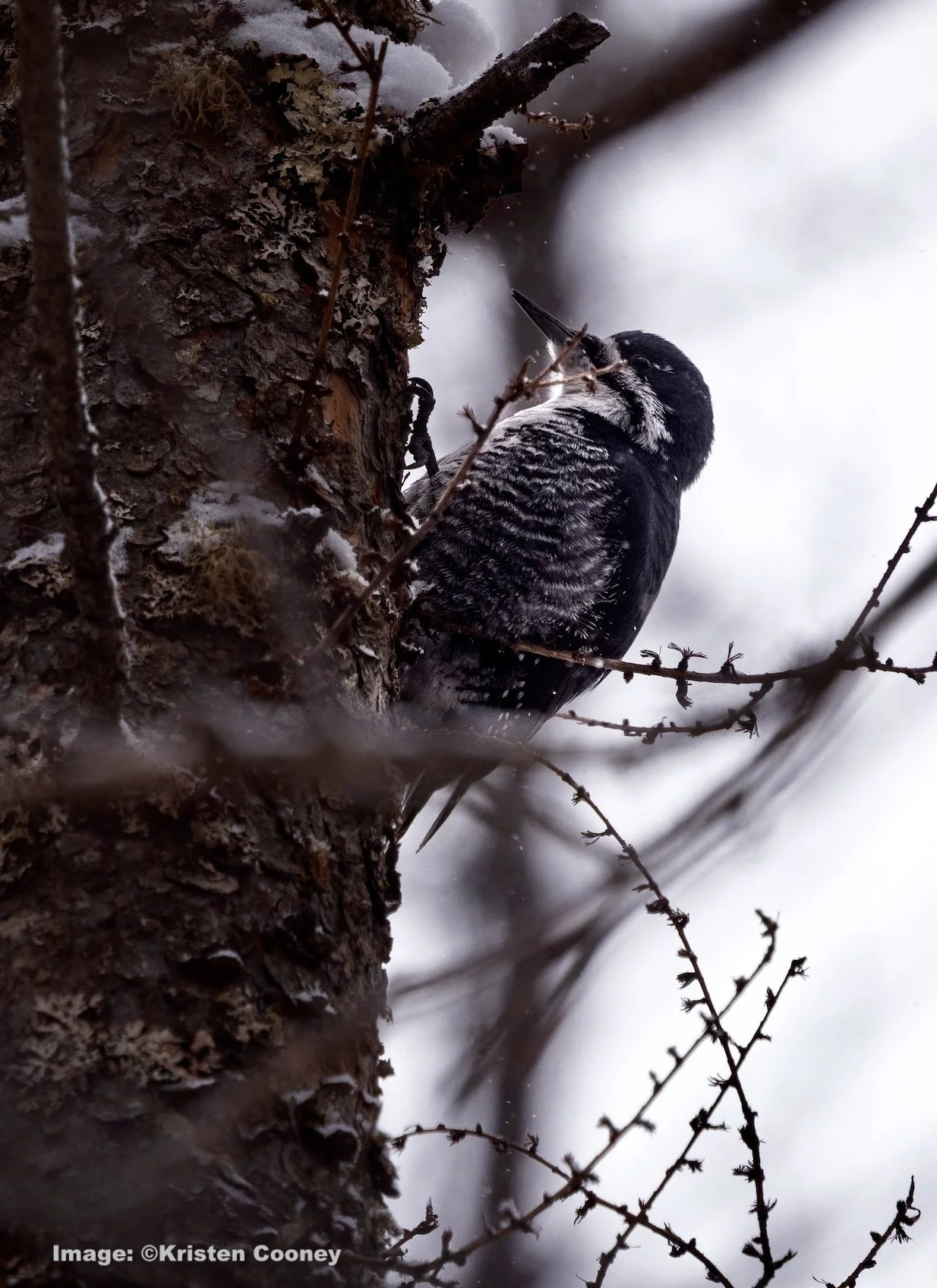
We decided to explore a section of the national forest that had been burned in recent years. As we got closer to the heart of the burn, the woods slowly transitioned from monotonous, dull-brown trunks to deeper, darker, charred trees that speckled the landscape, and eventually, overcame it.
While this stark aftermath can be jarring at first, forest fires, spaced out at balanced intervals, are vital to a forest's life. We witnessed this firsthand when we found over half a dozen Black-backed Woodpeckers using this burned section of the woods to sustain themselves through the winter.
We left the vehicle behind and carefully forged our way through the woods, in well over a foot of snow, to observe them from a good vantage point as they flitted between scarred and blackened trees full of bugs thriving on the decay.
One Last Surprise Bounded Across the Road
Incredibly brief but magical encounter (I only had time for a photo through the car windshield), this bobcat locked eyes with us before disappearing into the snow-laden forest. Image: ©Kristen Cooney
Finally, we returned to the vehicle and began making our way back towards our Duluth basecamp. We’d only been driving a few short minutes on the snow-covered road out of the burned area when we noticed a dark blur on the left side. A bobcat! Before we had time to react, this calculated feline predator bounded into the forest, leaving only sloppy tracks in the snow as proof of his existence. We were thrilled!
Minnesota Reveals Her Most Glorious Surprise at Sunrise
A double ice halo or parahelion, was nature’s special and unforgettable gift on our last morning in the Sax Zim Bog Image: Kristen Cooney).
This was a rewarding trip, but we had reached our last morning together. We did one final thorough lap around the Bog and encountered Ruffed Grouse feasting in the treetops. And then we were treated to a stunning double “ice halo” sunrise.
These extraordinary haloes are created by ice crystals suspended high in the atmosphere. A double ice halo is even rarer, as sunlight needs to pierce the crystals at the perfect angle for us to see them like this.
Squinting and facing towards the sky, you could see the ice crystals suspended in the air, speckling the atmosphere with the full spectrum of colors available to the human eye. A fitting finale for the many gifts that winter in Minnesota had to offer us. It was time to head home.
The Best Time for Seeing Wintering Birds in Minnesota
and the Sax-Zim Bog
The best time for seeing and photographing winter migrant and resident birds in Minnesota is mid-January through February. It can be frigid, but it’s hard to complain when the birds are surviving without the help of LL Bean or Patagonia layers. Use a guide; the Bog is extensive, and the surrounding areas are also productive. For the best results, don’t try this alone.
How to Survive Minnesota’s Negative Temperatures and
Endless Snowfall!
Our “Kit” or Packing List for the Minnesota Winter
Kristen Cooney’s Kit for extreme weather, like for the Sax Zin Bog in February! Image ©Kristen Cooney
The cold and wind of Minnesota’s winter are almost indescribable. There is no “secret weapon” you need to layer up - this is survival gear!
✔︎ Base layer:
A warm yet breathable first layer to stay warm in the elements. Quick-drying materials are key, as perspiration can make you cold quickly. Ideal materials include merino wool or polyester.
✔︎ Mid-layer:
A long-sleeve warm top, like a running or hiking shirt, is another line of defense to keep your body heat in.
✔︎ Well-insulated outer layer/shell:
A parka, down puffer, or similar. This layer should be windproof, ideally waterproof, and hold heat in well. It is your first line of defense against the cold.
✔︎ Base-layer gloves:
liners or thin gloves as a base layer for your hands and fingers, mittens go on top.
✔︎Mittens:
Insulates your hands better than gloves by keeping your fingers close together.
✔︎Neck insulation:
A winter buff, a balaclava, or a neck gaiter will suffice. Keeps heat in where it is most likely to escape from, around your neck. The ability to pull these over your nose to warm your face is incredibly helpful for extended periods outside, as you warm up/cool down from being idle or hiking through snow.
✔︎ Hand/foot warmers:
Sold in the form of chemical warmers, reusable ones, and even heated socks or gloves. Will keep you comfortable and warm for extended periods outside.
✔︎ Insulated snow boots:
Waterproof, sturdy snow boots with good traction and insulation will keep you warm, comfortable, and capable in the field. Choosing boots half a size larger leaves room for the insulation to work well, as the air pockets between your socks and the wall of the boots will hold the heat best.
✔︎ Yaktrax:
Adds traction through metal coils that attach to the bottom of your footwear, a necessity along the icy trails and parks we traversed over the course of the trip. Yaktrax causes less damage to indoor and car floors than microspikes - an important benefit and consideration when getting in and out of vehicles and warming stations!
Kristen’s Top Tips for Surviving and Thriving in Harsh Winter Conditions
You have to be prepared for winter adventures. Kristen Cooney
► Manage perspiration and waterproof layers carefully; you need to stay dry to stay warm.
► Minimize exposed skin:
Anything exposed is a place for heat to escape and is going to become colder far faster than the rest of you.
► Have more layers than you think you need;
You can always shed them, but it becomes dangerous in negative temperatures quickly when you do not have the right gear.
► Stay hydrated and satiated:
Metabolizing food generates body heat, keeps you warm, and fuels you for long days in the field. Proper hydration keeps you sharp and resilient against the elements by helping maintain your body temperature.
What are you thinking? Let us know below!