
Where to Find Alaska’s 10 Most Legendary Birds, Revealed!
In Alaska, birds are not “just birds.” They are wise or mischievous, teller of tales, deliverer of prayers and sometimes clowns. Never underestimate an Alaskan bird. Tufted Puffin Image: Lisa Hupp, USFWS
Roberta Kravette, Co-founder of Destination: Wildlife
Birds in Alaska? When I think of iconic Alaskan wildlife, images of fat, brown bears fishing for glistening salmon come to mind, and families of sleek Grey wolves trotting single-file along the forest edge, or crossing the tundra’s wide expanses, their howls echoing from mountain tops. I don’t think about birds … well, except maybe the tough, resilient Bald Eagle comes to mind. But Bald Eagles are just the beginning.
Alaska’s Legends of the Air, Ice, Water - and Spirit
Alaska’s birds are as storied as the state itself! According to Audubon, over 500 bird species have been documented in Alaska’s varied ecosystems, including boreal and rainforests, tundra, bogs, wetlands, the coastline, remote islands, and the Arctic itself.
To be a bird in Alaska is, almost by definition, legendary! So, here are two Arctic Legends, four Legendary Water and Seabirds, and four birds with deep spiritual significance for Alaska’s First People … and… there are Hummingbirds in Alaska!
Welcome to Alaska’s 10 most legendary birds!
Two of Alaska’s Arctic Avian Legends
Note the deeply forked tail; it helps to distinguish the Arctic tern from other tern species. Image ©Sigurbjornragnarrson
#1 The Arctic Tern
Scientific name: Sterna paradisaea Conservation Status: IUCN Low Concern, but population decreasing
Arctic Terns follow the sun - and experience more of it than possibly any other bird on the planet. They spend their lives at sea, coming ashore to breed across the state from Utiagvik in the Arctic north to Ketchikan on the Inside Passage, feeding on small fish along Alaska’s coastline and out into the Aleutian Islands.
Three Fast Facts about Arctic Terns
The Dread Arctic Terns are noisy - but right before migration begins, they become silent in a behavior called “the dread.” When the silence is over, the birds leave. No one knows the meaning of the behavior, but it reminds me of the Eastern European custom of taking a moment of silence before a journey, imagining its successful outcome
Long Distance Record Holder: This delicate and graceful bird has the longest migration of any bird on the planet - from Pole to pole, over 25,000 (40,234 ) round-trip! Arctic terns are completely ocean-dwelling, living during non-breeding months around the edges of sea ice.
Long, Busy Lives: Arctic Terns can live between 20 - 30 years, and log 1.5 million miles of migration flight, the equivalent of circumnavigating the Earth 60 times.
Our Three Favorite Places in Alaska to See Arctic Terns
✓ Anchorage Coastal Wildlife Refuge - Potter’s Marsh.
Pro Tip: Accessible! Near the highway, the 546-acre fresh water marsh stretches for almost 2 miles along Seward Highway. The boardwalk makes for great accessible viewing
✓Juneua: Mendenhall Wetlands, State Game Refuge
Arctic Tern Secret: Arctic terns are ground nesters. In 2025, Ravens and Bald Eagles raided every nest, greater than average meltoff from the fast receeding glacier compounded the problem. Not a single chick survived. Arctic Terns returned in 2026, conservationists are working to discourage raiding parties and help survival rates.
✓ Copper River Delta - a 35-mile critical wetland stop on the Pacific Flyway. 12 million shore birds flock to the Copper River Delta Critical habitat Area every spring.
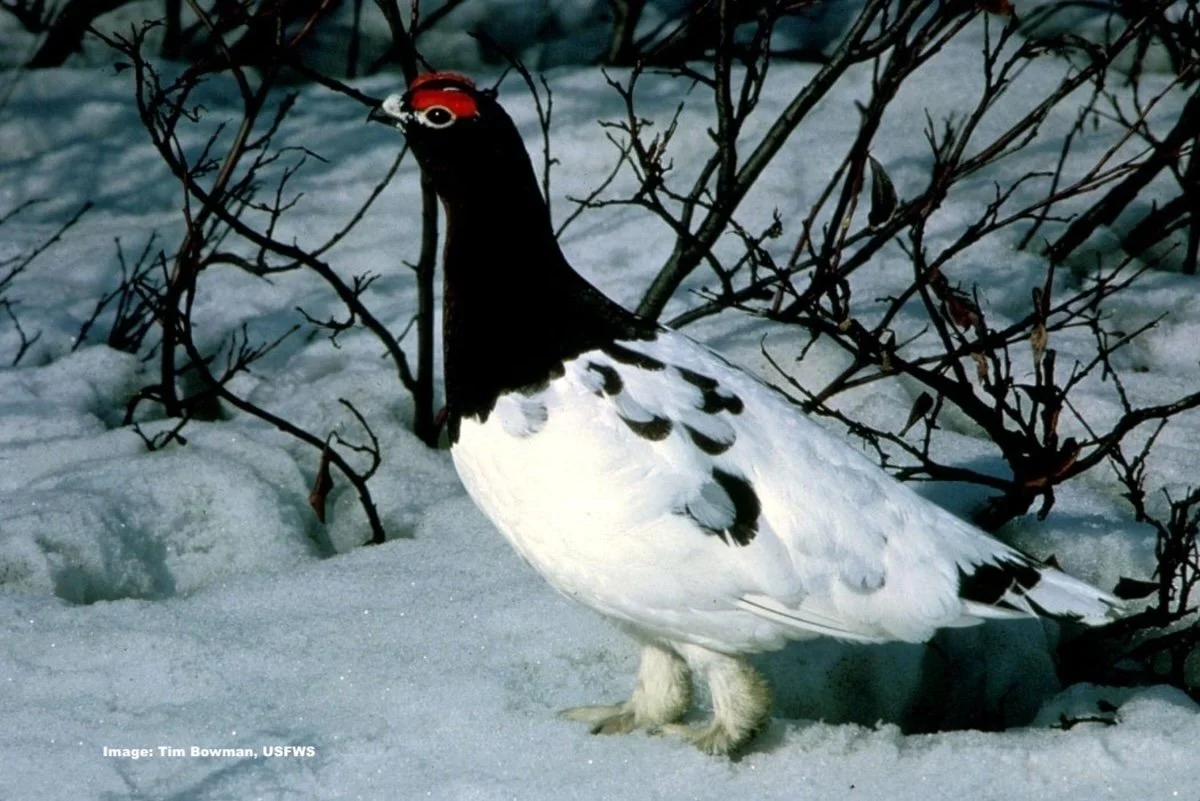
Willow Ptarmigan in winter plumage. A master of camouflage, the Willow Ptarmigan is a tough bird, living all winter in conditions that cause other grouse to migrate. Beware, they are hunted. Image: Leith Ramos, USFWS
#2 The Willow Ptarmigan - Alaska’s State Bird
Scientific name Lagopus lagopus Conservation Status: IUCN Least Concern
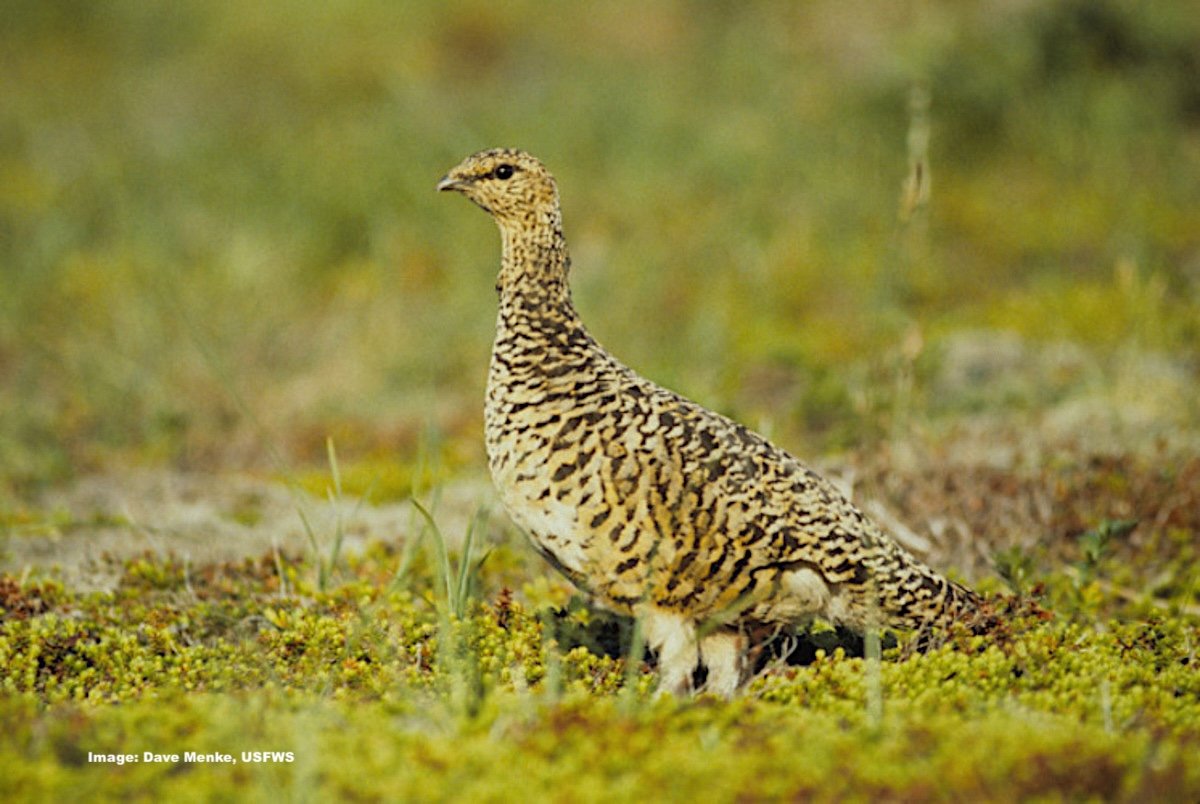
Alaska’s state bird is snowy white in winter and mottled shades of red, brown, black, and white in summer. Spring is the best time to see them, when this tenacious bird is not quite winter white nor summer dark. Look for them perched in bushes and on fence posts or strutting in the road, showing off and allowing their human audience to come surprisingly close. Be aware - this bird is legally hunted.
Three Fast Facts about Willow Ptarmigan
1. Dress for Success Willow Ptarmigan style: Thick feathers that cover their nose and heavily feathered feet keep Willow Ptarmigans warm and help them to walk over deep snow.
2. Home Sweet Home: Willow Ptarmigans excavate burrows in the snow for warmth and protection.
3. Good Partners: Most Willow Ptarmigan seek out their former mates, and they are the only grouse species in which the male stays with the female for up to 7 months to help raise chicks.
Our Three Favorite Places to See Willow Ptarmigan in Alaska
✓ Juneau area, the USFWS suggests a 20-mile section of the Haines Highway through Chilkat Pass, beginning 65 miles north of Haines. Remember, Ptarmigan are hunted here; stay aware.
✓ Denali State Park, all-year resident.
Pro Tip: Seek them out in Alpine areas, look in shrub thickets, and along the Denali Park road
✓ Kodiak National Wildlife Refuge - all year resident KNWR Bird List
Other Areas to Willow Ptarmigan in Alaska
St Elias National Park, Wrangell, The Gambell Area -remote, Yakutat, and Utqiaġvik / Barrow - Alaska’s northernmost city, come for the Utiqiak Migratory Bird Festival!
Alaska’s Three Most Legendary Water and Seabirds
3# The Sandhill Crane
Sandhill Cranes in take-off. Cranes are admired in Haida and other Northwest First Nations cultures, often associated with grace, communication, and peace. Image: ©Frank Fichtmuller
Scientific name: Antigone cranadensis Conservation Status: IUCN: Low Concern
Sandhill Cranes are deeply entwined in Alaskan culture; these migrators announce the start of summer when they arrive, advertising their breeding intentions with a fantastic dance. They raise their young on Alaska’s tundra and coastal marshes. And then, signal the coming winter, when they leave to migrate south again.
Among the many things Sandhill Cranes traditionally signify for First People and other cultures are transformation, longevity, mindfulness, and fidelity.
Three Fast Facts about Sandhill Crane:
Sandhill Cranes Come from Afar: Their range is from Mid-Mexico to the Arctic Circle and into eastern Siberia.
Lifespan: Sandhill Cranes can live up to 35 years, are monogamous, begin breeding between 2 and 8 years old, but only 1 in 3 chicks live to adulthood.
Great Performances: Standing three feet tall with a 6-foot wingspan, this is an impressive bird! And when they dance, it is something to see. Sandhill cranes also have a bugling call that can be heard from miles away.
Our Three Favorite Places to See a Sandhill Crane in Alaska + Bonus
✓ Anchorage Coastal Wildlife Refuge - Potter’s Marsh.
Pro Tip: Accessible! Near the highway, the 546-acre freshwater marsh stretches for almost 2 miles along Seward Highway. The boardwalk makes for great accessible viewing
✓ Copper River Delta
One of two migration funnels for Sandhill Cranes is this 35-mile (56.4 km) critical wetland stop on the Pacific Flyway. 12 million shore birds flock to the Copper River Delta Critical Habitat Area every spring, including up to 20 thousand Sandhill cranes.
✓ Gustavas Wildlife Refuge: The Dude Creek Critical Habitat Area
Pro Tip: Come in the fall when the wetlands provide abundant food and good resting places. This is one of the largest undisturbed wet meadow habitats in Alaska’s southeast. Look for river otters, moose here too!
✓ Bonus: Tanana Valley, Creamers Field Migratory Waterfowl Refuge Near Fairbanks
Pro Tip: The Sandhill Crane Festival is held here each August. Enjoy speakers, artists, and guided walks on a 2,200-acre refuge. This is a bird lover’s “Don’t Miss.”
For Alaska’s First People, birds are a vital part of their culture - even some we take for granted.
Watching the huge, but delicate Trumpeter Swan is always fascinating.These do not seem to be bothered by the icy conditions on Prince of Wales island, Alaska Image: ©Mariia Taylor
4. The Trumpeter Swan
Scientific name: Cygnus buccinator Conservation Status: IUNC: Least Concern
The large white swan with an all-black beak is the largest of two native to North America; the Tundra swan is the other.
Three Trumpeter Swan Fast Facts
The Trumpeter Swan is a Giant Among Birds: at 6 ft (1.83m) long and more than 25 lbs (11.34 kg), it is almost twice the size of the Tundra Swan - they are America’s heaviest flying bird. It needs 100 yards (91,44m) to become airborne!
The Longest Mile: Trumpeter Swans can walk more than a mile at a time, even when traveling with week-old cygnets.
Beauty Almost Ended Trumpeter Swans: Beginning in the 1600s, Trumpeter Swan feathers were a fashion item, their flight feathers used as writing quills, and their skin for powder puffs.
The Three Best Places to See Trumpeter Swans
✓ Denali State Park, migrates but can be seen in Denali’s ponds, lakes, and wetlands most of the year except the winter months. Climate change may impact this population.
✓ Anchorage Coastal Wildlife Refuge - Potter’s Marsh.
Pro Tip: Accessible! Near the highway, the 546-acre freshwater marsh stretches for almost 2 miles along Seward Highway. The boardwalk makes for great accessible viewing
✓ Copper River Delta - a 35-mile critical wetland stop on the Pacific Flyway. 12 million shore birds flock to the Copper River Delta Critical Habitat Area every spring.
Other areas to look for Trumpeter Swans in Alaska include:
Kanei National Wildlife Refuge - look near the Tustemena Lake Boat Launch, the Lower Skilak Boat Launch
Utqiaġvik / Barrow - Alaska’s northernmost city. Breeding grounds. Juneau, at Twin Lakes, Mendenhall Wetland SGR, and Auk Nu Cove
Tufted Puffins are poor fliers but expert divers, reaching depths of 250 ft (76.2m) in pursuit of their favorite fish, white capelin. This catch is probably going to chicks on Kodiak Island, Alaska. Image USFWS
#5 Tufted Puffin
Scientific name: Fratercula cirrhata Conservation Status: IUNC: Low Concern, but the population is decreasing.
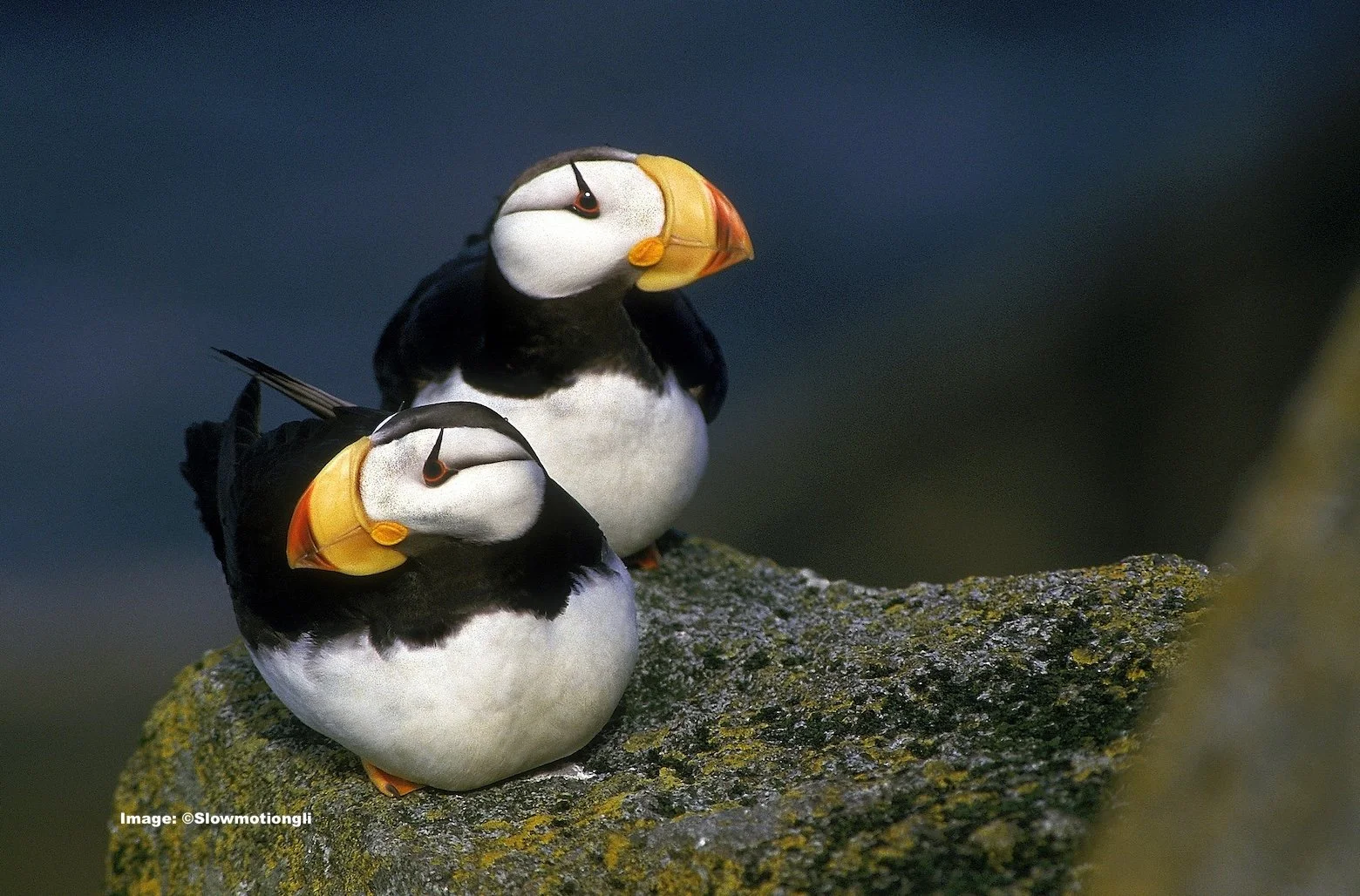
Overshadowed by the Horned Puffin, Tufted Puffins are sometimes called “the forgotten bird.” But don’t underestimate a Tufted Puffin! The largest puffin with the greatest range, from Alaska to Japan, and sporting its oversized, neon orange bill on a snow-white face with yellowish plumes streaming from its head, these birds are stars.
Three Fast Facts about Tufted Puffins
Recycling Puffin-Style: Native Alaskans used discarded Tufted Puffin bills as ceremonial rattles and adornments.
Long Range Puffins: Across the northern Pacific from central California to coastal Arctic Alaska and its Aleutian islands, to Japan’s Kuroshio Current.
Long Life: According to the National Marine Sanctuary Foundation, Tufted Puffins can live 20 years, and spend most of their time on the open ocean, coming ashore only to raise their pufflings! https://marinesanctuary.org/blog/everything-you-ever-wanted-to-know-about-tufted-puffins/
Best Three Places to Find Tufted Puffins in Alaska
According to the USFWS, Tufted puffins breed at several national wildlife refuges in Alaska, including Izembek, Alaska Peninsula/Becharof, and Togiak refuges, and the Adak, Alaska Maritime National Wildlife Refuge, which may no longer be open to the public because of the Trump Administration's budget-slashing.
✓ Kodiak National Wildlife Refuge - Breeding. Summer through fall. Beware of the bears! Read about the Tufted Puffin study on Kodiak Island. KNWR Bird List
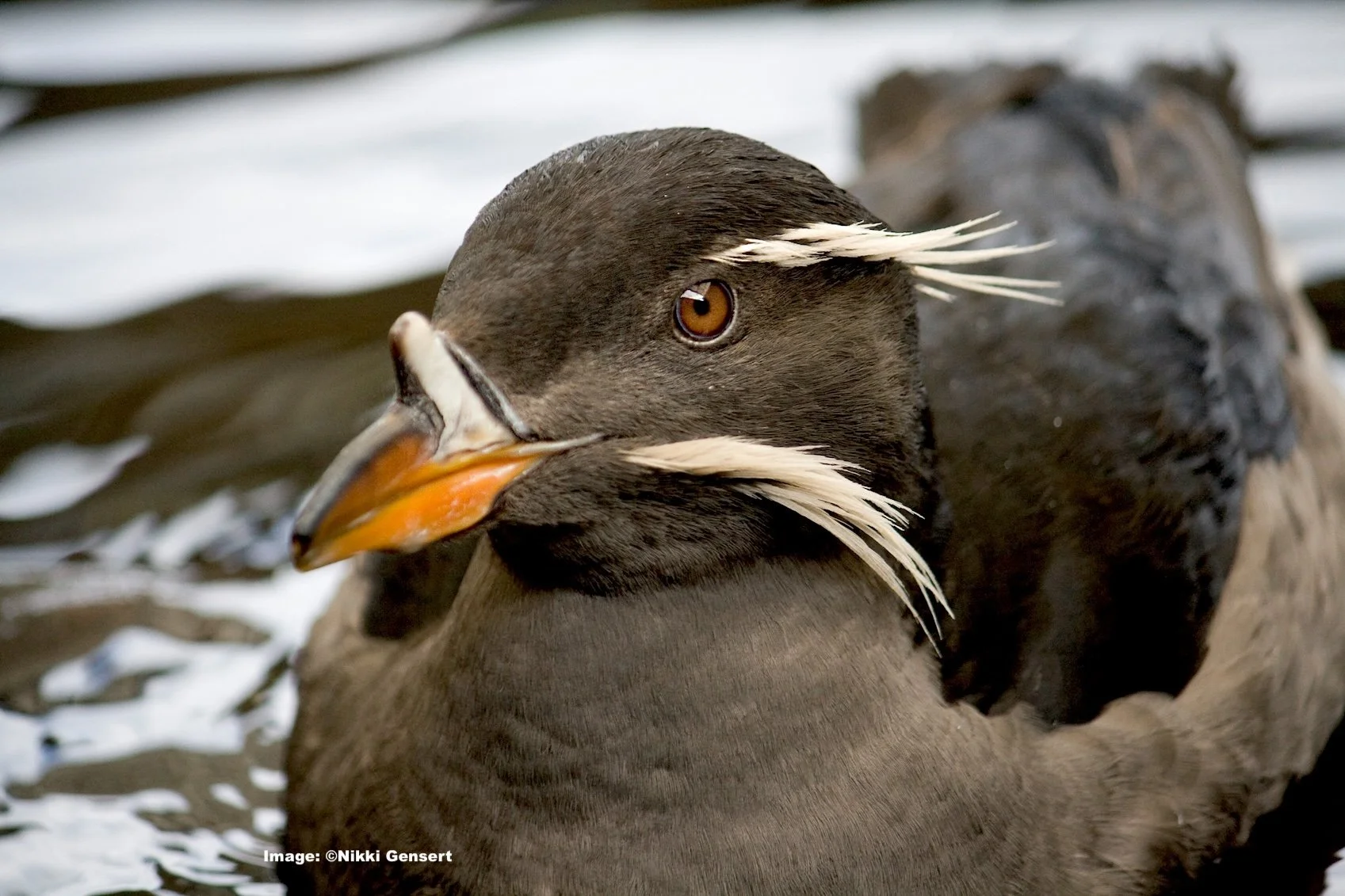
✓ Glacier Bay National Park has 281 bird species, including thousands of seabirds, such as Rhinoceros Auklet, Marbled Murrelet, and Sandhill Crane.
✓ Gambell off the coast of St. Lawrence Island, only 45 miles from Russia. Over 270 species spotted make the Gambell area one of North America’s birding hotspots, but its difficult conditions are not for the halfhearted, just ask the 750 people who live there. Read more about Gambell.
The Legendary Birds of Alaska’s First People
#6 The (Un) Common Raven
The “Common” Raven is anything but. It is among the world’s smartest birds, Ravens can use tools, solve problems, and plan ahead. Image: ©Brandon Smith
Scientific Name: Corus corax Conservation Status: IUNC: Least Concern
Raven is a complex creature, far more than its reputation as a clever pest and anything but “common”! For the First Nations, it is revered as a Creator or helper to the Creator of the world. Raven is wise, an interpreter of dreams and visions, bringing messages from the ancestors – its eyes see clearly, while human eyes can be deceived.
Raven is the bringer of light and the discoverer, in a clamshell, of the first humans. But Raven is also a curious, mischievous trickster who plays jokes on the unsuspecting, and Raven can be greedy. For the Tlingit, Haida, Eyak, and Tsimshian peoples, Raven is one of the two “Moieties,” or halves, that organize society, for example, dictating marriages (a Raven should marry an Eagle or Wolf to maintain societal balance). The other moiety is Bald Eagle or Wolf.
Today, the University of Washington is leading a landmark study on the ravens' relationship with wolves (a relationship already well-known to First people)
Three Fast Facts About the (un)Common Raven
Songbirds??? Ravens are technically considered “songbirds” due to the muscle control around their voice box (syrinx) and the fact that they learn their calls (songs).
Beware if you cross a raven – they have been known to remember and hold a grudge.
Looking for a wolf? Follow a Raven. Oportunistic Ravens follow wolves to steal their kills.
The Best Places in Alaska to Look for Common Ravens
✓ Ravens can be found across the entire state of Alaska. Look on fence posts, near kill sites, on the outskirts of town, and in the forests. Ravens are everywhere.
✓ Denali State Park - abundant. In a wildlife refuge or Park, look for raven-wildlife interactions and listen to their calls. They “tell” each other about kill locations, and group together to steal and cache extra shares for later use.
Other Places to find Common Ravens include: Kodiak National Wildlife Refuge, St Elias National Park, Wrangell, Glacier Bay National Park,
Gambell Area (Nome) and Yakutat.
#7 The Bald Eagle
Magnificent Bald Eagle in flight. This mighty bird is also an opportunist not opposed to scavenging carrion or stealing other birds fresh fish catch. Image: Andrew Morfew, USFWS
Scientific Name: Haliaeetus leucocephalus Conservation Status: IUNC Least Concern
Soaring high above the Earth, the Bald Eagle is thought to travel between the spiritual and physical worlds, bringing prayers and messages to the Creator. When an Eagle is seen during a prayer, it is thought that the prayer was heard. For time-sensitive prayers, an Eagle feather is held up to the sky, ensuring the entreaty is heard.
For First people, the eagle signifies strength, focus, and leadership, and its widespread wings symbolize the balance between men and women, showing how they must work together to achieve harmony.
Three Bald Eagle Fast Facts:
From Near Extinction to Thriving: In the 1700’s, between 300,000 and 500,00 Bald Eagles lived across the continental US. By the 1976’s, fewer than 400 nesting pairs remained. Today, thanks to the Environmental Protection Act’s ban on DDT and the Endangered Species Act, they (and other raptors) are thriving.
Alaskan Eagles Save the Day: Alaska’s Bald Eagles, the only remaining healthy population, provided genetic diversity for nationwide repopulation.
BIG Houses! Bald eagles mate for life, build a nest, and add on to it year after year. The largest bald Eagle nest on record was found in St. Petersburg, Florida. It was 10 feet wide, 20 feet tall, and weighed 2 tons.
Best Places in Alaska to Look for Bald Eagles:
Look for Bald Eagles along salmon rivers, streams, and inlets across Alaska except for the extreme (Arctic) north.
✓ Chilkat Bald Eagle Preserve on the Chilkat River north of Haines is the site of the world’s largest congregation, up to 4000 Bald Eagles (!!)
✓ Anchorage Coastal Wildlife Refuge - Potter’s Marsh.
Pro Tip: Accessible! Near the highway, the 546-acre freshwater marsh stretches for almost 2 miles along Seward Highway. The boardwalk makes for great accessible viewing
✓ Kodiak National Wildlife Refuge Common all year. KNWR is home ot over 200 bird species, as well as their famous bears! KNWR Bird List
St. Elias National Park, Wrangell (Tanada Lake)
And more places to see Blad Eagles include:
Glacier Bay National Park, Kenai National Wildlife Refuge, Mendenhall Wetlands, and Yakutat.
#8 and #9 The Hummingbirds
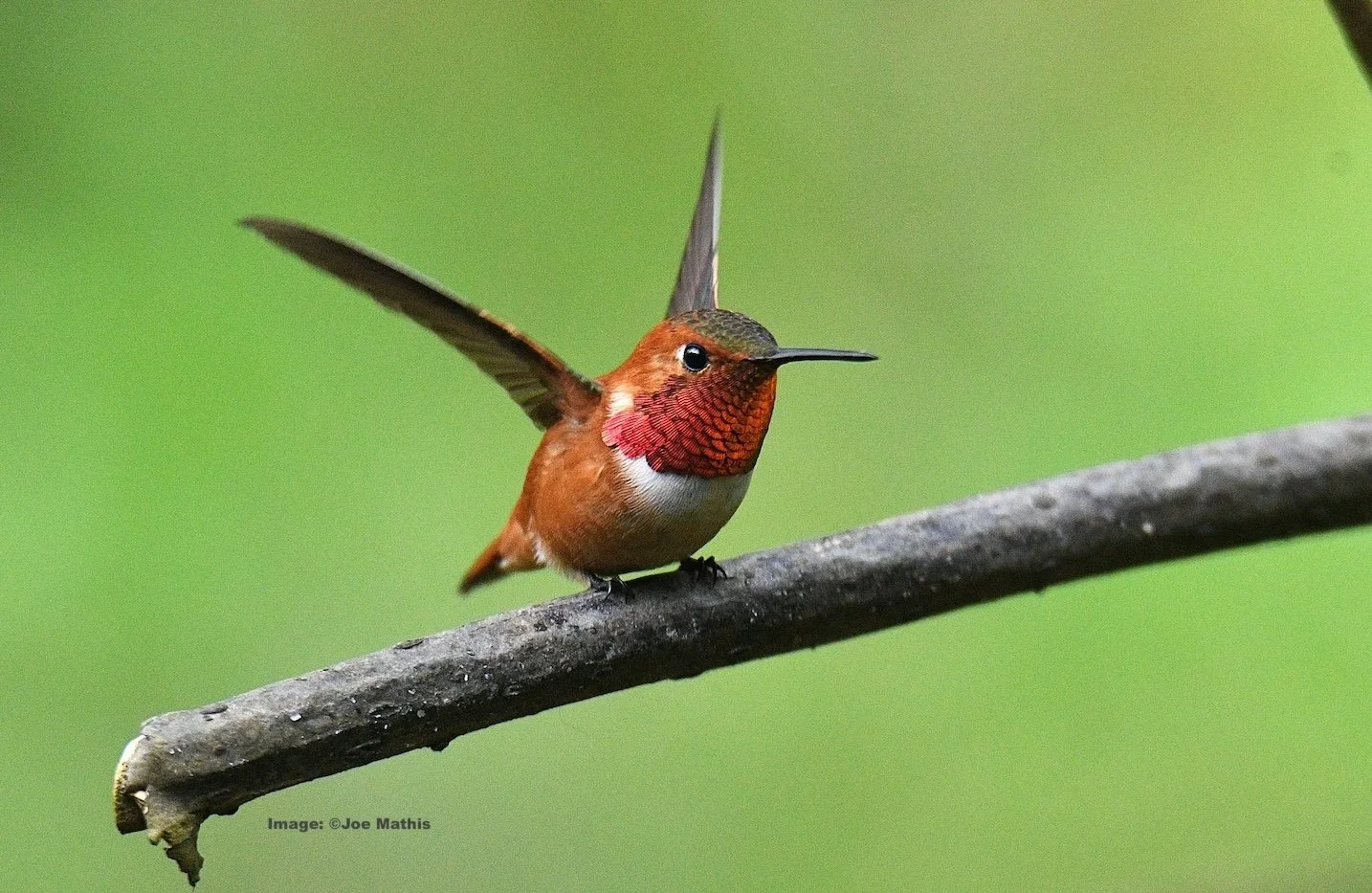
Rufous Hummingbird, female, exposing her long tongue perched in a garden on Prince of Wales Island Image: Courtesy of ©Joe Mathis see more of his work here
Hummingbirds in Alaska? Yes, and for native peoples, the Hummingbird is a symbol of love and beauty. For the people of the Haida Eagle clan, they are an ancient family crest.
Hummingbirds are thought to nest in the hair of Dzunuk’wa, the forest guardian, and are considered to be tiny rainbows that transform light into weightless jewels. I agree!
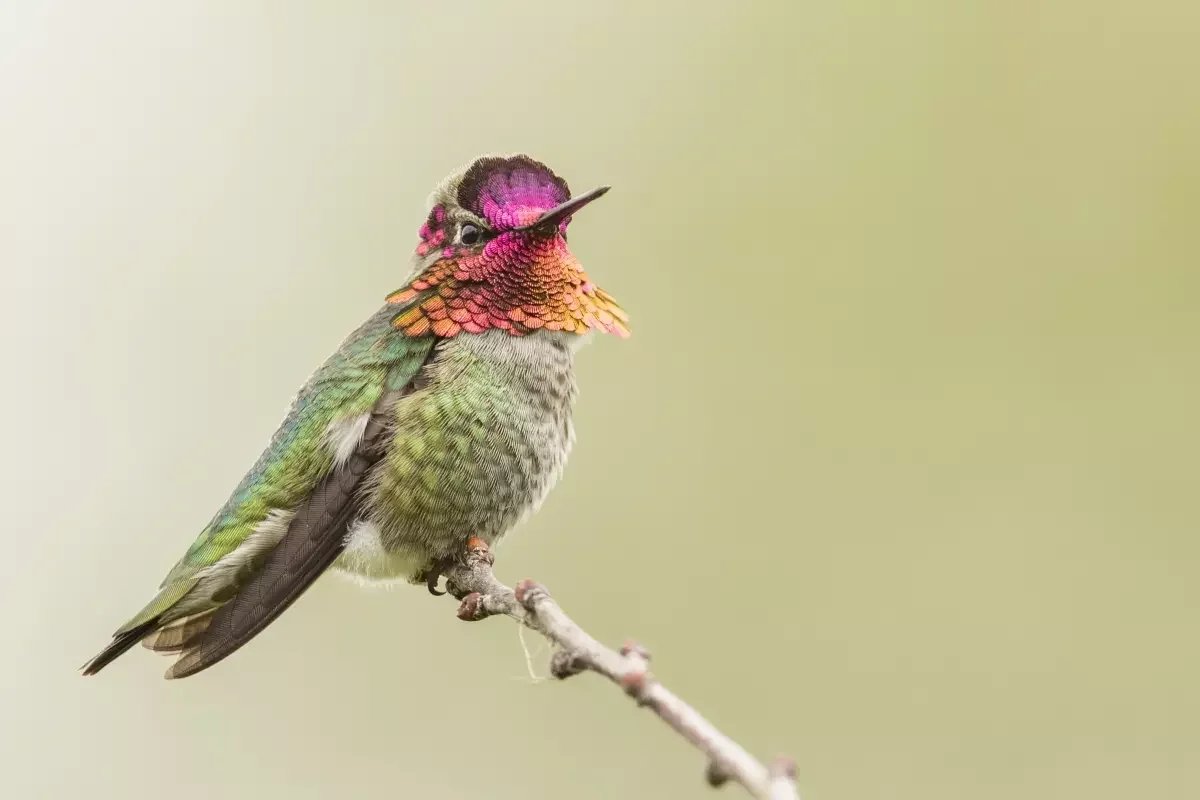
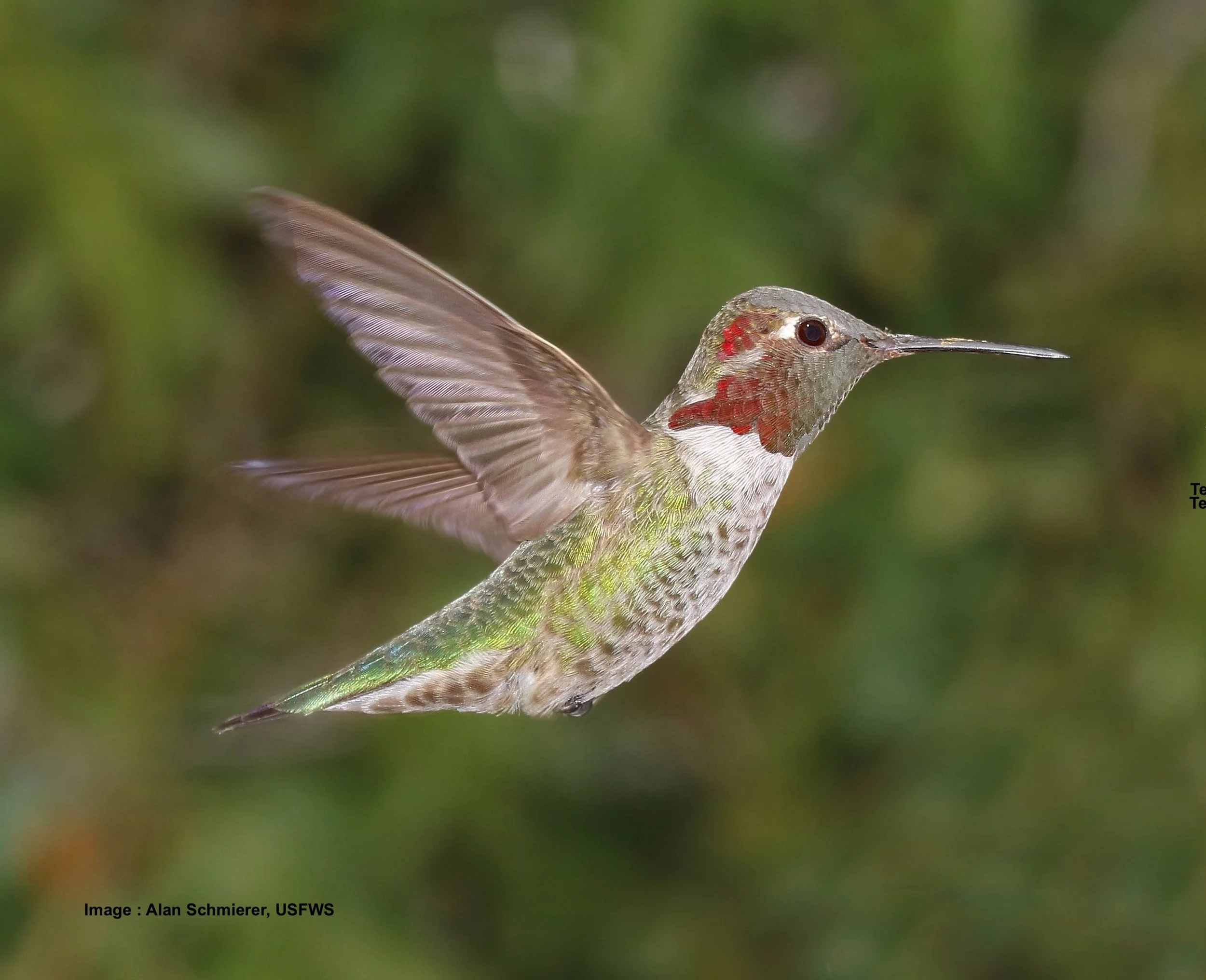
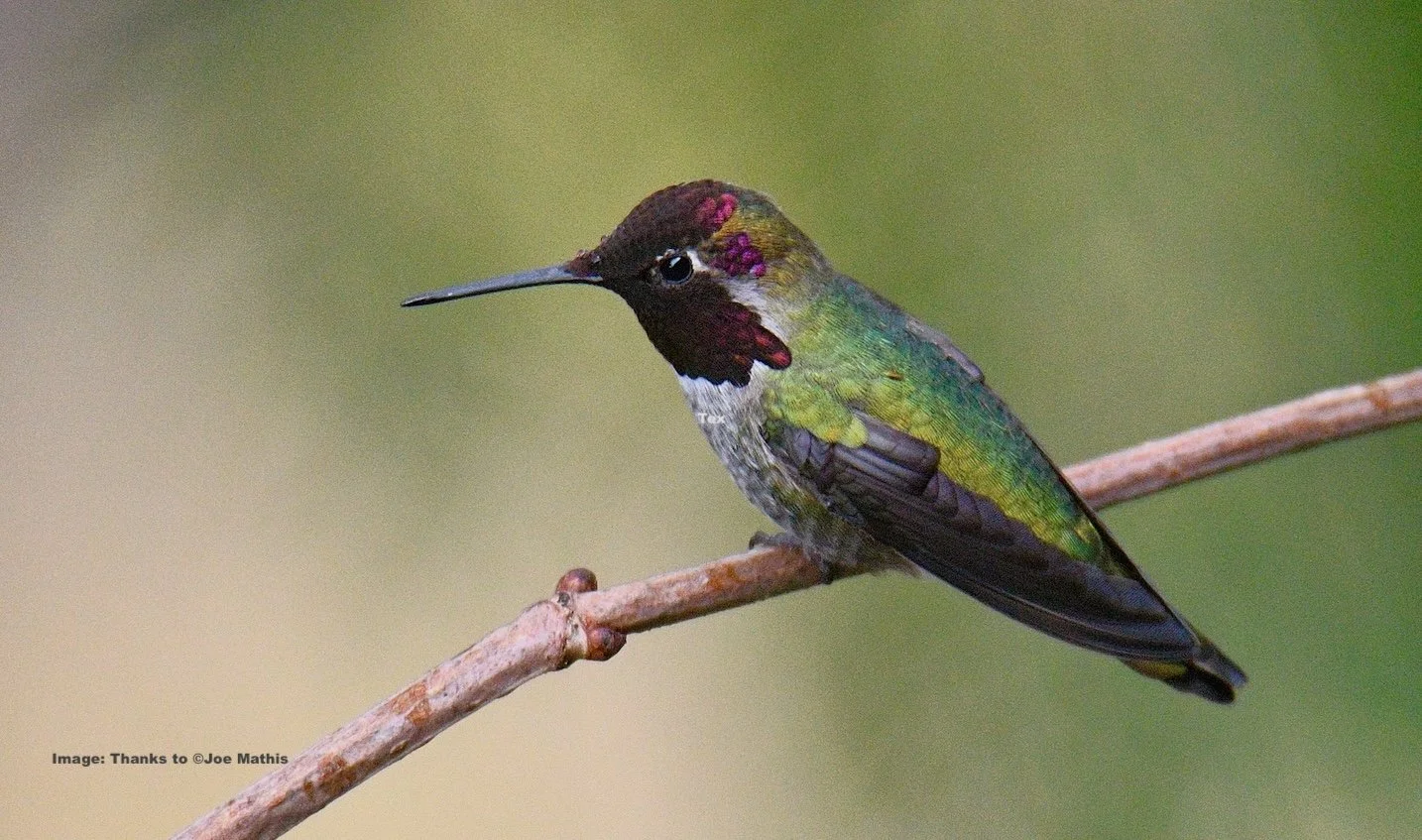
There are two species of hummingbirds found in southern Alaska: Anna’s Hummingbird (rare, but possibly year-round in some areas) and the Rufus Hummingbird, a returning summer breeder. Both are beautiful and amazing – but the Rufous is a hummingbird of many distinctions.
Anna’s Hummingbird Calypte anna Conservation Status: IUNC: Least Concern
Rufous Hummingbird Selasphorus Rufus Conservation Status: IUNC: Near Threatened at Tipping point Lost 72% of total population between 1968 - 2023
Rufous Hummingbird Fact Facts
Hummingbird Love! It’s notable for its distinctive courtship dives and sounds.
Northern-Most Breeding Record Holder The Rufous is the northern-most breeding of all Hummers!
Widest Ranging Record Holder: The Rufous Hummingbird is the most widely distributed Hummingbird in North America, from Panama to Alaska
Migration Record Holder! A Rufous Hummingbird (only 3 inches long and weighing 3.5 grams) holds the record for the longest documented migration of any Hummingbird (Florida to Alaska, 3,530 miles!) Read the story here
The Best Places in Alaska to See Anna’s Hummingbird
✓ Ketchikan, Sitka, and the Kanai Peninsula.
✓ Thorne Bay and Jenny Creek, Prince of Wales Island
The Best Places in Alaska to See Rufous Hummingbirds
✓ Prince of Wales Island, Thorn Bay, Hyder, Homer, Soldotna, Ketchikan, or Pelican, and in the Tongass National Forest.
✓ Mendanhall Wetlands State Game Refuge MWBird List
✓ The Kanai National Wildlife Refuge
✓ Glacier Bay National Park and Yakutat.
The Thunderbird
Close-up of a Thunderbird topping a totem pole in southwest Alaska. Image: ©Enrico Powell
We cannot talk about the iconic birds of Alaska without mentioning Thunderbird, guardian of the spirit world. This mythical bird is a revered part of the indigenous Haida and Tlingit cultures, and symbolizes strength and protection. According to legend, the Thunderbird’s superpowers enable it to change into human form or create thunder by flapping its wings!
Haida Name: Xyáahl Conservation Status: Threatened
Greatest Threats to Thunderbirds: Loss of Cultural Knowledge
Fast Facts About Alaskan Thunderbird
Legend says it can lift a full-grown whale in its talons
Thunderbird sits at the top of the totem poles forever in remembrance for his help to the People in a time of food shortage.
Best Places to See Thunderbirds in Alaska:
✓ Ketchikan at Totem Bight State Historical Park - a little touristy, but worth a look. Take a guided tour.
✓ Prince of Wales Island: Klawock Totem Park (Becoming touristy) or Hydaburg Totem Park, and Kasaan.
The preserved totems at Kasaan surrounding the unforgettable Chief Son-I-Hat’s Whalehouse. This is a Do Not Miss. Take a tour!